Previous Spaceflight Launches
Filter by Agency, Locations or Vehicles
Show All Launches
Soyuz 2.1b/Fregat | Glonass-K1 No. 20 (?)
Progress Rocket Space Center | RussiaPlesetsk Cosmodrome, Russian Federation
Status: Launch Successful
Mission:
Note: Satellite serial number and Cosmos designation not confirmed. Glonass-K are the third generation of satellite design for GLONASS satellite navigation system. GLONASS is a Russian space-based navigation system comparable to the similar GPS and Galileo systems. This generation improves on accuracy, power consumption and design life. Each satellite is unpressurized and weighs 935 kg, and has an operational lifetime of 10 years.
Medium Earth OrbitSoyuz 2.1b/Fregat | Glonass-K1 No. 23 (Kosmos 2619)
Progress Rocket Space Center | RussiaPlesetsk Cosmodrome, Russian Federation
Status: Launch Successful
Mission:
Glonass-K are the third generation of satellite design for GLONASS satellite navigation system. GLONASS is a Russian space-based navigation system comparable to the similar GPS and Galileo systems. This generation improves on accuracy, power consumption and design life. Each satellite is unpressurized and weighs 935 kg, and has an operational lifetime of 10 years.
Medium Earth OrbitSoyuz 2.1b | 16 x Rassvet-3
Progress Rocket Space Center | RussiaPlesetsk Cosmodrome, Russian Federation
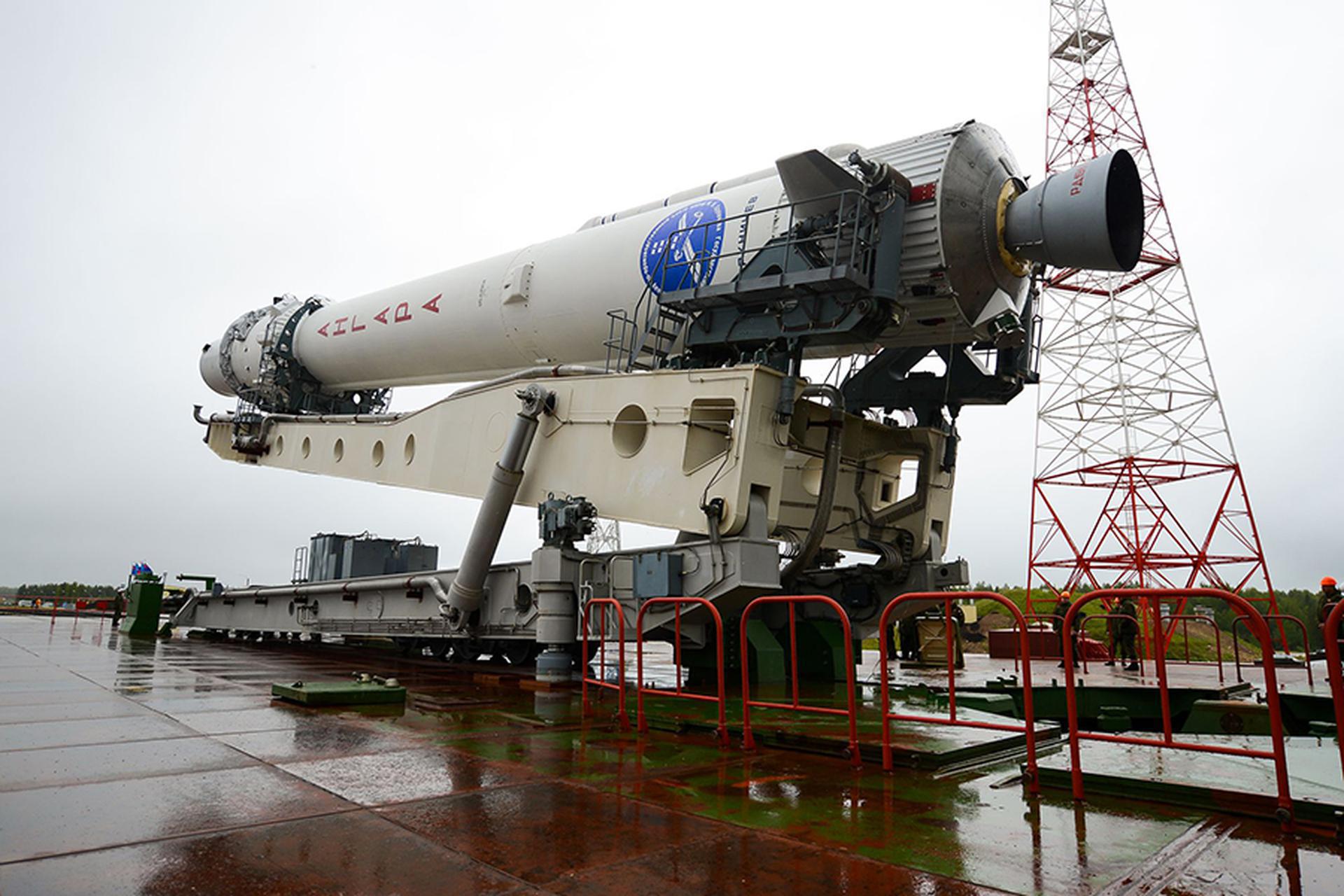
Angara 1.2 | Kosmos 2615-2618
Khrunichev State Research and Production Space Center | RussiaPlesetsk Cosmodrome, Russian Federation
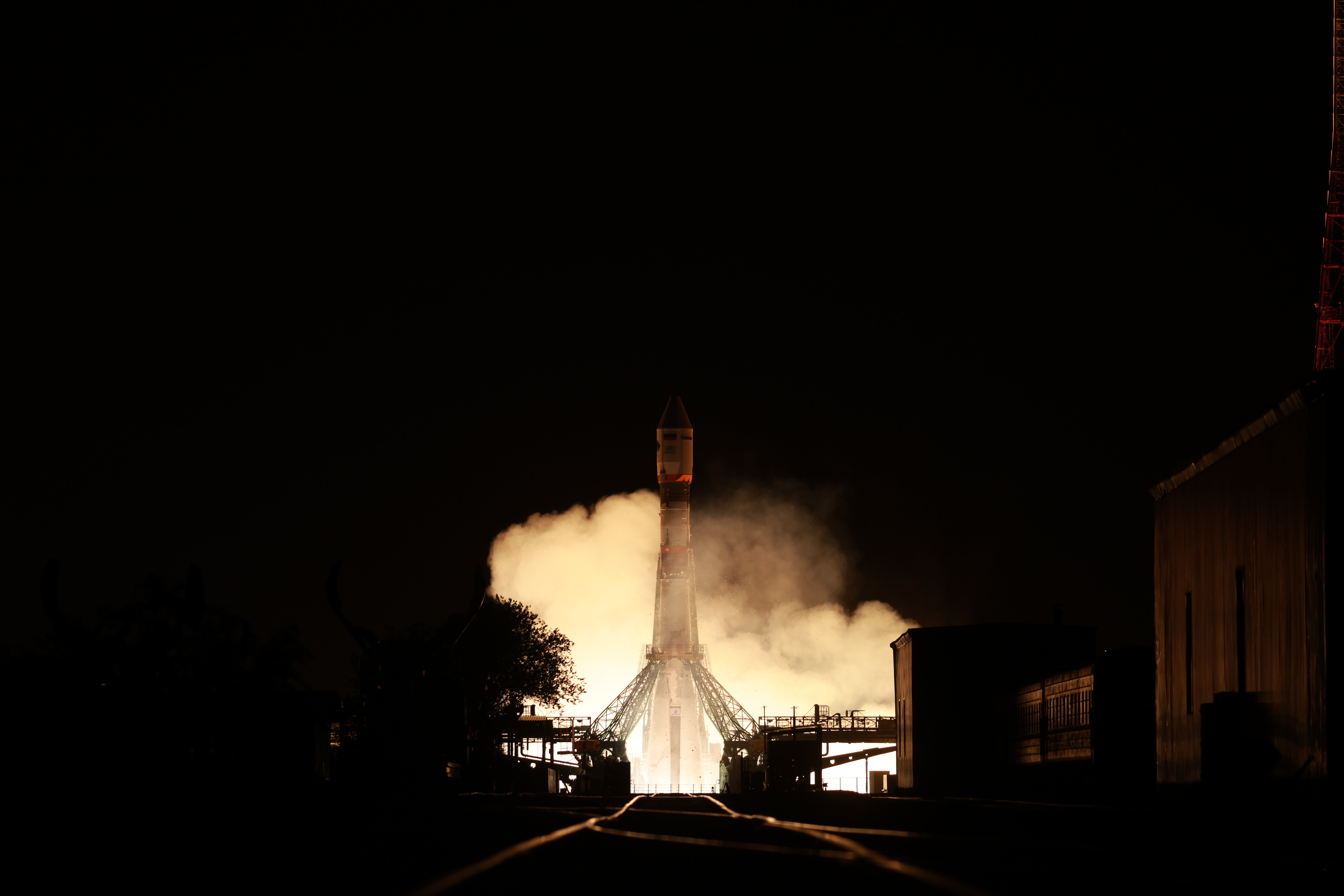
Soyuz 2.1b/Volga | Kosmos 2609-2614
Progress Rocket Space Center | RussiaPlesetsk Cosmodrome, Russian Federation
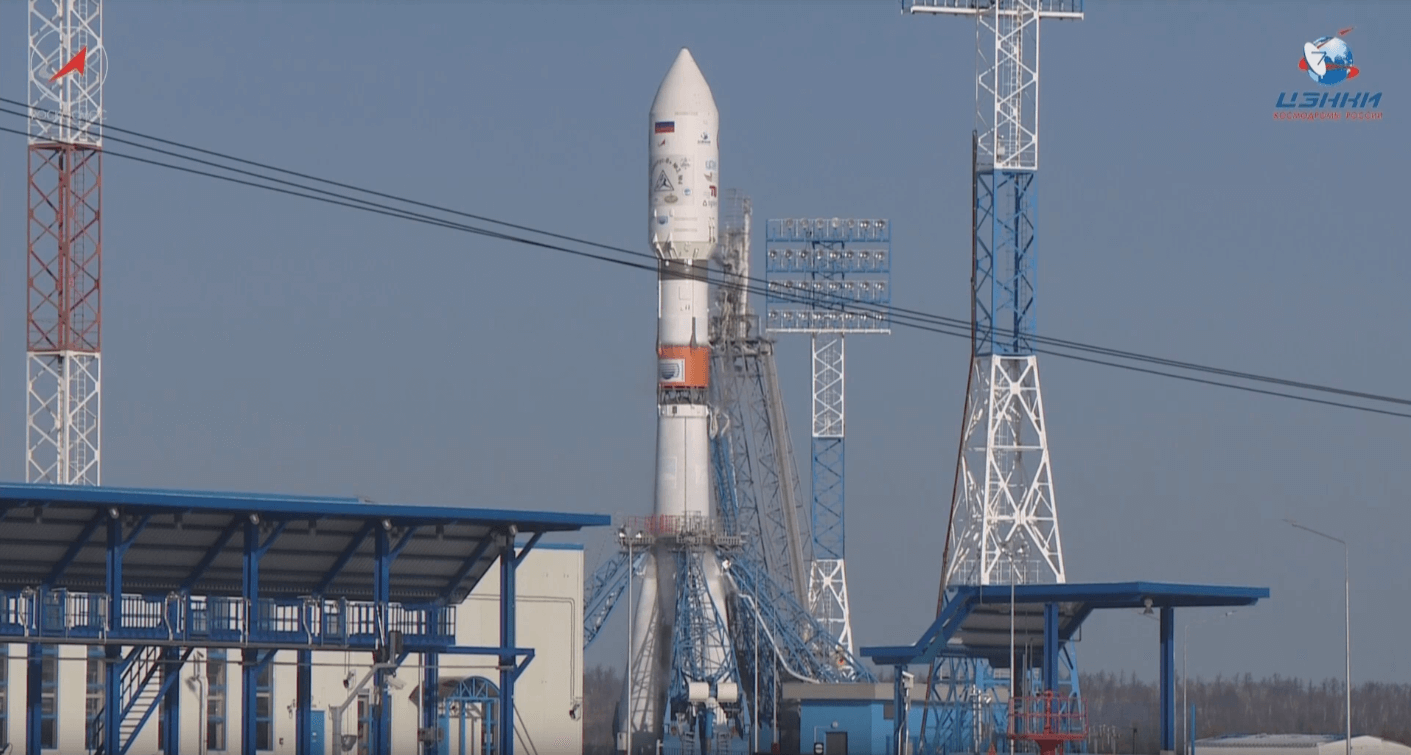
Soyuz 2.1a/Fregat-M | Meridian-M No.21L
Progress Rocket Space Center | RussiaPlesetsk Cosmodrome, Russian Federation
Soyuz 2.1b | 16 x Rassvet-3
Progress Rocket Space Center | RussiaPlesetsk Cosmodrome, Russian Federation
Soyuz 2.1b/Fregat-M | Kosmos 2600-2608
Progress Rocket Space Center | RussiaPlesetsk Cosmodrome, Russian Federation
Soyuz 2.1b/Fregat-M | AIST-2T 01 & 02
Progress Rocket Space Center | RussiaVostochny Cosmodrome, Siberia, Russian Federation
Status: Launch Successful
Mission:
A pair of Russian optical Earth observation satellites built by the Progress Rocket Space Centre for obtaining stereo images of the Earth's surface, with maximum resolution of 1.2 m in panchromatic mode and a swath width of 32 km. 50 small satellites will also be launched as ride-share payloads, including 3 from Iran.
Sun-Synchronous Orbit
Soyuz 2.1a | Obzor-R No.1
Progress Rocket Space Center | RussiaPlesetsk Cosmodrome, Russian Federation
Status: Launch Successful
Mission:
The Russian Obzor-R satellite is a planned X-band radar earth observation satellite designed by TsSKB-Progress. In 2012, the development of the Arkon-2M radar satellite was stopped and instead the development of the Obzor-R was initiated. The satellite features the BRLK X-band Synthetic Aperture Radar as the imaging instrument with a ground resolution of 500 m.
Sun-Synchronous Orbit
