Upcoming Spaceflight Launches
Filter by Agency, Locations or Vehicles
Show All Launches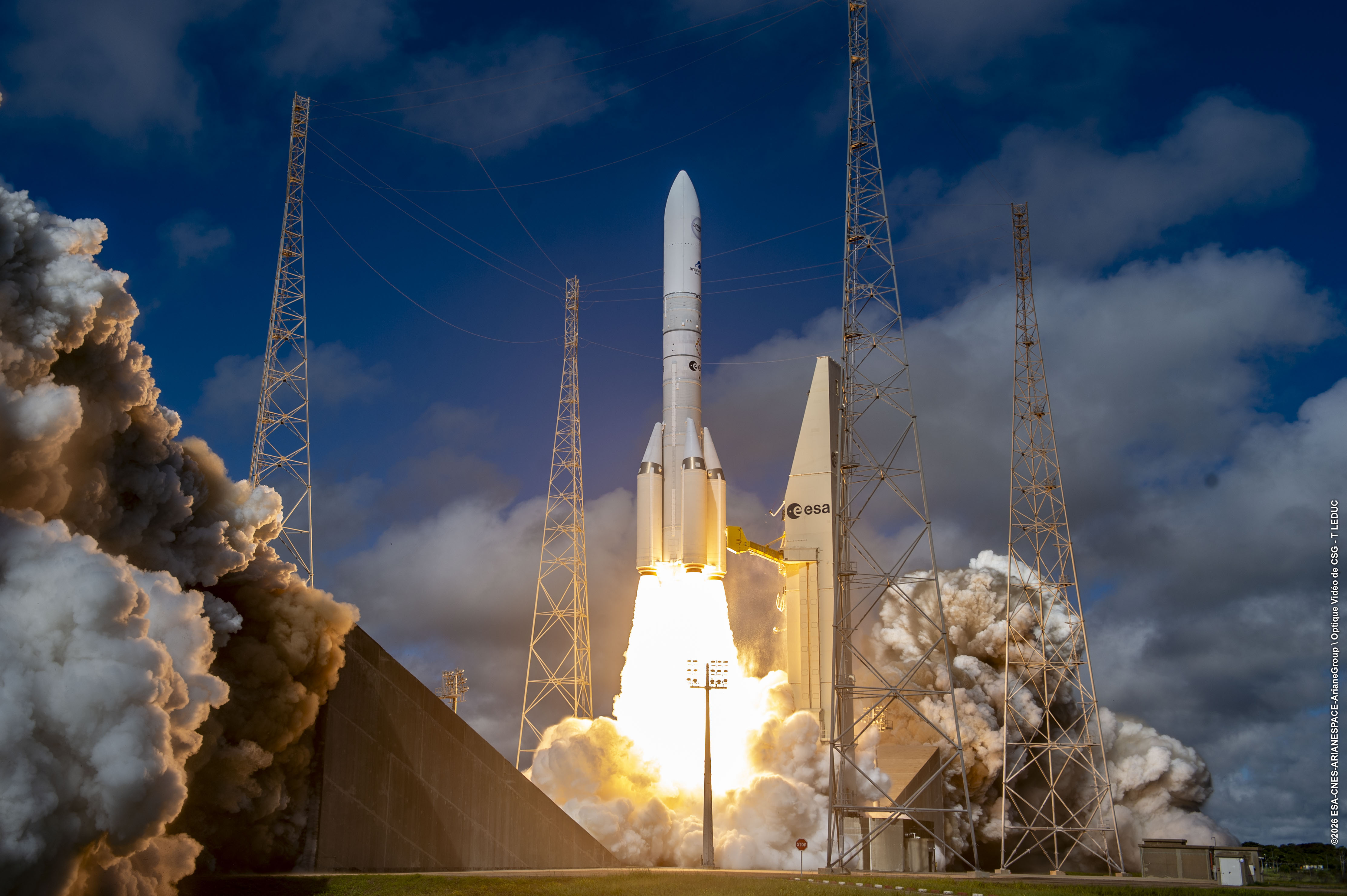
Ariane 64 Block 2 | Amazon Leo (LE-04)
ArianeGroup | FranceGuiana Space Centre, French Guiana
Status: To Be Determined
Mission:
Amazon Leo, formerly known as Project Kuiper, is a mega constellation of satellites in Low Earth Orbit that will offer broadband internet access, this constellation will be managed by Kuiper Systems LLC, a subsidiary of Amazon. This constellation is planned to be composed of 3,276 satellites. The satellites are projected to be placed in 98 orbital planes in three orbital layers, one at 590 km, 610 km and 630 km altitude. 35-40 satellites will be carried on each Ariane 6 launch.
Low Earth Orbit VA271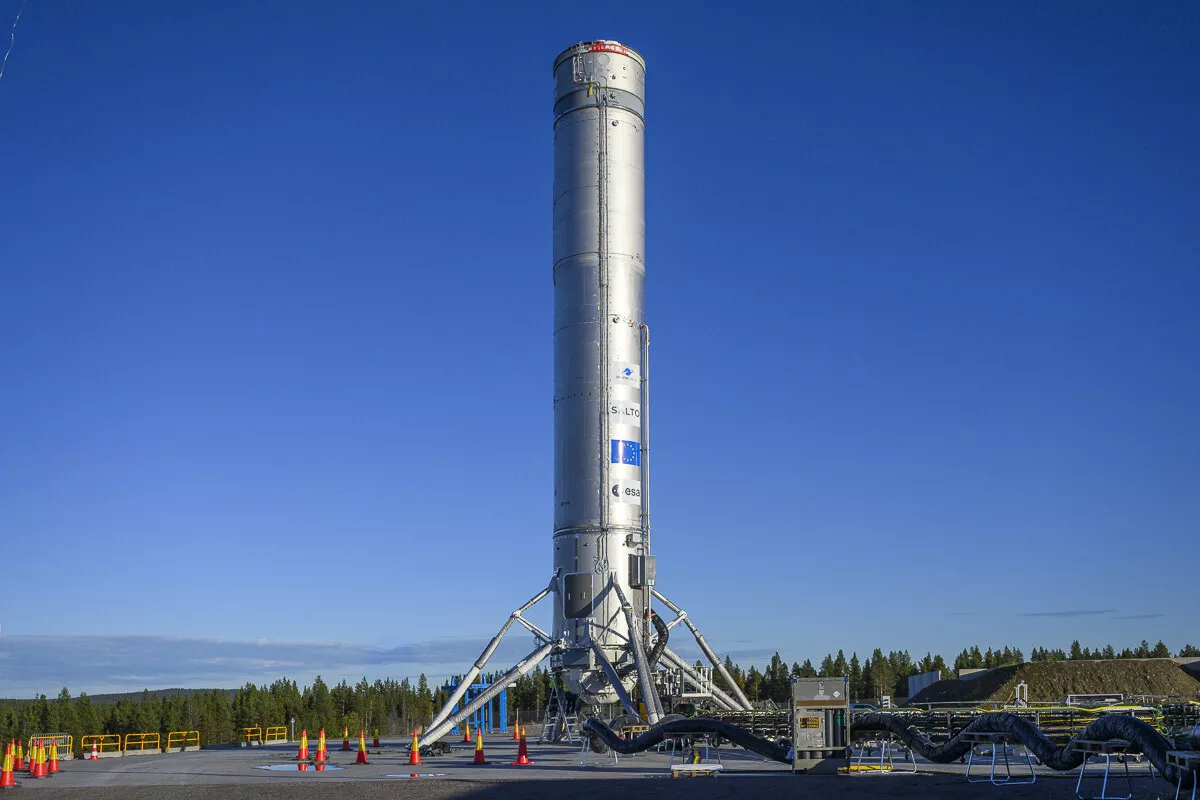
Themis Demonstrator | T1H-1
ArianeGroup | FranceEsrange Space Center
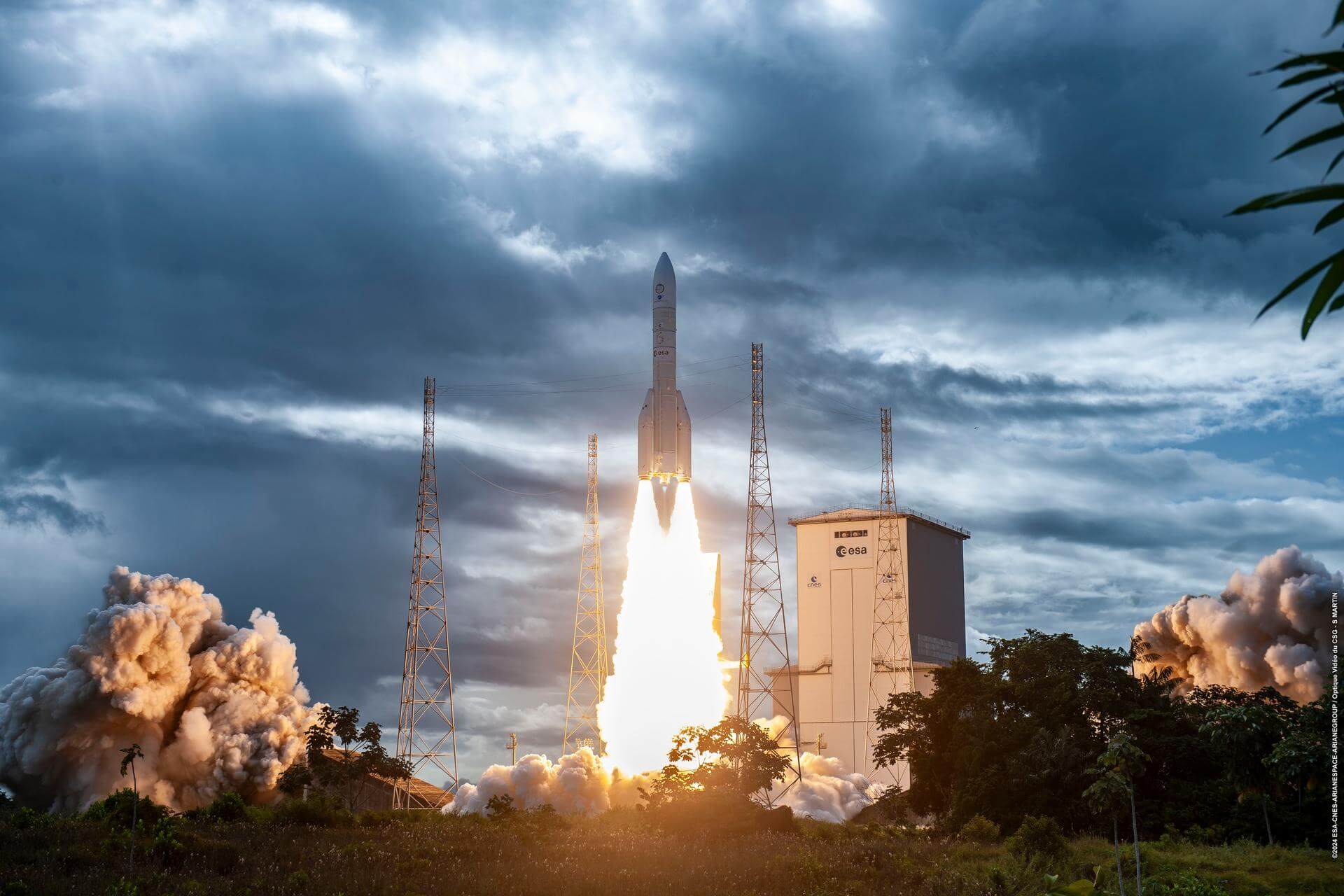
Ariane 62 | Metop-SG B1
ArianeGroup | FranceGuiana Space Centre, French Guiana
Ariane 62 | Galileo L16 (FOC FM29 & FM30)
ArianeGroup | FranceGuiana Space Centre, French Guiana
Ariane 62 Block 2 | PLATO
ArianeGroup | FranceGuiana Space Centre, French Guiana
Status: To Be Determined
Mission:
Plato, for PLAnetary Transits and Oscillations of stars, is a European Space Agency (ESA) mission with 26 cameras to study terrestrial exoplanets in orbits up to the habitable zone of Sun-like stars. Its goal is to measure the sizes of exoplanets and discover exomoons and rings around them, as well as characterise planets' host stars by studying tiny light variations in the starlight it receives.
Sun-Earth L2Ariane 62 | Galileo L15 (FOC FM28 & FM31)
ArianeGroup | FranceGuiana Space Centre, French Guiana
Ariane 6 | NEXUS-1
ArianeGroup | FranceGuiana Space Centre, French Guiana
Status: To Be Determined
Mission:
Katalyst Space Technologies' robotic space vehicle NEXUS-1 will dock with other satellites to install hardware, reposition spacecraft, and extend mission life, offering a faster, lower-cost alternative to replacement of satellites. NEXUS-1 will begin delivering these services through initial government missions before supporting commercial operators. Initial operations include installing a sensor on a Space Force satellite to detect and identify nearby spacecraft and conducting additional rendezvous and proximity operations to support space domain awareness. Following these missions, NEXUS-1 will transition to commercial servicing operations for communications satellite operators seeking to maintain and upgrade spacecraft already in orbit.
Geostationary Orbit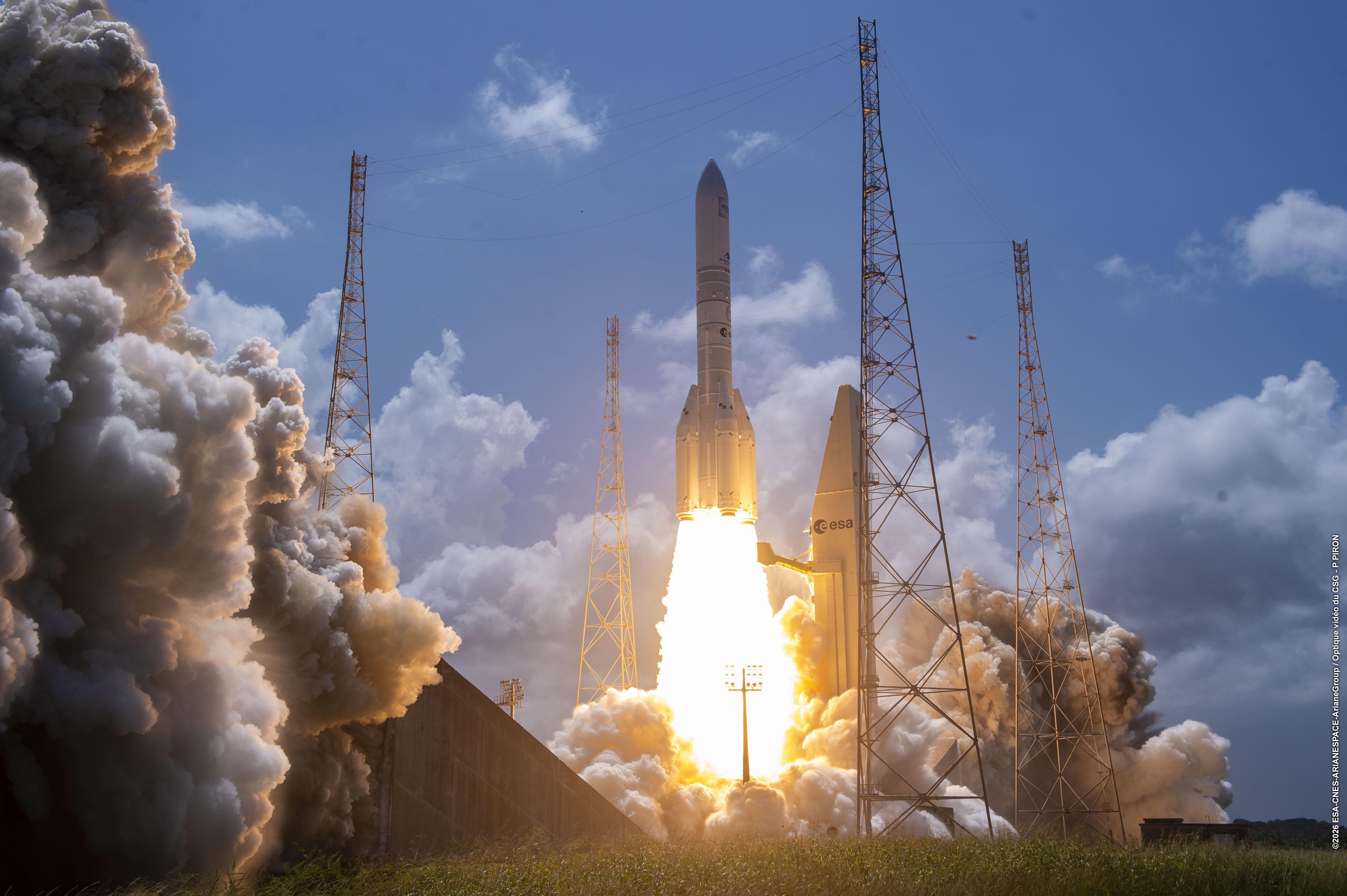
Ariane 64 | Optus-11
ArianeGroup | FranceGuiana Space Centre, French Guiana
Status: To Be Determined
Mission:
Optus-11 is a Ku-band communications satellite with a coverage zone encompassing Australia and New Zealand. Optus-11 incorporates a number of advanced technologies, especially the latest developments in digital processing, plus active antennas enabling the creation of several thousand beams.
Geostationary Transfer OrbitAriane 64 | OneWeb L?
ArianeGroup | FranceGuiana Space Centre, French Guiana
Status: To Be Determined
Mission:
A batch of satellites for the OneWeb satellite constellation, which is intended to provide global Internet broadband service for individual consumers. The constellation is planned to have around 648 microsatellites (of which 60 are spares), around 150 kg each, operating in Ku-band from low Earth orbit.
Polar OrbitAriane 64 | Hellas Sat 5
ArianeGroup | FranceGuiana Space Centre, French Guiana
Long March 2D
CAS Pathfinder-1
Launch Area 94 (SLS-2 / 603) - Jiuquan Satellite Launch Center, People's Republic of ChinaThe Chinese Academy of Science (CAS)' Pathfinder-1 satellites is built for in-orbit validation of critical technologies for the upcoming main mission…
Long March 12
SatNet LEO Group 29
Commercial LC-2 - Wenchang Space Launch Site, People's Republic of ChinaA batch of 9 Low Earth Orbit communication satellites for the Chinese state owned SatNet constellation operated by the China Satellite Network Group.…
Soyuz 2.1b/Fregat-M
Glonass-K1? (Kosmos 2621?)
43/3 (43L) - Plesetsk Cosmodrome, Russian FederationNote: Payload identity uncertain. Glonass-K are the third generation of satellite design for GLONASS satellite navigation system. GLONASS is a Rus…
Falcon 9
USSF-432
Space Launch Complex 4E - Vandenberg SFB, CA, USAA classified mission for the United States Space Force. It is possibly a batch of classified LEO satellites based on SpaceX’s Starshield satellite bu…
Ceres-2
4 satellites
Launch Area 95A - Jiuquan Satellite Launch Center, People's Republic of ChinaShare-ride of 4 commercial Earth observation and technology demonstration satellites to SSO, details TBD.
Long March 2C
Yaogan 51-07 to 09
Launch Complex 3 (LC-3/LA-1) - Xichang Satellite Launch Center, People's Republic of China3 Chinese military “remote sensing” satellite of unknown purposes.
Kinetica 2
SpaceSail Polar Group #17
Launch Area 140 - Jiuquan Satellite Launch Center, People's Republic of China18 Low Earth Orbit communication satellites with Ku, Q and V band payloads for the G60 constellation operated by Shanghai Spacesail Technologies with…
Electron
The Sea God Surveys (iQPS Launch 9)
Rocket Lab Launch Complex 1A - Rocket Lab Launch Complex 1, Mahia Peninsula, New ZealandSynthetic aperture radar Earth observation satellite for Japanese Earth imaging company iQPS.
Falcon 9
Starlink Group 15-18
Space Launch Complex 4E - Vandenberg SFB, CA, USAA batch of 27 satellites for the Starlink mega-constellation - SpaceX's project for space-based Internet communication system.
GSLV Mk II
IRNSS-1L (NVS-03)
Satish Dhawan Space Centre Second Launch Pad - Satish Dhawan Space Centre, IndiaThis is a replacement satellite for the Indian Regional Navigation Satellite System. The constellation will provide India with an alternative to GPS …