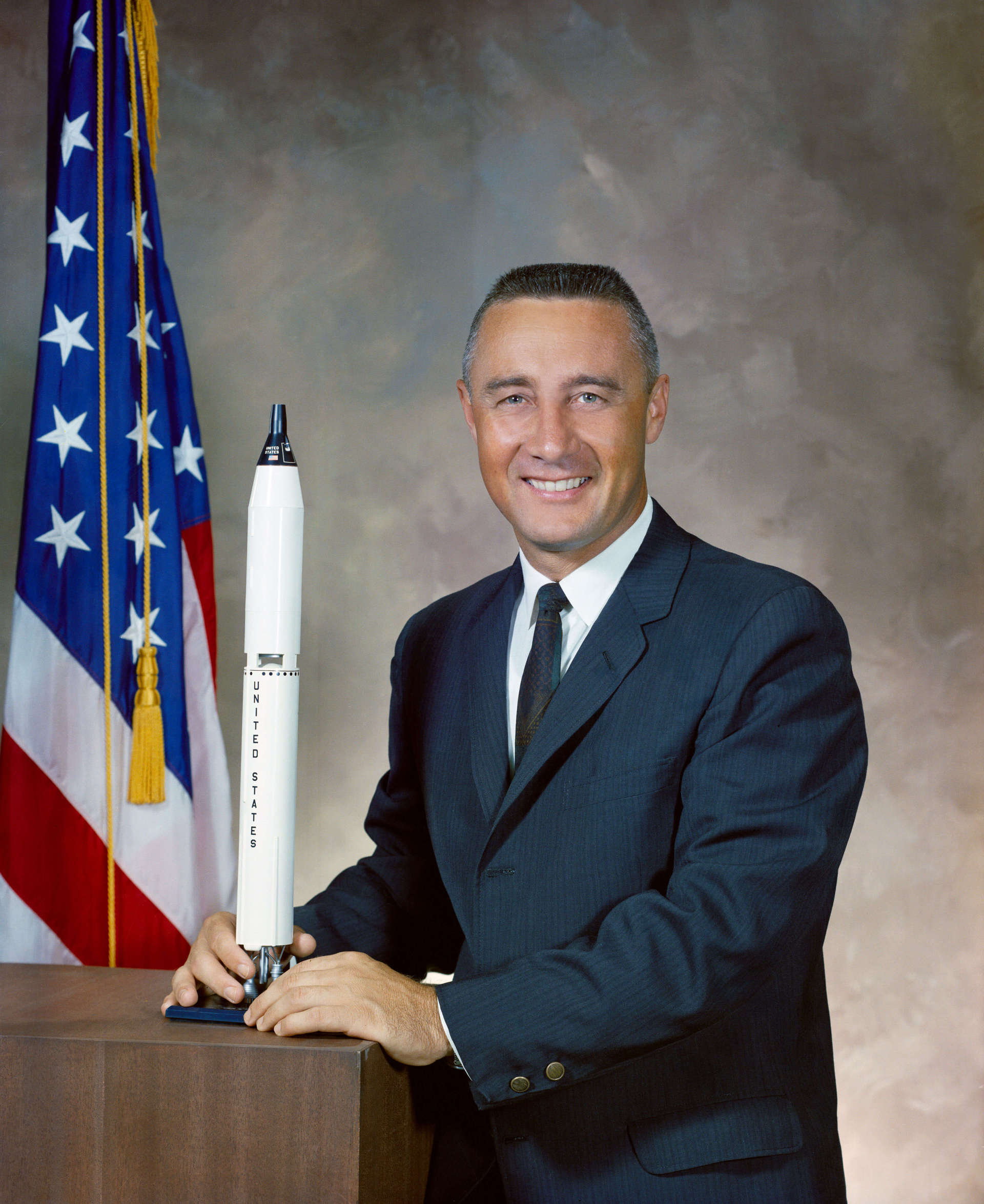
Gus Grissom
American - (NASA)
Lost In Training
Date of Birth: April 3, 1926
Date of Death: Jan. 27, 1967
Lieutenant Colonel Virgil Ivan "Gus" Grissom was one of the seven original National Aeronautics and Space Administration's Project Mercury astronauts, and the first of the Mercury Seven to die. He was also a Project Gemini and an Apollo program astronaut. Grissom was the second American to fly in space, and the first member of the NASA Astronaut Corps to fly in space twice. In addition, Grissom was a World War II and Korean War veteran, U.S. Air Force test pilot, and a mechanical engineer. He was a recipient of the Distinguished Flying Cross, and the Air Medal with an oak leaf cluster, a two-time recipient of the NASA Distinguished Service Medal, and, posthumously, the Congressional Space Medal of Honor.
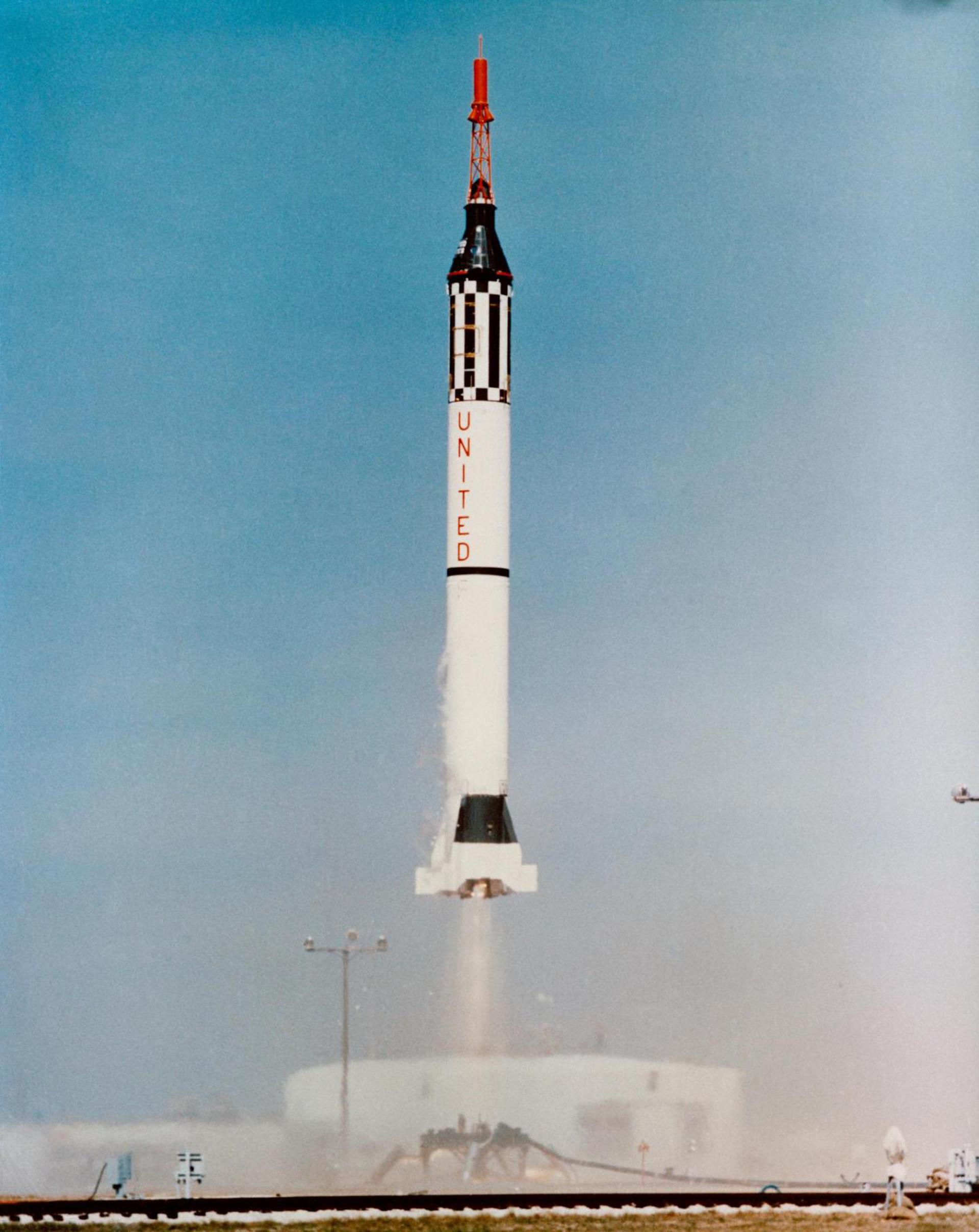
Redstone MRLV | Mercury-Redstone 4
Chrysler | United States of AmericaCape Canaveral SFS, FL, USA
Status: Success
Mission:
Mercury-Redstone 4 was the second United States human spaceflight, on July 21, 1961. The suborbital Project Mercury flight was launched with a Mercury-Redstone Launch Vehicle, MRLV-8. The spacecraft, Mercury capsule #11, was nicknamed the Liberty Bell 7, and it was piloted by the astronaut Virgil "Gus" Grissom.
Suborbital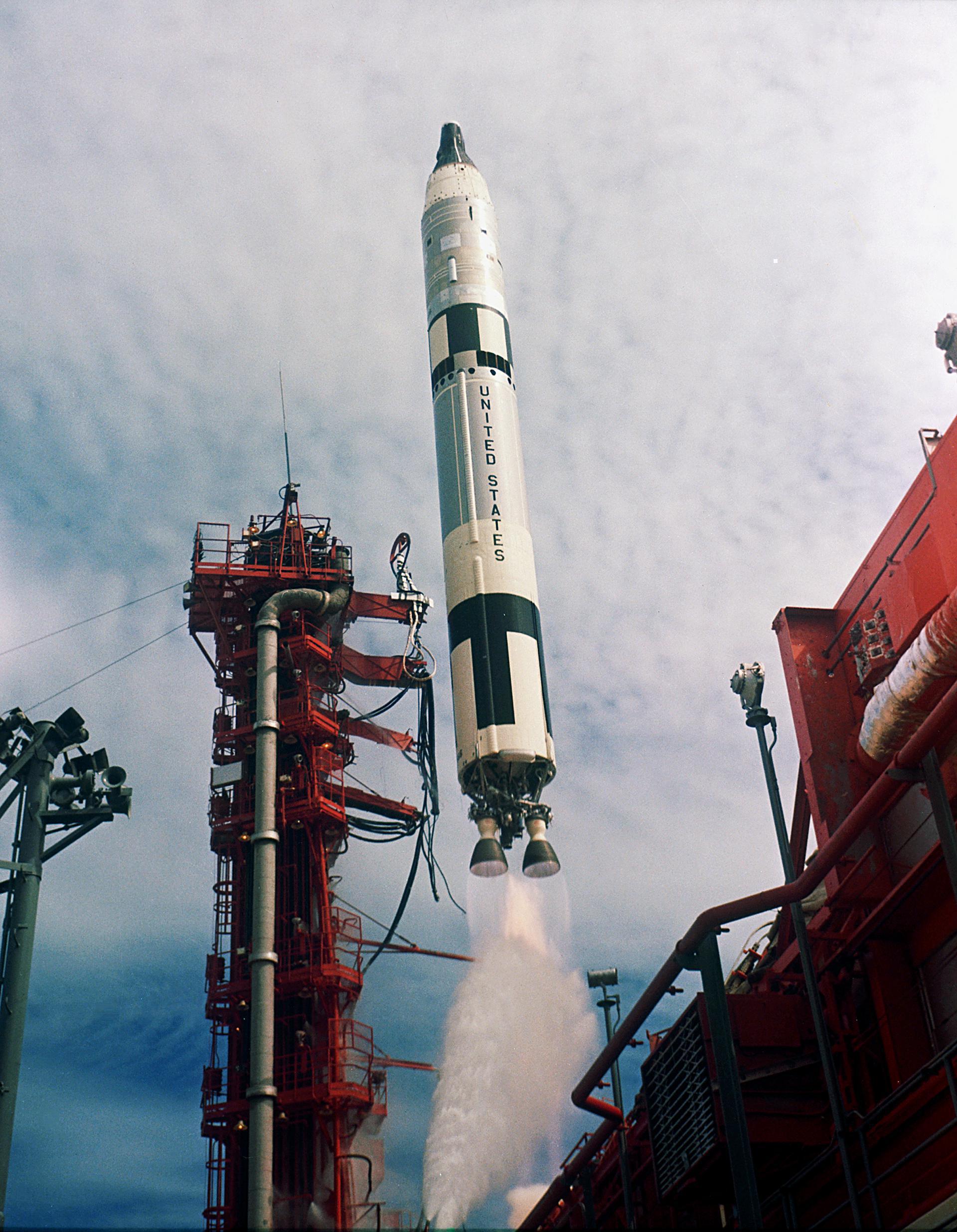
Titan II GLV | Gemini III
National Aeronautics and Space Administration | United States of AmericaCape Canaveral SFS, FL, USA
Status: Success
Mission:
Gemini 3 was the first crewed mission of the Gemini program. Mission Command Pilot Gus Grissom and PilotJohn Young flew 3 orbits in a flight that was the last one to be operated from the Cape Kennedy Air Force Station. The mission was considered a success and was the first flight to perform an orbital maneuver. Gemini 3 fired its engines for 1 minute and 14 seconds changing its orbit. The mission lasted 4 hours and 52 minutes.
Low Earth Orbit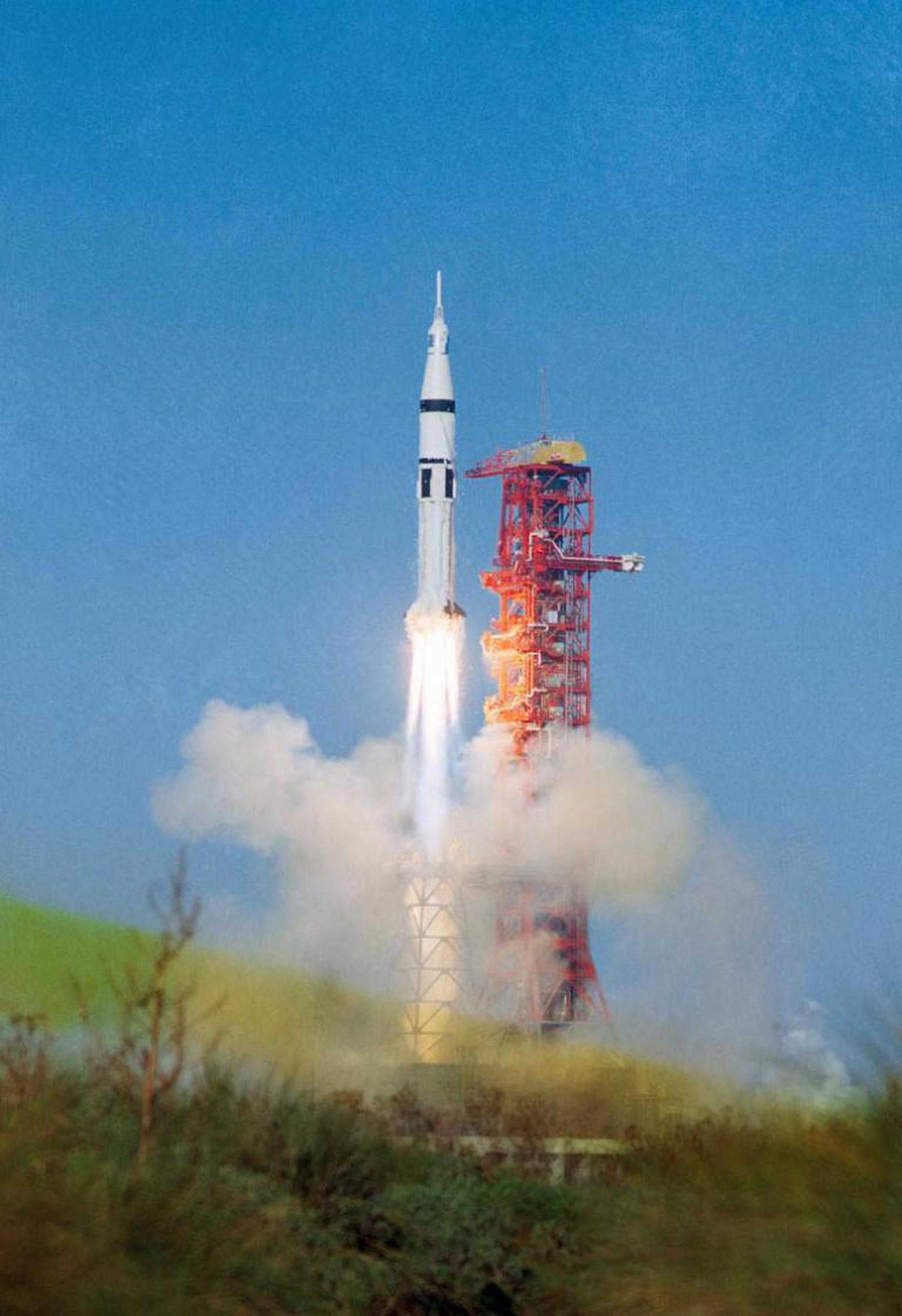
Saturn IB | Apollo 1 (Failure before launch)
National Aeronautics and Space Administration | United States of AmericaCape Canaveral SFS, FL, USA
Status: Failure
Mission:
Apollo 1, initially designated AS-204, was the first crewed mission of the United States Apollo program, the undertaking to land the first man on the Moon. It was planned to launch on February 21, 1967, as the first low Earth orbital test of the Apollo command and service module. The mission never flew; a cabin fire during a launch rehearsal test at Cape Kennedy Air Force Station Launch Complex 34 on January 27 killed all three crew members—Command Pilot Gus Grissom, Senior Pilot Ed White, and Pilot Roger B. Chaffee—and destroyed the command module (CM). The name Apollo 1, chosen by the crew, was made official by NASA in their honor after the fire.
Low Earth OrbitThe National Aeronautics and Space Administration is an independent agency of the executive branch of the United States federal government responsible for the civilian space program, as well as aeronautics and aerospace research. NASA have many launch facilities but most are inactive. The most commonly used pad will be LC-39B at Kennedy Space Center in Florida.
Kinetica 2
SpaceSail Polar Group #17
Launch Area 140 - Jiuquan Satellite Launch Center, People's Republic of China18 Low Earth Orbit communication satellites with Ku, Q and V band payloads for the G60 constellation operated by Shanghai Spacesail Technologies with…
Electron
The Sea God Surveys (iQPS Launch 9)
Rocket Lab Launch Complex 1A - Rocket Lab Launch Complex 1, Mahia Peninsula, New ZealandSynthetic aperture radar Earth observation satellite for Japanese Earth imaging company iQPS.
Falcon 9
Starlink Group 15-18
Space Launch Complex 4E - Vandenberg SFB, CA, USAA batch of 27 satellites for the Starlink mega-constellation - SpaceX's project for space-based Internet communication system.
GSLV Mk II
IRNSS-1L (NVS-03)
Satish Dhawan Space Centre Second Launch Pad - Satish Dhawan Space Centre, IndiaThis is a replacement satellite for the Indian Regional Navigation Satellite System. The constellation will provide India with an alternative to GPS …
Falcon 9
Starlink Group 15-16
Space Launch Complex 4E - Vandenberg SFB, CA, USAA batch of 27 satellites for the Starlink mega-constellation - SpaceX's project for space-based Internet communication system.