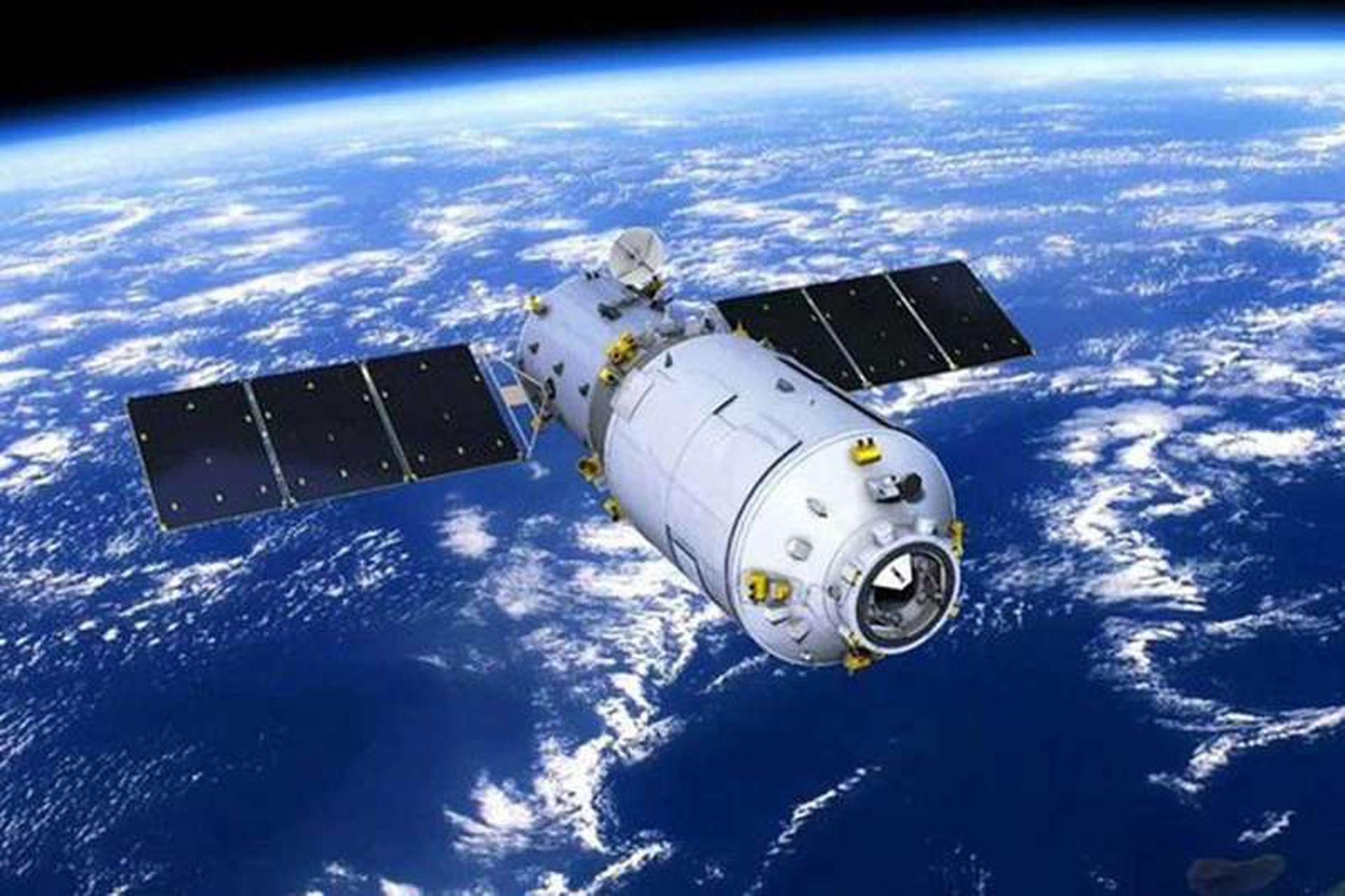
Tiangong 1
Status - De-Orbited
Details
Tiangong-1 (Chinese: 天宫一号; pinyin: Tiāngōng yīhào; literally: "Heavenly Palace 1" or "Celestial Palace 1") was China's first prototype space station. It orbited Earth from September 2011 to April 2018, serving as both a manned laboratory and an experimental testbed to demonstrate orbital rendezvous and docking capabilities during its two years of active operational life. Tiangong-1 was visited by a series of Shenzhou spacecraft during its two-year operational lifetime. The first of these, the unmanned Shenzhou 8, successfully docked with the module in November 2011, while the manned Shenzhou 9 mission docked in June 2012. A third and final mission to Tiangong-1, the manned Shenzhou 10, docked in June 2013. The manned missions to Tiangong-1 were notable for including China's first female astronauts, Liu Yang and Wang Yaping. On 21 March 2016, after a lifespan extended by two years, the China Manned Space Engineering Office announced that Tiangong-1 had officially ended its service. They went on to state that the telemetry link with Tiangong-1 had been lost. A couple of months later, amateur satellite trackers watching Tiangong-1 found that China's space agency had lost control of the station. In September, after conceding they had lost control over the station, officials speculated that the station would re-enter and burn up in the atmosphere late in 2017. According to the China Manned Space Engineering Office, Tiangong-1 started reentry over the southern Pacific Ocean, northwest of Tahiti, on 2 April 2018 at 00:15 UTC.
Agencies
China National Space Administration
Government
Administrator: Tang Dengjie
CNSA 1993The China National Space Administration (CNSA) is the national space agency of the People's Republic of China. It is responsible for the national space program and for planning and development of space activities. CNSA and China Aerospace Corporation (CASC) assumed the authority over space development efforts previously held by the Ministry of Aerospace Industry. The CNSA has many launch sites around China with their orbital sites located in Jiuquan, Xichang, Taiyuan and Wenchang.
Falcon 9
USSF-481
Space Launch Complex 4E - Vandenberg SFB, CA, USAA classified mission for the United States Space Force. It is possibly a batch of classified LEO satellites based on SpaceX’s Starshield satellite bu…
Zhuque-2E Block 2
10 satellites
Launch Area 96A - Jiuquan Satellite Launch Center, People's Republic of ChinaRide-share of 10 satellites to sun-synchronous orbit, including: * Guangchuan-03 & 04 (LT-03/04) from LandSpace's subsidiary LandTower for testing…
Falcon 9
Dragon CRS-2 SpX-35
Space Launch Complex 40 - Cape Canaveral SFS, FL, USA35th commercial resupply services mission to the International Space Station operated by SpaceX. The flight will be conducted under the second Commer…
Falcon 9
Starlink Group 15-25
Space Launch Complex 4E - Vandenberg SFB, CA, USAA batch of 27 satellites for the Starlink mega-constellation - SpaceX's project for space-based Internet communication system.
Falcon 9
SDA Tranche 1 Transport Layer A
Space Launch Complex 4E - Vandenberg SFB, CA, USATranche 1 Transport Layer A is one of six missions by the United States Space Force Space Development Agency (SDA) for the Proliferated Warfighter Sp…

