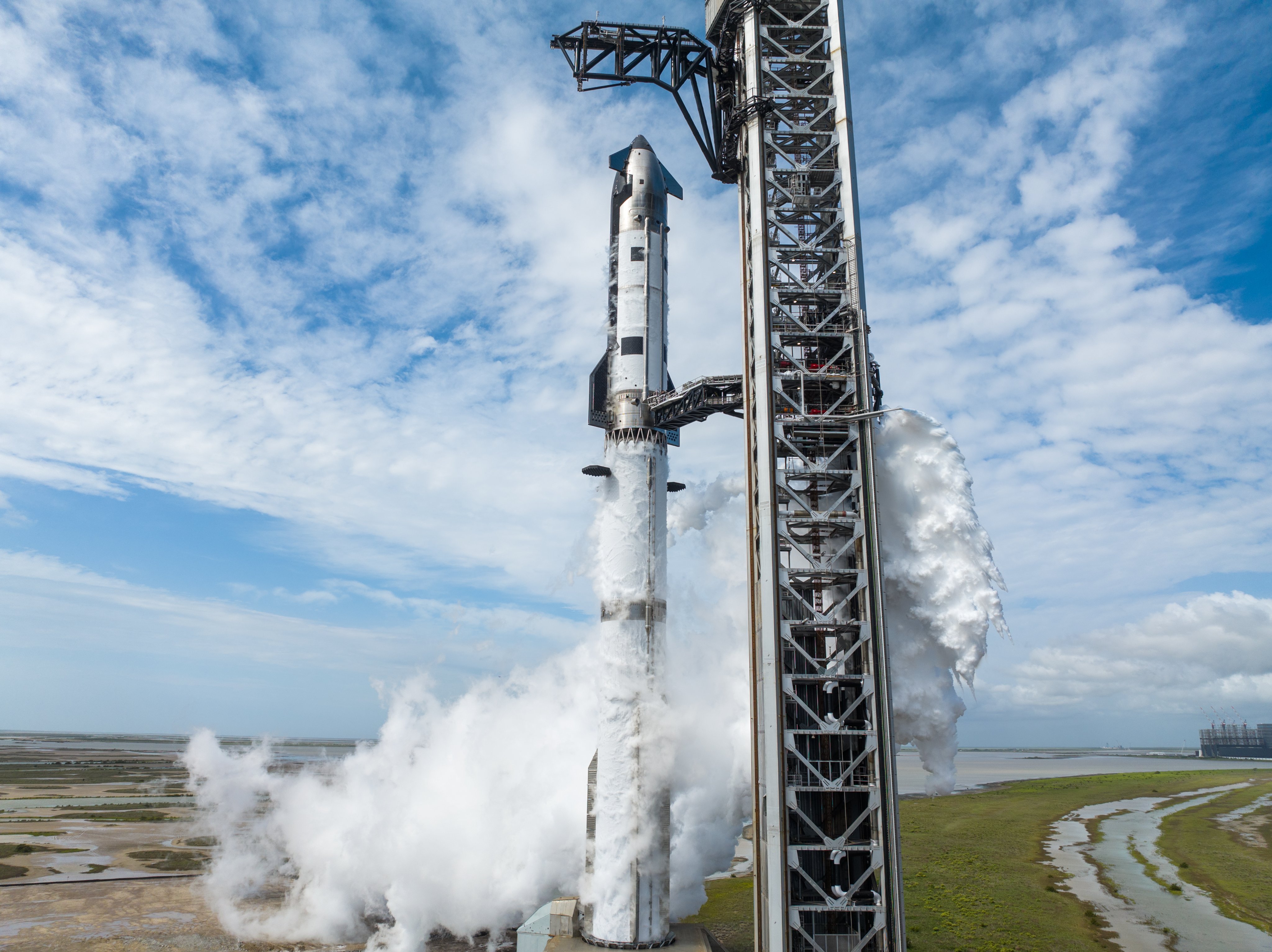
Starship - Booster 19
Details
Status - Destroyed
First Block 3 Super Heavy booster to fly with various enhancements including Raptor 3 engines, integrated interstage and 3 grid fins instead of 4 used. Used on the 12th Starship flight test, replacing Booster 18 written off during ground testing in November 2025. It was lost after stage separation, having completed an off-nominal boostback burn with fewer engines than planned.
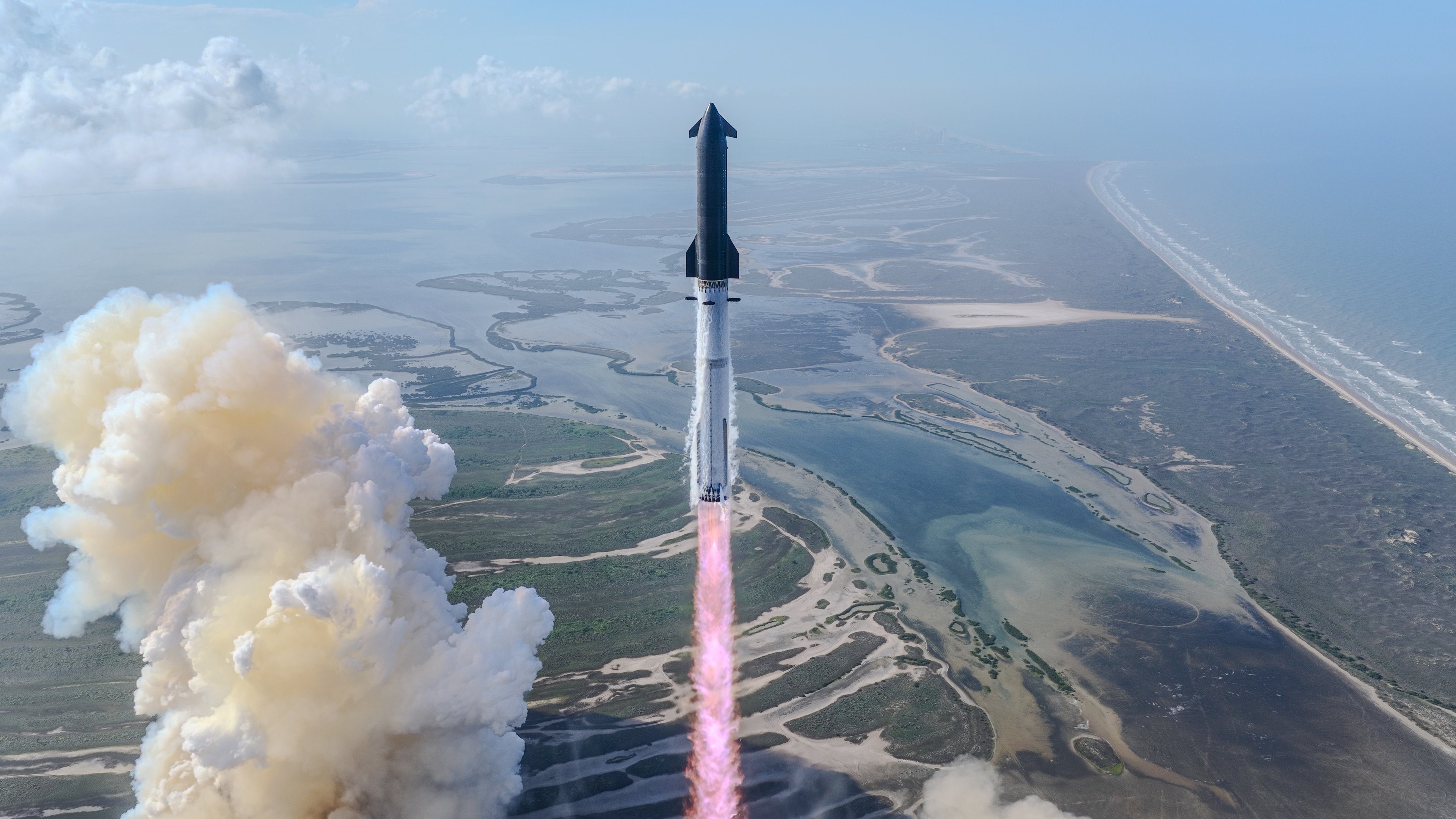
Starship | Flight 12
SpaceX | United States of AmericaSpaceX Starbase, TX, USA
Status: Launch Successful
Mission:
12th test flight of the two-stage Starship launch vehicle. Maiden Flight of Starship V3. The flight test’s primary goal will be to demonstrate each of these new pieces in the flight environment for the first time, with each element of the Starship architecture featuring significant redesigns to enable full and rapid reuse that incorporate learnings from years of development and test. The Starship upper stage will target multiple in-space and reentry objectives, including a payload deployment of 20 Starlink simulators, similar in size to next-generation Starlink V3 satellites, and two specially modified Starlink satellites. The two modified satellites will test hardware planned for Starlink V3 and will attempt to scan Starship’s heat shield and transmit imagery down to operators to test methods of analyzing Starship’s heat shield readiness for return to launch site on future missions. Several tiles on Starship have been painted white to simulate missing tiles and serve as imaging targets in the test. The Starlink simulators will be on the same suborbital trajectory as Starship. A relight of a single Raptor engine while in space is also planned. For Starship entry, a single heat shield tile has been intentionally removed to measure the aerodynamic load differences on adjacent tiles when there is a tile missing. Finally, the ship will perform experimental actions tested on previous flight tests, including a maneuver to intentionally stress the structural limits of the vehicle’s rear flaps and a dynamic banking maneuver to mimic the trajectory that future missions returning to Starbase will fly.
Suborbital Booster 19 - Maiden Flight Gulf of MexicoLong March 2D
PIESAT-2 13-16
Launch Complex 9 - Taiyuan Satellite Launch Center, People's Republic of China4 X-band synthetic-aperture radar Earth observation satellites for the Chinese Earth observation satellite company PIESAT.
Electron
Owl By The Dozen (StriX Launch 12)
Rocket Lab Launch Complex 1B - Rocket Lab Launch Complex 1, Mahia Peninsula, New ZealandSynthetic aperture radar satellite for Japanese Earth imaging company Synspective.
Soyuz 2.1b/Fregat-M
Glonass-K1 No. 20 (?)
43/3 (43L) - Plesetsk Cosmodrome, Russian FederationNote: Satellite serial number and Cosmos designation not confirmed. Glonass-K are the third generation of satellite design for GLONASS satellite n…
Kuaizhou 11
SpaceTY-51 & 52
Launch Area 95A - Jiuquan Satellite Launch Center, People's Republic of China2 Earth observation radar satellites built by the Chinese satellite manufacturer SpaceTY.
Falcon 9
USSF-259
Space Launch Complex 4E - Vandenberg SFB, CA, USAUSSF-259 is a classified mission for the United States Space Force. It is possibly a batch of classified LEO satellites based on SpaceX’s Starshield …

