
Falcon Heavy - Unknown FH
Details
Status - N/A
Booster serial number unknown.
Upcoming Spaceflights
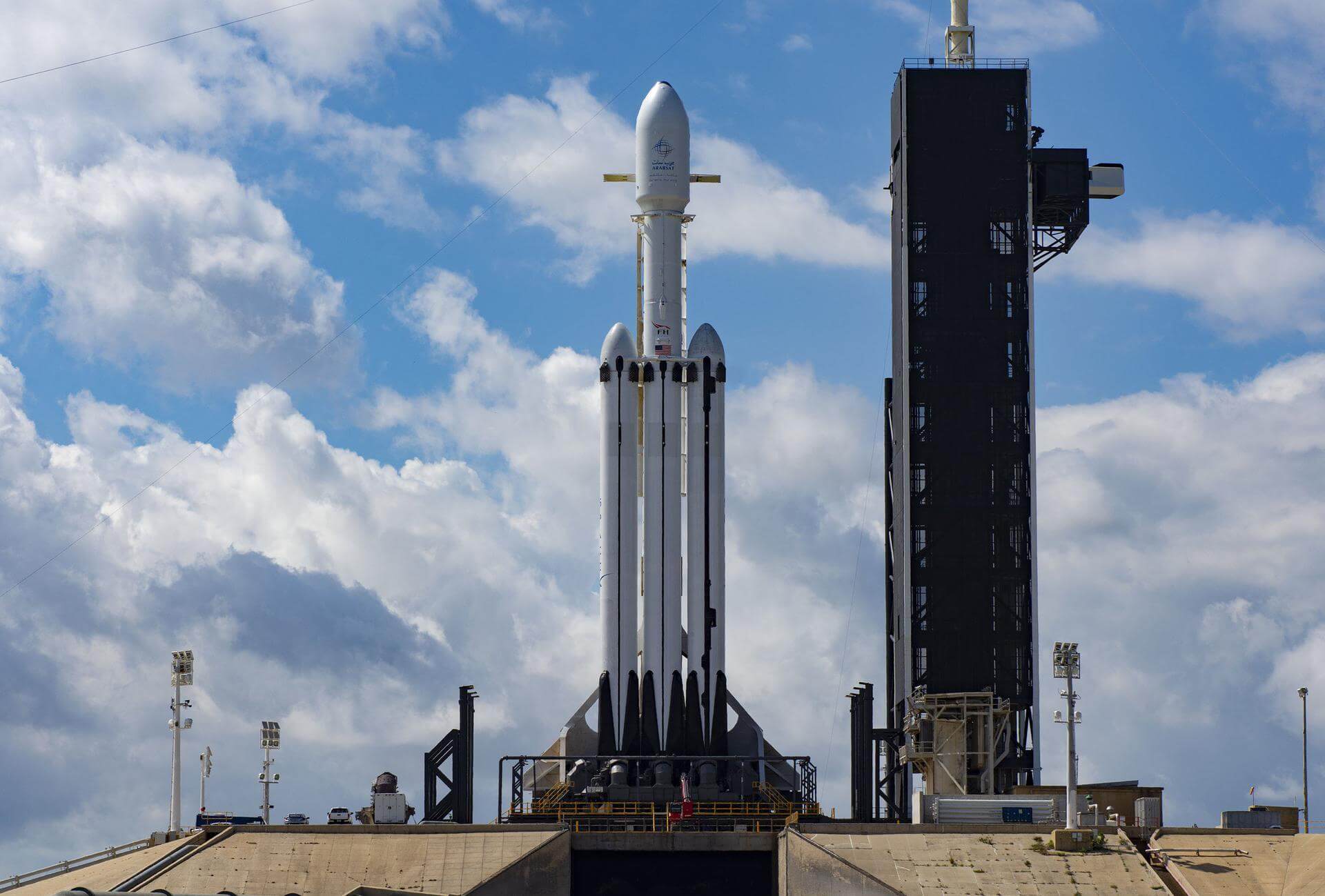
Falcon Heavy | Griffin Mission One
SpaceX | United States of AmericaKennedy Space Center, FL, USA
Status: To Be Determined
Mission:
Demonstration flight of the Astrobotic Griffin lander and its engines, initially contracted for the NASA VIPER (Volatiles Investigating Polar Exploration Rover) mission. The vacated payload spot will now host the FLIP (FLEX Lunar Innovation Platform) lunar rover from Astrolab.
Lunar Orbit Unknown FH - Maiden Flight Unknown Unknown FH - Maiden Flight Unknown Unknown FH - Maiden Flight UnknownFalcon Heavy | Griffin Mission One
SpaceX | United States of AmericaKennedy Space Center, FL, USA
Status: To Be Determined
Mission:
Demonstration flight of the Astrobotic Griffin lander and its engines, initially contracted for the NASA VIPER (Volatiles Investigating Polar Exploration Rover) mission. The vacated payload spot will now host the FLIP (FLEX Lunar Innovation Platform) lunar rover from Astrolab.
Lunar Orbit Unknown FH - Maiden Flight Unknown Unknown FH - Maiden Flight Unknown Unknown FH - Maiden Flight Unknown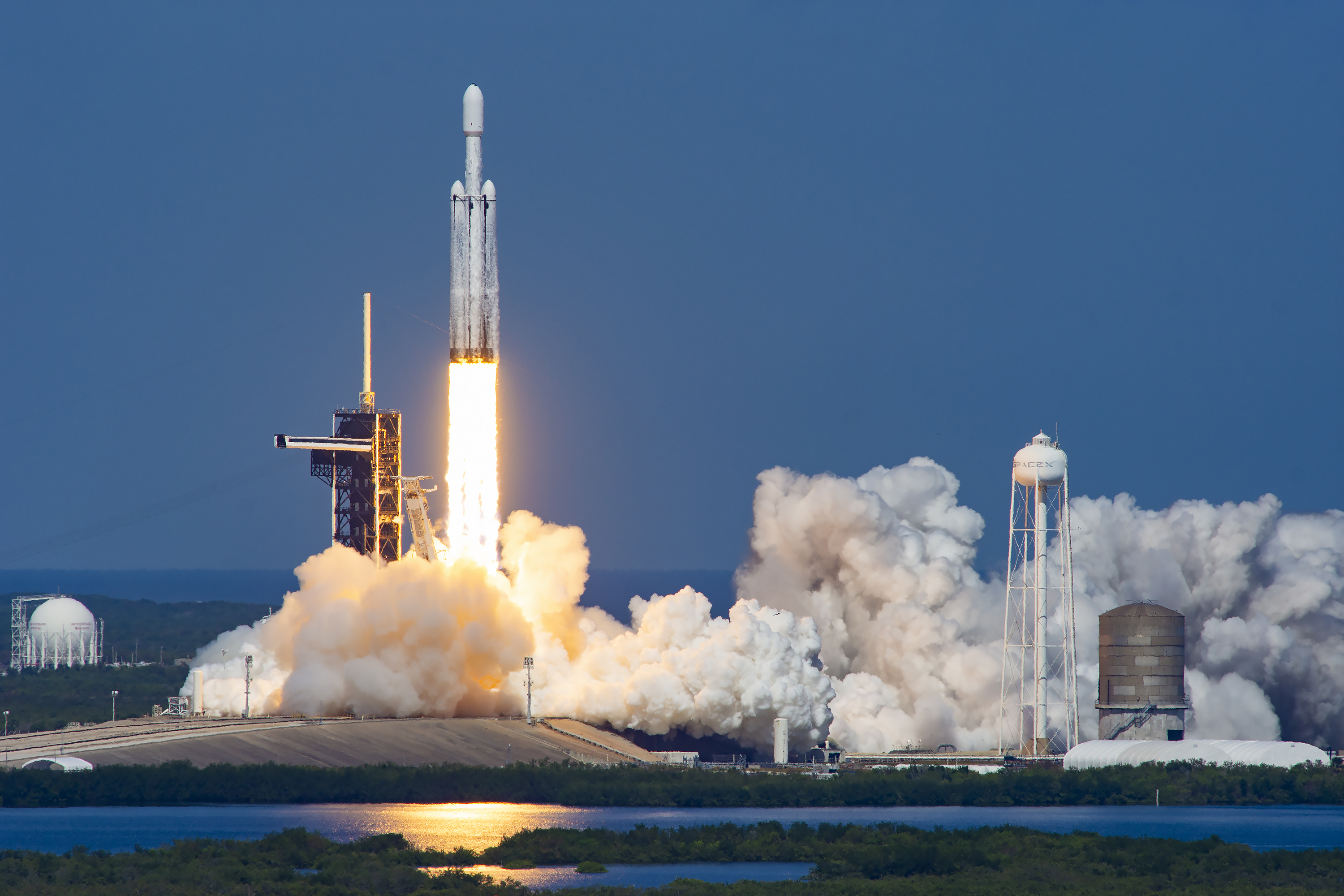
Falcon Heavy | Dragonfly
SpaceX | United States of AmericaKennedy Space Center, FL, USA
Status: To Be Determined
Mission:
Dragonfly is NASA's 4th New Frontiers program mission that will send a robotic rotorcraft to fly within the atmosphere of Saturn's moon Titan to sample materials and determine surface composition in different geologic settings, advancing humanity's search for the building blocks of life. The craft is a large quadcopter with double rotors with mass of about 875 kg, featuring rotors of 1.35 m in diameter. It can fly through several kilometers within an hour and will perform 1 flight per Titan day (~16 Earth days). During the planned 3.3-year mission, Dragonfly is expected to cover distance up to several hundred km. Dragonfly will use a Multi-Mission Radioisotope Thermoelectric Generator (MMRTG) to power its instruments. The planned science instrument suite is: * DragonCam: Camera Suite * DrACO: Drill for Acquisition of Complex Organics * DraMS: Mass Spectrometer * DraGNS: Gamma-ray and Neutron Spectrometer * DraGMet: Geophysics and Meteorology
Heliocentric N/AFalcon Heavy | Dragonfly
SpaceX | United States of AmericaKennedy Space Center, FL, USA
Status: To Be Determined
Mission:
Dragonfly is NASA's 4th New Frontiers program mission that will send a robotic rotorcraft to fly within the atmosphere of Saturn's moon Titan to sample materials and determine surface composition in different geologic settings, advancing humanity's search for the building blocks of life. The craft is a large quadcopter with double rotors with mass of about 875 kg, featuring rotors of 1.35 m in diameter. It can fly through several kilometers within an hour and will perform 1 flight per Titan day (~16 Earth days). During the planned 3.3-year mission, Dragonfly is expected to cover distance up to several hundred km. Dragonfly will use a Multi-Mission Radioisotope Thermoelectric Generator (MMRTG) to power its instruments. The planned science instrument suite is: * DragonCam: Camera Suite * DrACO: Drill for Acquisition of Complex Organics * DraMS: Mass Spectrometer * DraGNS: Gamma-ray and Neutron Spectrometer * DraGMet: Geophysics and Meteorology
Heliocentric N/AFalcon Heavy | ExoMars 2028 Rosalind Franklin rover
SpaceX | United States of AmericaKennedy Space Center, FL, USA
Status: To Be Determined
Mission:
ExoMars 2028 is a second mission of two-part European Space Agency astrobiology project to search for evidence of life on Mars. The primary objective is to land the rover at a site with high potential for finding well-preserved organic material, particularly from the very early history of the planet. The rover is expected to travel several kilometers during its mission. The European rover will be the first mission to combine the capability to move across the surface and to study Mars at depth. It will collect samples with a drill down to a depth of 2 m and analyze them with next-generation instruments in an onboard laboratory. Underground samples are more likely to include biomarkers, since the tenuous martian atmosphere offers little protection from radiation and photochemistry at the surface.
Heliocentric N/AFlight Record
No spaceflights found for Unknown FH.
Falcon 9
Starlink Group 15-16
Space Launch Complex 4E - Vandenberg SFB, CA, USAA batch of 27 satellites for the Starlink mega-constellation - SpaceX's project for space-based Internet communication system.
Long March 8A
SatNet LEO Group 28
Commercial LC-1 - Wenchang Space Launch Site, People's Republic of ChinaA batch of 9 Low Earth Orbit communication satellites for the Chinese state owned SatNet constellation operated by the China Satellite Network Group.…
Falcon 9
Starlink Group 15-15
Space Launch Complex 4E - Vandenberg SFB, CA, USAA batch of 27 satellites for the Starlink mega-constellation - SpaceX's project for space-based Internet communication system.
Long March 4B
Yaogan 53-07 to 09/56-19 to 21
Launch Area 94 (SLS-2 / 603) - Jiuquan Satellite Launch Center, People's Republic of China6 Chinese military “remote sensing” satellite of unknown purposes.
Long March 6A
Yaogan 50-03
Launch Complex 9A - Taiyuan Satellite Launch Center, People's Republic of ChinaThe Yaogan 50-03 is a Chinese military “remote sensing” satellite of unknown purposes.