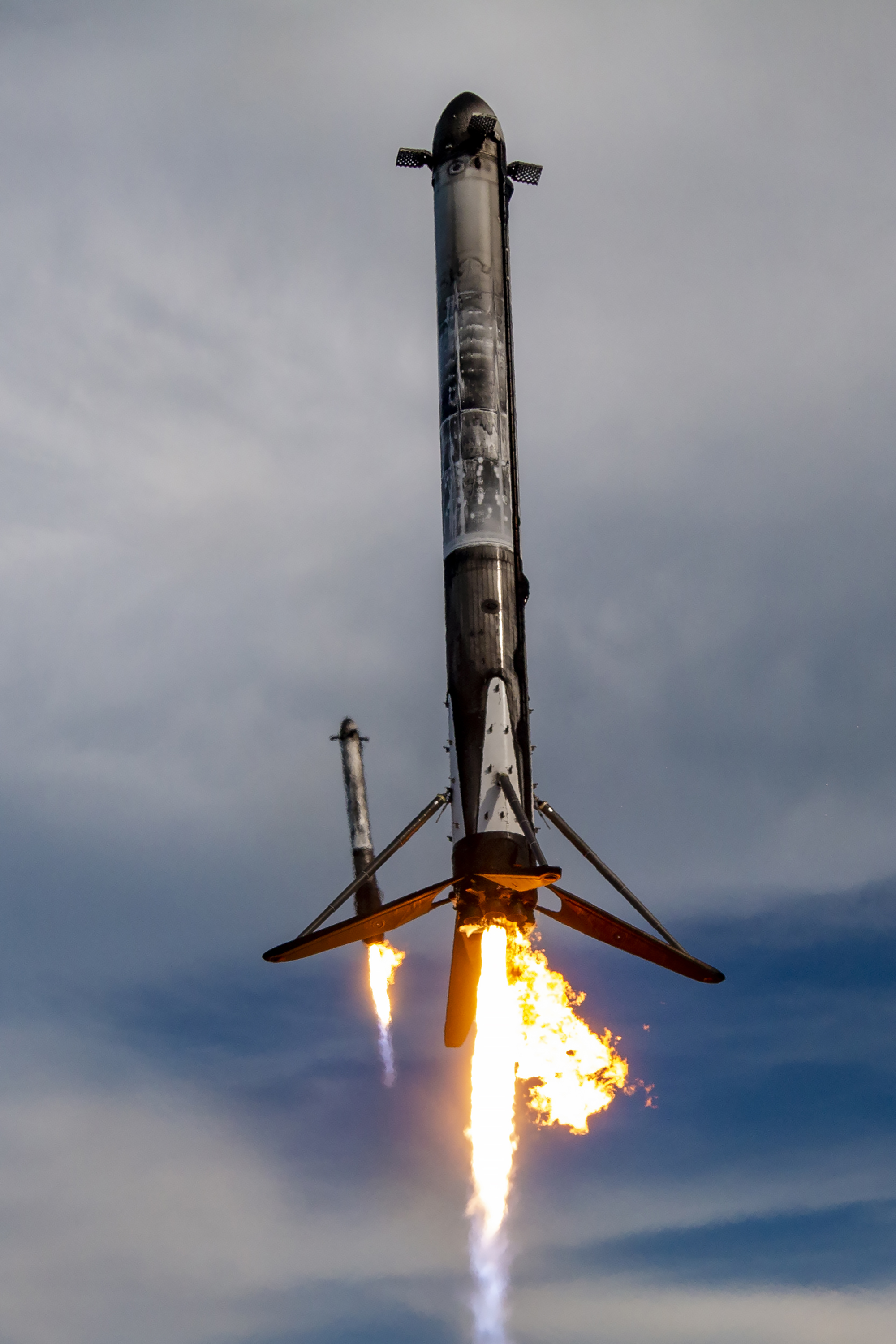
Falcon Heavy - B1072
Details
Status - Active
Falcon Heavy side booster first flown during the GOES-U mission.
Upcoming Spaceflights
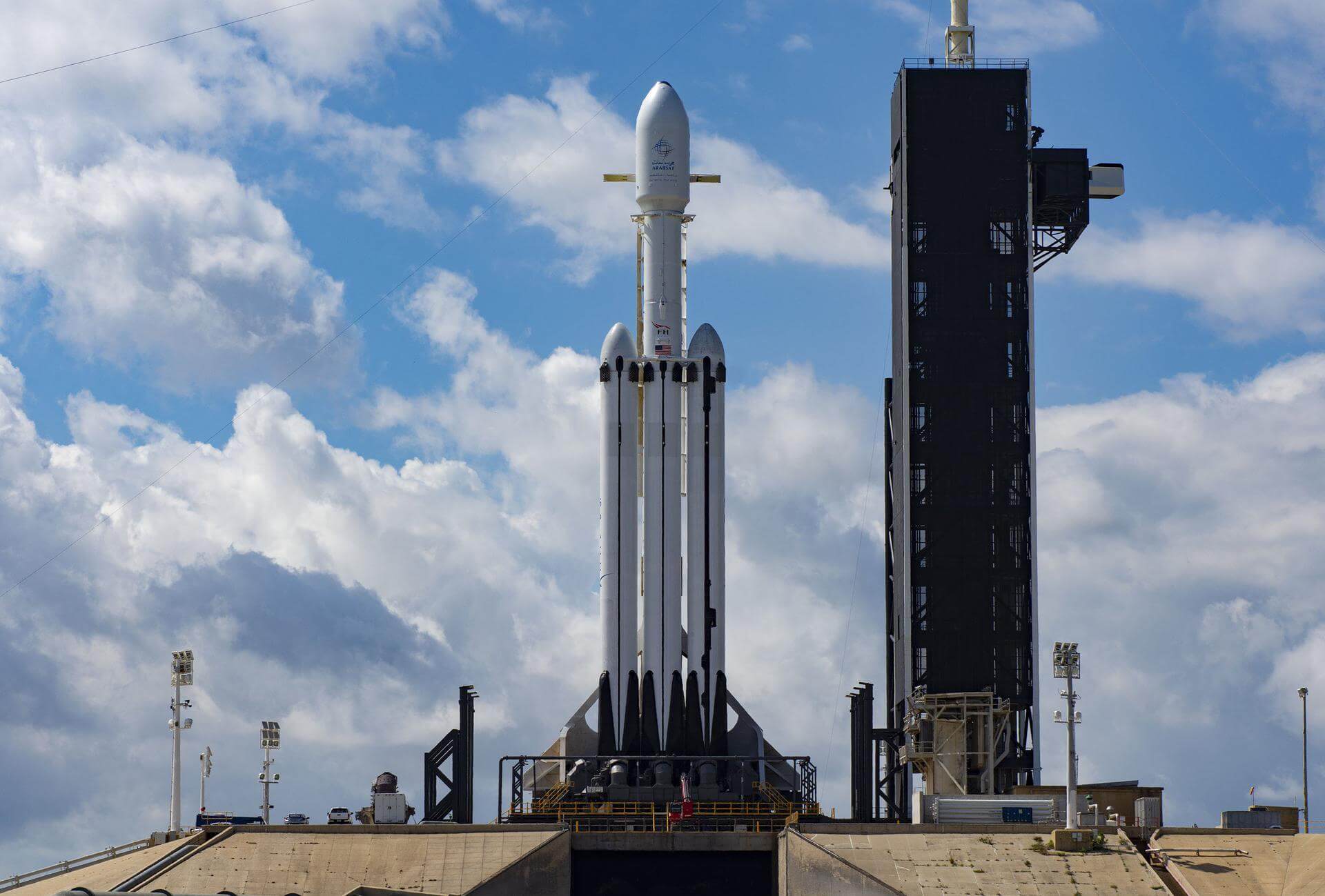
Falcon Heavy | NROL-97
SpaceX | United States of AmericaKennedy Space Center, FL, USA
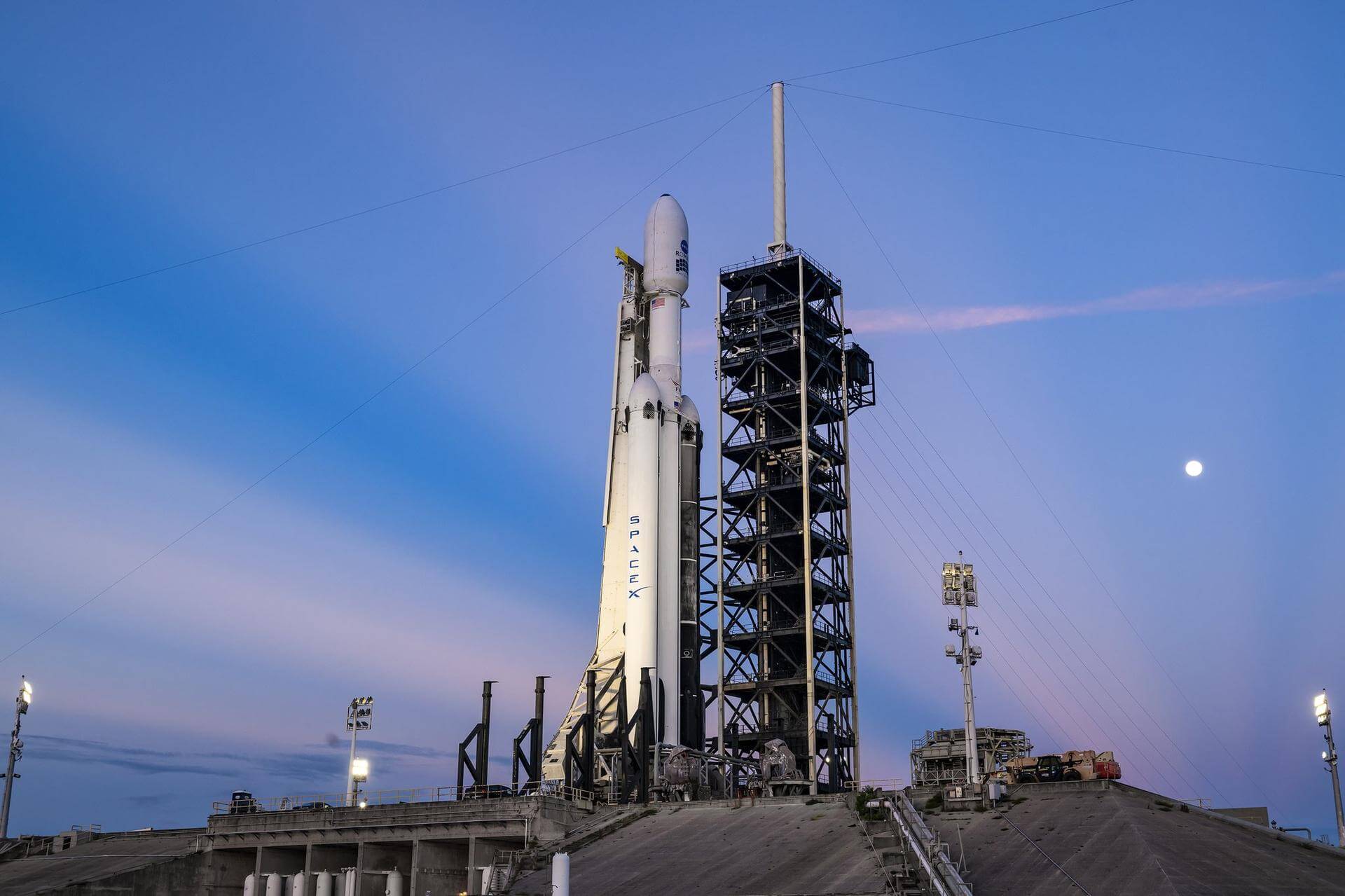
Falcon Heavy | Nancy Grace Roman Space Telescope
SpaceX | United States of AmericaKennedy Space Center, FL, USA
Status: Launch Successful
Mission:
The Nancy Grace Roman Space Telescope is a NASA infrared space telescope with a 2.4 m (7.9 ft) wide field of view primary mirror and two scientific instruments. The Wide-Field Instrument (WFI) is a 300.8-megapixel multi-band visible and near-infrared camera, providing a sharpness of images comparable to that achieved by the Hubble Space Telescope over a 0.28 square degree field of view, 100 times larger than imaging cameras on the Hubble. The Coronagraphic Instrument (CGI) is a high-contrast, small field of view camera and spectrometer covering visible and near-infrared wavelengths using novel starlight-suppression technology. Roman objectives include a search for extra-solar planets using gravitational microlensing, and probing the expansion history of the Universe and the growth of cosmic structure, with the goal of measuring the effects of dark energy, the consistency of general relativity, and the curvature of spacetime.
Sun-Earth L2 B1104 - Maiden Flight Landing Zone 40 B1072 - Flight Proven ( ) Landing Zone 2 B1105 - Maiden Flight Atlantic Ocean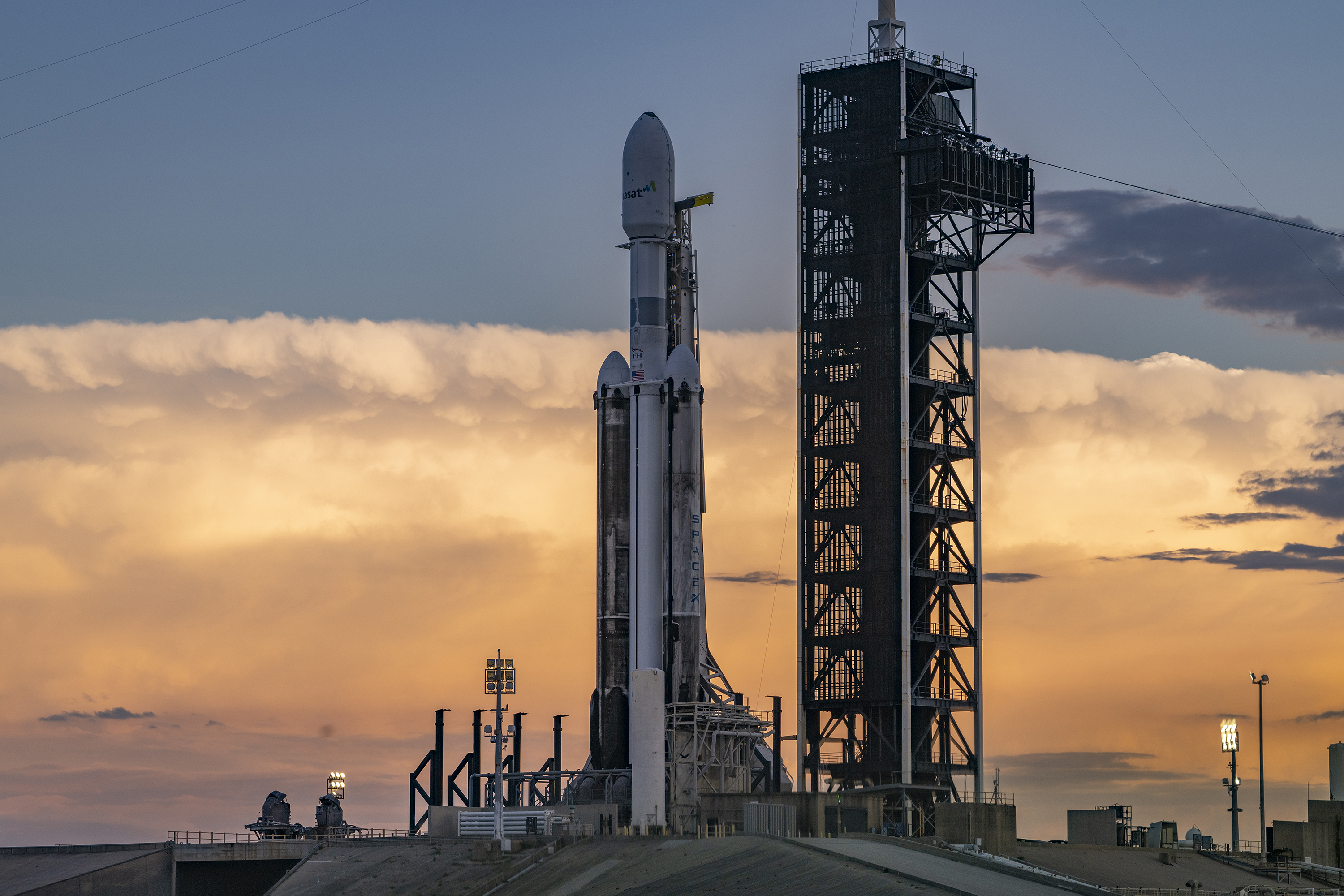
Falcon Heavy | ViaSat-3 F3 (ViaSat-3 Asia-Pacific)
SpaceX | United States of AmericaKennedy Space Center, FL, USA
Status: Launch Successful
Mission:
The ViaSat-3 is a series of three Ka-band satellites is expected to provide vastly superior capabilities in terms of service speed and flexibility for a satellite platform. Each ViaSat-3 class satellite is expected to deliver more than 1-Terabit per second of network capacity, and to leverage high levels of flexibility to dynamically direct capacity to where customers are located.
Geostationary Transfer Orbit B1072 - Flight Proven ( ) Landing Zone 2 B1075 - Flight Proven ( ) Landing Zone 40 B1098 - Maiden Flight Atlantic Ocean
Falcon Heavy | GOES-U
SpaceX | United States of AmericaKennedy Space Center, FL, USA
Status: Launch Successful
Mission:
The Geostationary Operational Environmental Satellite-U (GOES-U) is the fourth of the next generation of geostationary weather satellites, known as the GOES-R series. The four satellites of the series provide advanced imaging with increased spatial resolution and faster coverage for more accurate forecasts, real-time mapping of lightning activity, and improved monitoring of solar activity. Once GOES-U reaches orbit, it will be renamed GOES-19.
Geostationary Transfer Orbit B1086 - Maiden Flight Landing Zone 2 B1072 - Maiden Flight Landing Zone 1 B1087 - Maiden Flight Atlantic OceanLong March 2D
PIESAT-2 13-16
Launch Complex 9 - Taiyuan Satellite Launch Center, People's Republic of China4 X-band synthetic-aperture radar Earth observation satellites for the Chinese Earth observation satellite company PIESAT.
Electron
Owl By The Dozen (StriX Launch 12)
Rocket Lab Launch Complex 1B - Rocket Lab Launch Complex 1, Mahia Peninsula, New ZealandSynthetic aperture radar satellite for Japanese Earth imaging company Synspective.
Soyuz 2.1b/Fregat-M
Glonass-K1 No. 20 (?)
43/3 (43L) - Plesetsk Cosmodrome, Russian FederationNote: Satellite serial number and Cosmos designation not confirmed. Glonass-K are the third generation of satellite design for GLONASS satellite n…
Kuaizhou 11
SpaceTY-51 & 52
Launch Area 95A - Jiuquan Satellite Launch Center, People's Republic of China2 Earth observation radar satellites built by the Chinese satellite manufacturer SpaceTY.
Falcon 9
USSF-259
Space Launch Complex 4E - Vandenberg SFB, CA, USAUSSF-259 is a classified mission for the United States Space Force. It is possibly a batch of classified LEO satellites based on SpaceX’s Starshield …

