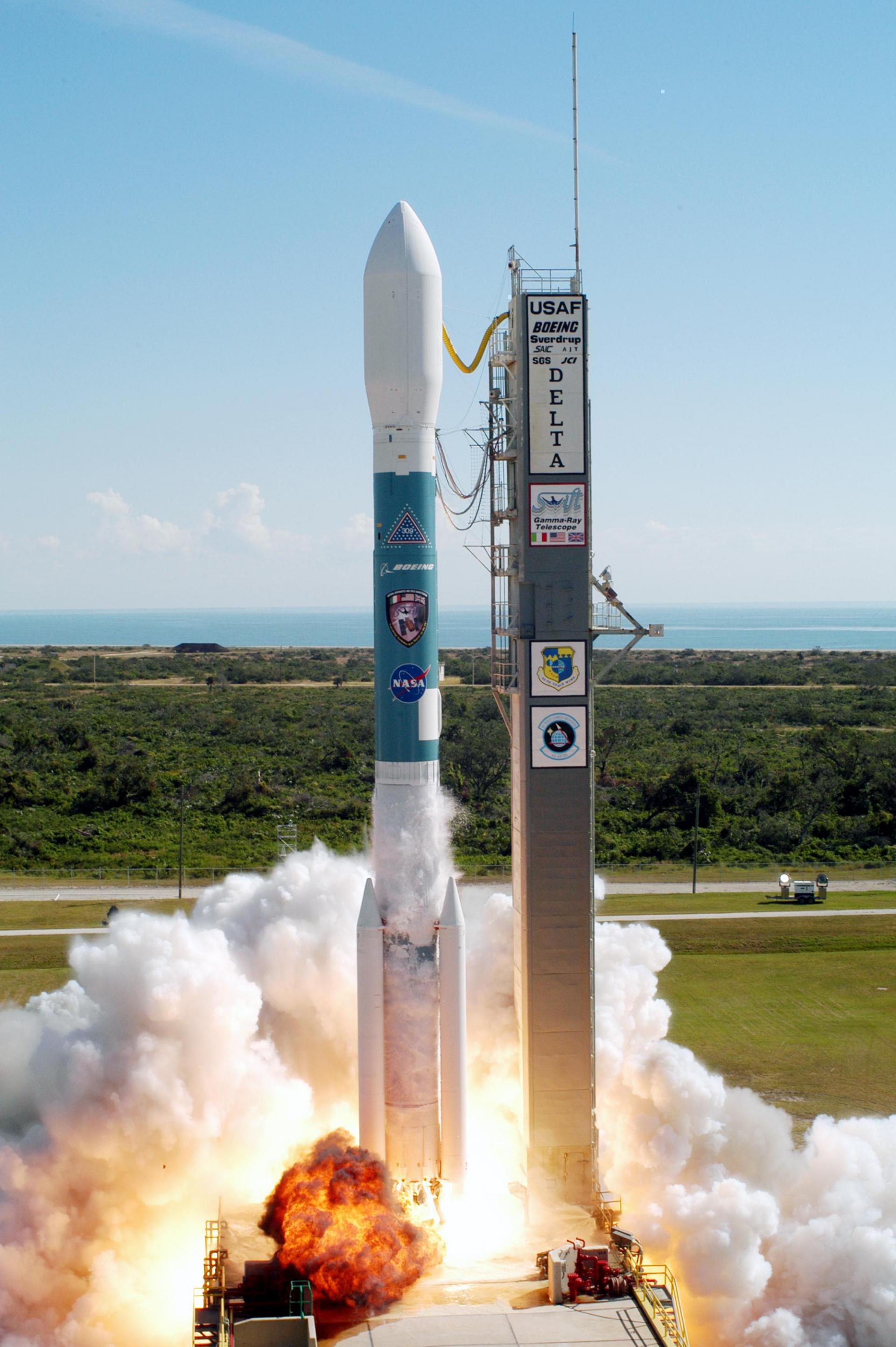
Delta II
In-activeUnited Launch Alliance (ULA)
Nov. 20, 2004
Description
Delta II is an American space launch system developed by McDonnell Douglas, now part of the Delta rocket family operated by United Launch Alliance. With more than 150 missions and a nearly perfect track record, Delta II has established itself as one of the most successful orbital launch systems.
Specifications
-
Stages
2 -
Length
38.9 m -
Diameter
2.44 m -
Fairing Diameter
3.0 m -
Launch Mass
168.0 T -
Thrust
―
Family
-
Name
Delta II -
Family
― -
Variant
7320-10C -
Alias
― -
Full Name
Delta II 7320-10C
Payload Capacity
-
Launch Cost
$51000000 -
Low Earth Orbit
2800.0 kg -
Geostationary Transfer
Orbit
― -
Direct Geostationary
― -
Sun-Synchronous Capacity
1651.0 kg
United Launch Alliance
Commercial
Interim CEO: John Elbon
ULA 2006United Launch Alliance (ULA) is a joint venture of Lockheed Martin Space Systems and Boeing Defense, Space & Security. ULA was formed in December 2006 by combining the teams at these companies which provide spacecraft launch services to the government of the United States. ULA launches from both coasts of the US. They launch their Atlas V vehicle from LC-41 in Cape Canaveral and LC-3E at Vandeberg. Their Delta IV launches from LC-37 at Cape Canaveral and LC-6 at Vandenberg.
Delta II 7320-10C | SMAP, FIREBIRD II A, FIREBIRD II B, GRIFEX, ExoCube
United Launch Alliance | United States of AmericaVandenberg SFB, CA, USA
Jan. 31, 2015, 2:22 p.m.
Delta II 7320-10C | OCO-2
United Launch Alliance | United States of AmericaVandenberg SFB, CA, USA
July 2, 2014, 9:56 a.m.
Delta II 7320-10C | WISE
United Launch Alliance | United States of AmericaVandenberg SFB, CA, USA
Dec. 14, 2009, 2:09 p.m.
Delta II 7320-10C | NOAA-19 (NOAA N)
United Launch Alliance | United States of AmericaVandenberg SFB, CA, USA
Feb. 6, 2009, 10:22 a.m.
Delta II | NOAA 18
United Launch Alliance | United States of AmericaVandenberg SFB, CA, USA
May 20, 2005, 10:22 a.m.
Status: Launch Successful
Mission:
NOAA-18, known before launch as NOAA-N, is a weather forecasting satellite run by NOAA. NOAA-N (18) was launched on May 20, 2005, into a sun-synchronous orbit at an altitude of 854 km above the Earth, with an orbital period of 102 minutes. It hosts the AMSU-A, MHS, AVHRR, Space Environment Monitor SEM/2 instrument and High Resolution Infrared Radiation Sounder (HIRS) instruments, as well as the SBUV/2 ozone-monitoring instrument. It is the first NOAA POES satellite to use MHS in place of AMSU-B. NOAA-18 also hosts Cospas-Sarsat payloads.
Sun-Synchronous Orbit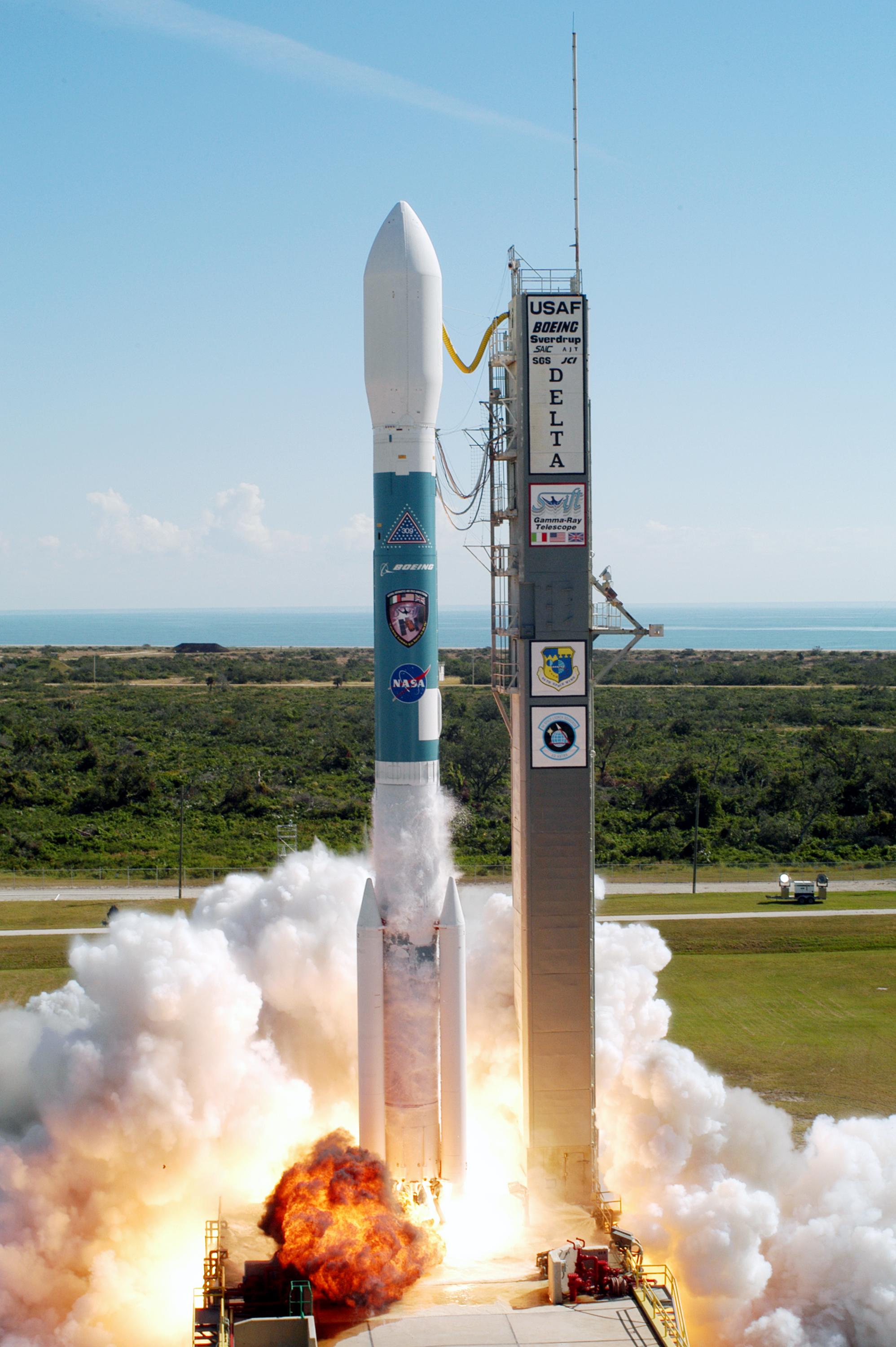
Delta II | Swift
United Launch Alliance | United States of AmericaCape Canaveral SFS, FL, USA
Nov. 20, 2004, 5:16 p.m.
Falcon 9
Starlink Group 10-38
Space Launch Complex 40 - Cape Canaveral SFS, FL, USAA batch of 29 satellites for the Starlink mega-constellation - SpaceX's project for space-based Internet communication system.
Soyuz-5
Demo Flight
45/1 - Baikonur Cosmodrome, Republic of KazakhstanDemonstration Flight for Russia's new Soyuz-5 launch vehicle, with a mass simulator on board. The launch was suborbital with the simulator splashing …
Ariane 64
Amazon Leo (LE-02)
Ariane Launch Area 4 - Guiana Space Centre, French GuianaAmazon Leo, formerly known as Project Kuiper, is a mega constellation of satellites in Low Earth Orbit that will offer broadband internet access, thi…
Falcon 9
Starlink Group 17-36
Space Launch Complex 4E - Vandenberg SFB, CA, USAA batch of 24 satellites for the Starlink mega-constellation - SpaceX's project for space-based Internet communication system.
Falcon Heavy
ViaSat-3 F3 (ViaSat-3 Asia-Pacific)
Launch Complex 39A - Kennedy Space Center, FL, USAThe ViaSat-3 is a series of three Ka-band satellites is expected to provide vastly superior capabilities in terms of service speed and flexibility fo…

