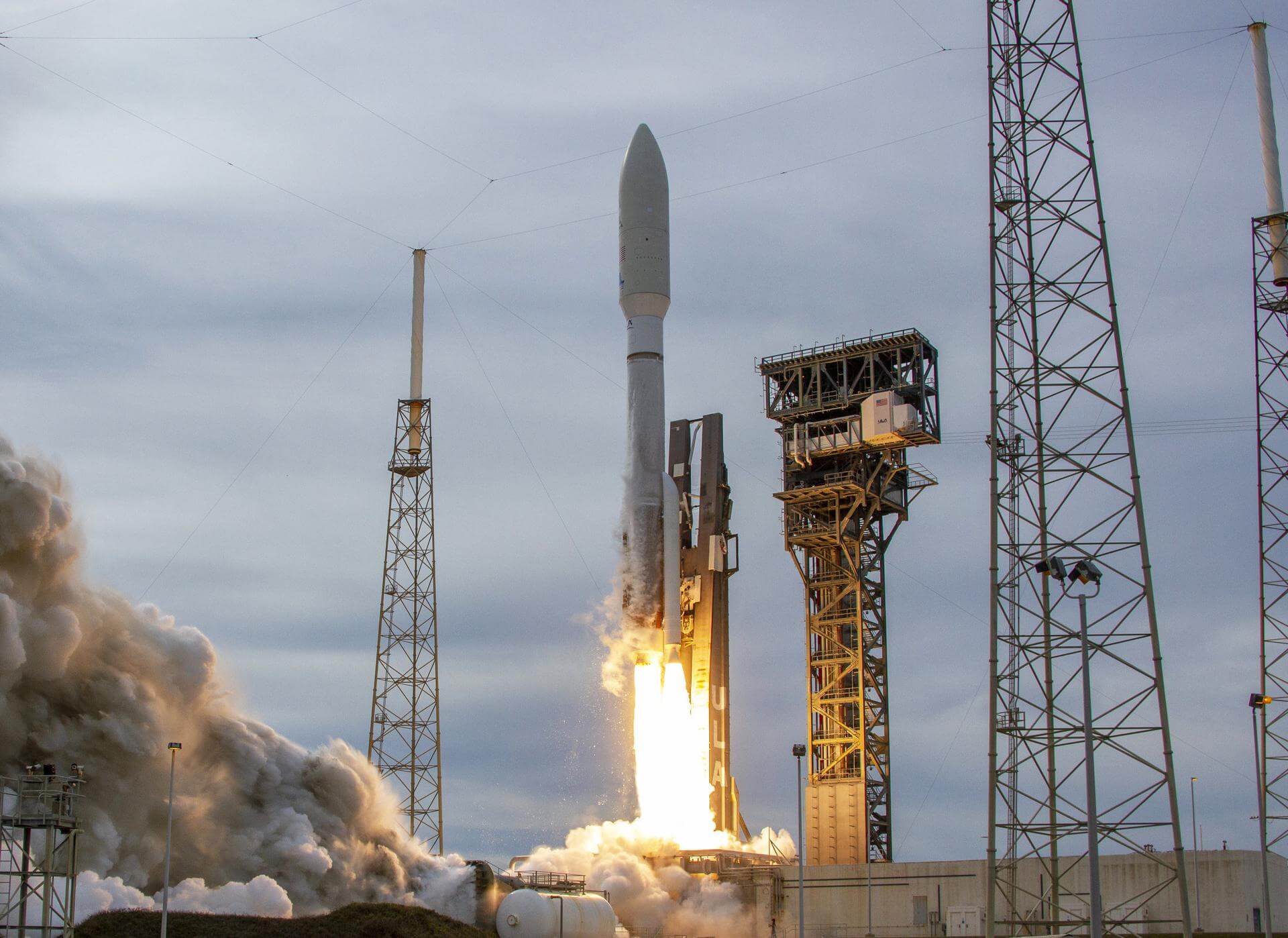
Atlas V 511
In-activeUnited Launch Alliance (ULA)
Jan. 21, 2022
Description
Atlas V is an expendable launch system in the Atlas rocket family. It was formerly operated by Lockheed Martin and is now operated by United Launch Alliance (ULA), a joint venture with Boeing. Each Atlas V rocket uses a Russian-built RD-180 engine burning kerosene and liquid oxygen to power its first stage and an American-built RL10 engine burning liquid hydrogen and liquid oxygen to power its Centaur upper stage. The RD-180 engines are provided by RD Amross, while Aerojet Rocketdyne provides both the RL10 engines and the strap-on boosters used in some configurations. The 511 version uses a 5m wide fairing, 1 solid rocket booster and one engine on the Centaur stage.
Specifications
-
Stages
2 -
Length
58.3 m -
Diameter
3.81 m -
Fairing Diameter
5.4 m -
Launch Mass
590.0 T -
Thrust
5490.0 kN
Family
-
Name
Atlas V 511 -
Family
― -
Variant
511 -
Alias
― -
Full Name
Atlas V 511
Payload Capacity
-
Launch Cost
$130000000 -
Low Earth Orbit
10986.0 kg -
Geostationary Transfer
Orbit
5250.0 kg -
Direct Geostationary
― -
Sun-Synchronous Capacity
―
United Launch Alliance
Commercial
CEO: Mark Peller
ULA 2006United Launch Alliance (ULA) is a joint venture of Lockheed Martin Space Systems and Boeing Defense, Space & Security. ULA was formed in December 2006 by combining the teams at these companies which provide spacecraft launch services to the government of the United States. ULA launches from both coasts of the US. They launch their Atlas V vehicle from LC-41 in Cape Canaveral and LC-3E at Vandeberg. Their Delta IV launches from LC-37 at Cape Canaveral and LC-6 at Vandenberg.
Atlas V 511 | USSF-8
United Launch Alliance | United States of AmericaCape Canaveral SFS, FL, USA
Status: Launch Successful
Mission:
USSF-8 will launch two identical Geosynchronous Space Situational Awareness Program (GSSAP) satellites GSSAP-5 and GSSAP-6 directly to a near-geosynchronous orbit approximately 36,000 km above the equator. Data from the GSSAP will uniquely contribute to timely and accurate orbital predictions, further enabling space flight safety including satellite collision avoidance. Unique to this mission is the first and only planned flight of the Atlas V 511 configuration.
Geosynchronous OrbitKinetica 1
9 satellites
Launch Area 130 - Jiuquan Satellite Launch Center, People's Republic of ChinaShare-ride of 9 commercial Earth observation and technology demonstration satellites to SSO, details TBD.
Falcon 9
Starlink Group 15-27
Space Launch Complex 4E - Vandenberg SFB, CA, USAA batch of 27 satellites for the Starlink mega-constellation - SpaceX's project for space-based Internet communication system.
Long March 2D
PIESAT-2 13-16
Launch Complex 9 - Taiyuan Satellite Launch Center, People's Republic of China4 X-band synthetic-aperture radar Earth observation satellites for the Chinese Earth observation satellite company PIESAT.
Electron
Owl By The Dozen (StriX Launch 12)
Rocket Lab Launch Complex 1B - Rocket Lab Launch Complex 1, Mahia Peninsula, New ZealandSynthetic aperture radar satellite for Japanese Earth imaging company Synspective.
Soyuz 2.1b/Fregat-M
Glonass-K1 No. 20 (?)
43/3 (43L) - Plesetsk Cosmodrome, Russian FederationNote: Satellite serial number and Cosmos designation not confirmed. Glonass-K are the third generation of satellite design for GLONASS satellite n…

