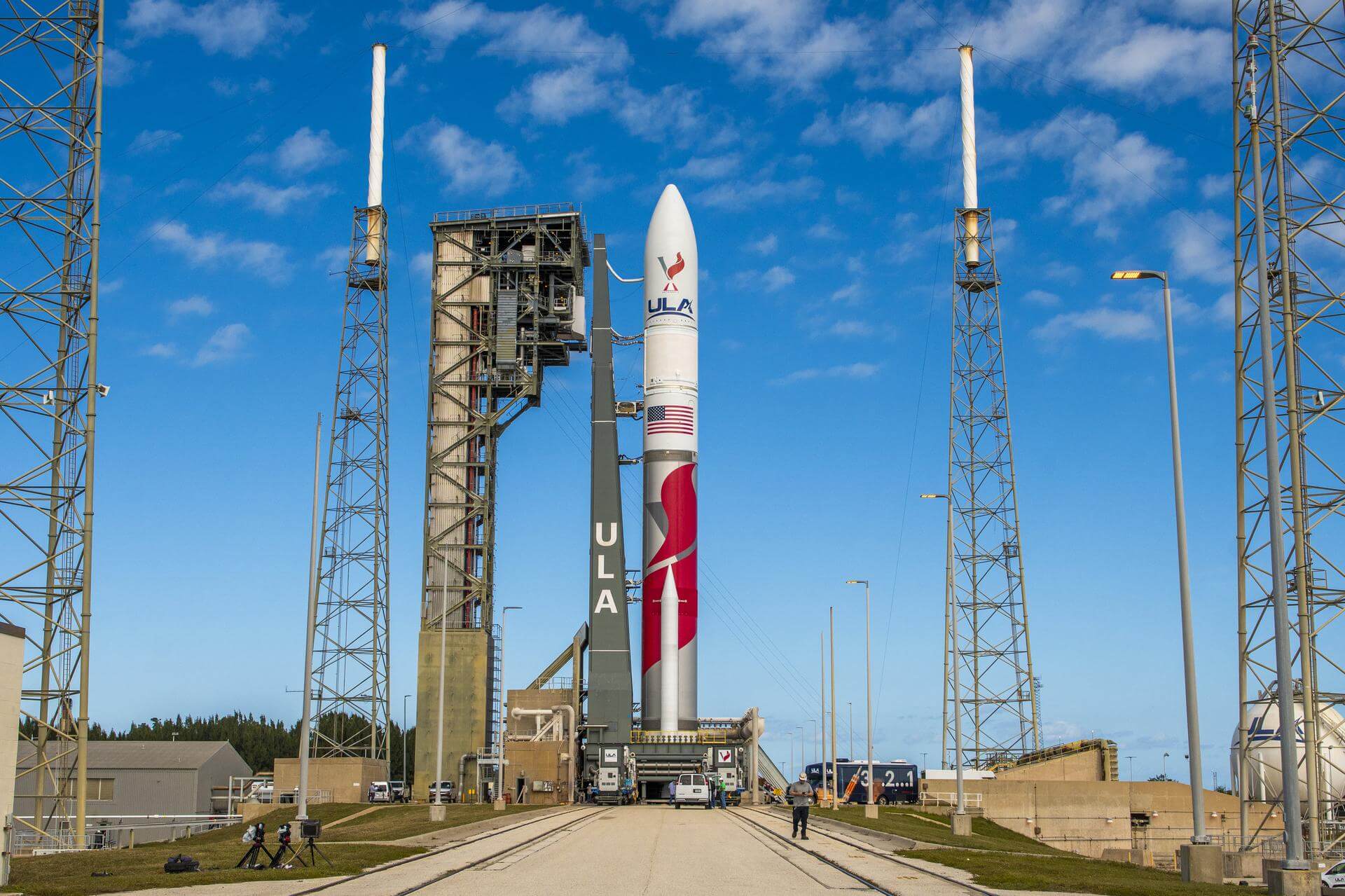
Vulcan VC2S
ActiveUnited Launch Alliance (ULA)
Jan. 8, 2024
Description
Vulcan Centaur is a two-stage-to-orbit, heavy-lift launch vehicle under development by United Launch Alliance (ULA) since 2014. It is principally designed to meet launch demands for the U.S. government's National Security Space Launch (NSSL) program for use by the United States Space Force and U.S. intelligence agencies for national security satellite launches. It will replace both of ULA's existing launchers (Atlas V and Delta IV Heavy) in this role, as these launchers are retiring.
Specifications
-
Stages
2 -
Length
61.6 m -
Diameter
5.4 m -
Fairing Diameter
5.4 m -
Launch Mass
663.0 T -
Thrust
9303.0 kN
Family
-
Name
Vulcan VC2S -
Family
― -
Variant
VC2S -
Alias
― -
Full Name
Vulcan VC2S
Payload Capacity
-
Launch Cost
― -
Low Earth Orbit
19000.0 kg -
Geostationary Transfer
Orbit
8400.0 kg -
Direct Geostationary
2600.0 kg -
Sun-Synchronous Capacity
15200.0 kg
United Launch Alliance
Commercial
CEO: Mark Peller
ULA 2006United Launch Alliance (ULA) is a joint venture of Lockheed Martin Space Systems and Boeing Defense, Space & Security. ULA was formed in December 2006 by combining the teams at these companies which provide spacecraft launch services to the government of the United States. ULA launches from both coasts of the US. They launch their Atlas V vehicle from LC-41 in Cape Canaveral and LC-3E at Vandeberg. Their Delta IV launches from LC-37 at Cape Canaveral and LC-6 at Vandenberg.
Upcoming Spaceflights
Vulcan VC2S | GPS IIIF SV04 (USSF-88)
United Launch Alliance | United States of AmericaCape Canaveral SFS, FL, USA
Vulcan VC2S | Certification Flight 2
United Launch Alliance | United States of AmericaCape Canaveral SFS, FL, USA
Status: Launch Successful
Mission:
Replacement Vulcan test launch with inert payload, experiments, and demonstrations for certification with the USSF after delays caused by payload testing of the Sierra Space Dreamchaser CRS SNC-1 mission, the original planned payload. One of the GEM-63XL SRBs was observed to blown out its booster nozzle at T+37 seconds, causing reduced and asymmetric thrust during ascent, however the performance shortfall was fully compensated by Vulcan's other stages.
Heliocentric N/A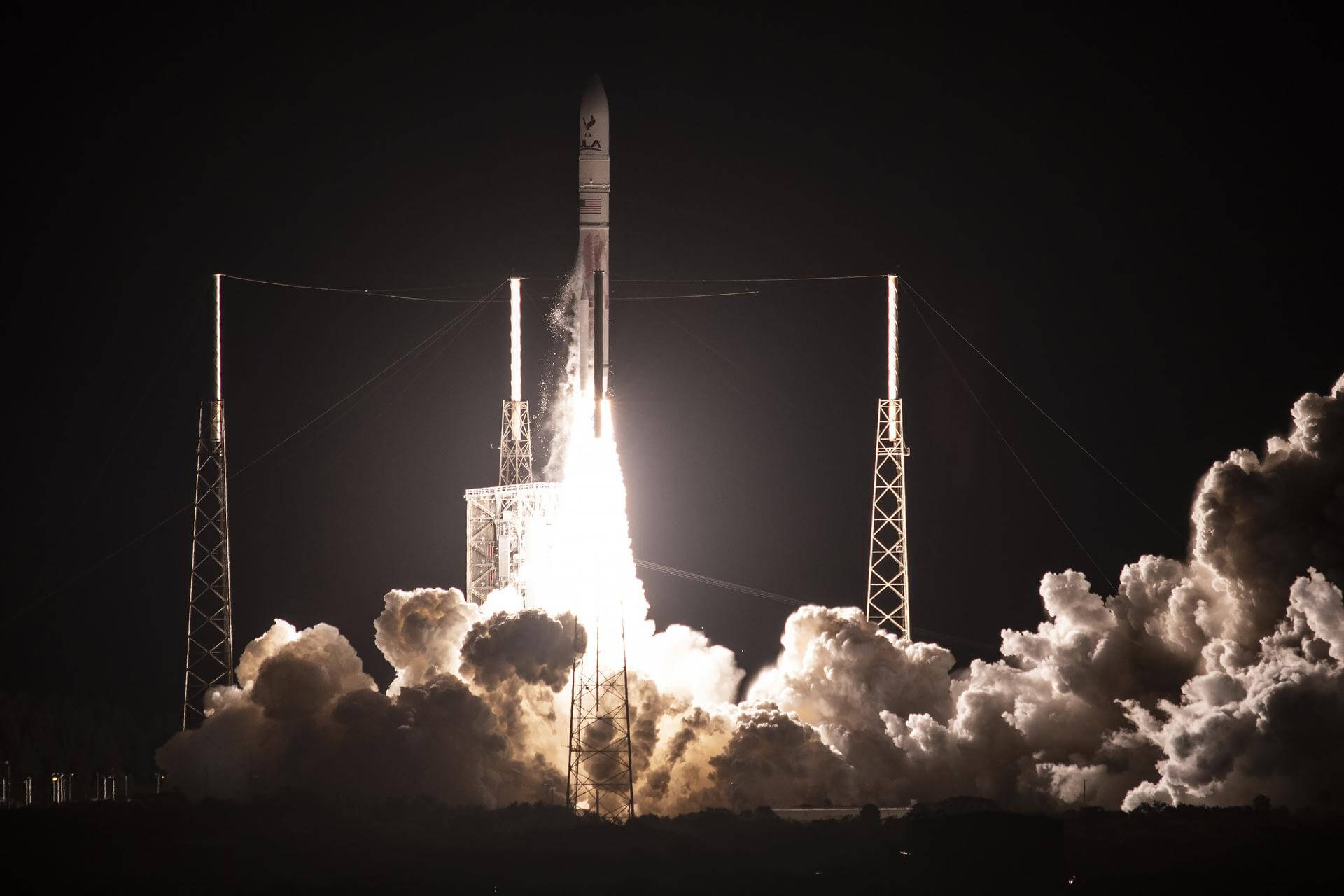
Vulcan VC2S | Peregrine lunar lander (Maiden flight)
United Launch Alliance | United States of AmericaCape Canaveral SFS, FL, USA
Status: Launch Successful
Mission:
Maiden flight of ULA's Vulcan launch vehicle carrying the Peregrine lunar lander developed by Astrobotic Technology. Astrobotic was selected by NASA’s Commercial Lunar Payload Services (CLPS) program to deliver up to 14 NASA payloads to the Moon on its Peregrine lunar lander in 2022.
Lunar OrbitLong March 2D
PIESAT-2 13-16
Launch Complex 9 - Taiyuan Satellite Launch Center, People's Republic of China4 X-band synthetic-aperture radar Earth observation satellites for the Chinese Earth observation satellite company PIESAT.
Electron
Owl By The Dozen (StriX Launch 12)
Rocket Lab Launch Complex 1B - Rocket Lab Launch Complex 1, Mahia Peninsula, New ZealandSynthetic aperture radar satellite for Japanese Earth imaging company Synspective.
Soyuz 2.1b/Fregat-M
Glonass-K1 No. 20 (?)
43/3 (43L) - Plesetsk Cosmodrome, Russian FederationNote: Satellite serial number and Cosmos designation not confirmed. Glonass-K are the third generation of satellite design for GLONASS satellite n…
Kuaizhou 11
SpaceTY-51 & 52
Launch Area 95A - Jiuquan Satellite Launch Center, People's Republic of China2 Earth observation radar satellites built by the Chinese satellite manufacturer SpaceTY.
Falcon 9
USSF-259
Space Launch Complex 4E - Vandenberg SFB, CA, USAUSSF-259 is a classified mission for the United States Space Force. It is possibly a batch of classified LEO satellites based on SpaceX’s Starshield …

