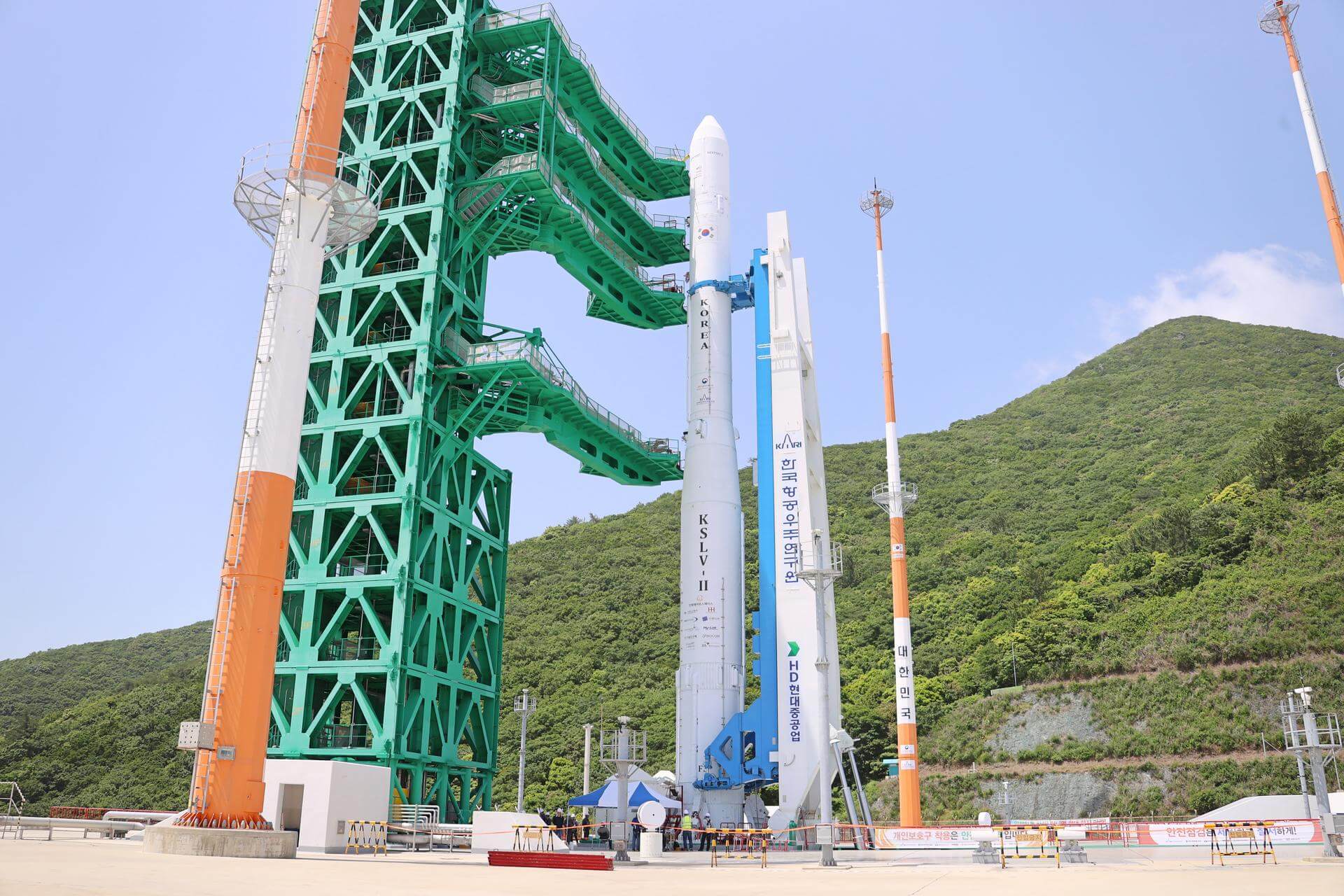
Nuri
ActiveKorea Aerospace Research Institute (KARI)
Oct. 21, 2021
Description
Nuri, also known as KSLV-II, is South Korea's second carrier rocket and the successor to KSLV-1.
Specifications
-
Stages
3 -
Length
47.2 m -
Diameter
3.5 m -
Fairing Diameter
3.5 m -
Launch Mass
200.0 T -
Thrust
2612.0 kN
Family
-
Name
Nuri -
Family
― -
Variant
2 -
Alias
― -
Full Name
KSLV-2 Nuri
Payload Capacity
-
Launch Cost
― -
Low Earth Orbit
2600.0 kg -
Geostationary Transfer
Orbit
― -
Direct Geostationary
― -
Sun-Synchronous Capacity
―
Korea Aerospace Research Institute
Government
Administrator: Lee Sang-Ryool
KARI 1989The Korea Aerospace Research Institute (KARI) established in 1989, is the aeronautics and space agency of Republic of Korea. Its main laboratories are located in Daejeon, in the Daedeok Science Town.
Upcoming Spaceflights
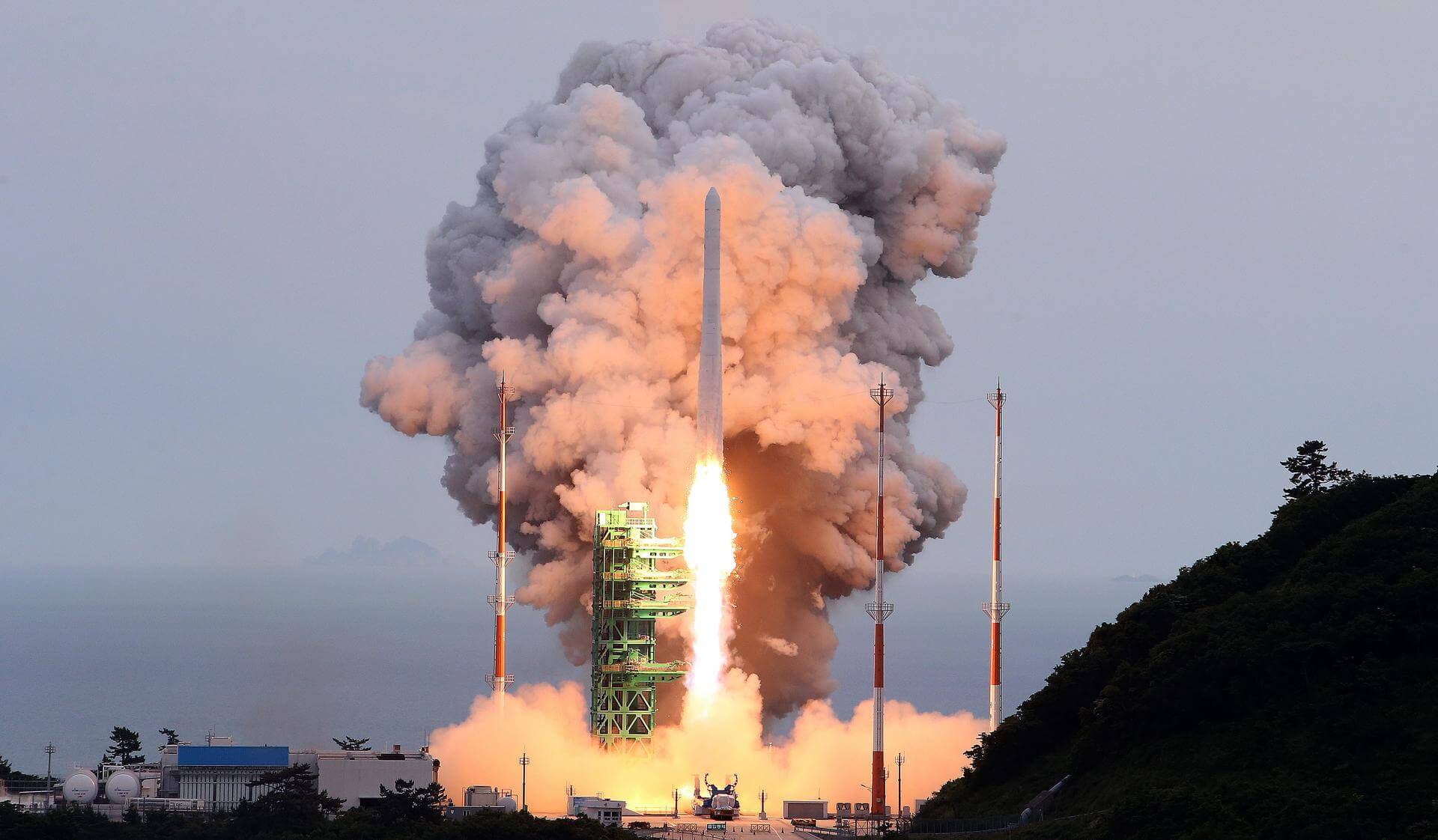
Nuri | NeonSat-2 to 6
Korea Aerospace Research Institute | South KoreaNaro Space Center, South Korea
TBD September, 2026
Status: To Be Determined
Mission:
NeonSat-2 to 6 are part of the South Korean government's Earth observation micro-satellite constellation NeonSat (New-space Earth Observation Satellite). The NeonSat constellation is the first satellite system developed by the government using a mass-production approach for precise monitoring of the Korean Peninsula.
Sun-Synchronous OrbitNuri | NeonSat-7 to 11
Korea Aerospace Research Institute | South KoreaNaro Space Center, South Korea
TBD December, 2027
Status: To Be Determined
Mission:
NeonSat-7 to 11 are part of the South Korean government's Earth observation micro-satellite constellation NeonSat (New-space Earth Observation Satellite). The NeonSat constellation is the first satellite system developed by the government using a mass-production approach for precise monitoring of the Korean Peninsula.
Sun-Synchronous OrbitNuri | CAS500-3
Korea Aerospace Research Institute | South KoreaNaro Space Center, South Korea
Nov. 26, 2025, 4:13 p.m.
Nuri | NEXTSat-2 & SNIPE
Korea Aerospace Research Institute | South KoreaNaro Space Center, South Korea
May 25, 2023, 9:24 a.m.
Nuri | Flight Test 2
Korea Aerospace Research Institute | South KoreaNaro Space Center, South Korea
June 21, 2022, 7 a.m.
Status: Launch Successful
Mission:
Second flight of the KSLV-II "Nuri" launch vehicle, carrying a dummy satellite Payload of 1500 kg to sun-synchronous orbit. The mission will in addition launch the performance verification satellite (PVSAT) and four Cubesats: - CubeSat (6U) STEP Cube Lab-II - CubeSat (3U) SNUGLITE-II - CubeSat (3U) MIMAN - CubeSat (3U) RANDEV
Sun-Synchronous OrbitNuri | Flight Test
Korea Aerospace Research Institute | South KoreaNaro Space Center, South Korea
Oct. 21, 2021, 8 a.m.
Falcon 9
Starlink Group 10-33
Space Launch Complex 40 - Cape Canaveral SFS, FL, USAA batch of 29 satellites for the Starlink mega-constellation - SpaceX's project for space-based Internet communication system.
Falcon 9
Starlink Group 10-46
Space Launch Complex 40 - Cape Canaveral SFS, FL, USAA batch of 29 satellites for the Starlink mega-constellation - SpaceX's project for space-based Internet communication system.
Falcon 9
Starlink Group 17-24
Space Launch Complex 4E - Vandenberg SFB, CA, USAA batch of 25 satellites for the Starlink mega-constellation - SpaceX's project for space-based Internet communication system.
Kuaizhou 11
8 satellites
Launch Area 95A - Jiuquan Satellite Launch Center, People's Republic of ChinaRide-share launch of 8 satellites to sun-synchronous orbit: * Juntian-1-04A * Dongpo-11 * Dongpo-12 * Dongpo-16 * Weitong-1-01 * Xiguang-1-06…
Long March 6A
Yaogan 50-02
Launch Complex 9A - Taiyuan Satellite Launch Center, People's Republic of ChinaThe Yaogan 50-02 is a Chinese military “remote sensing” satellite of unknown purposes.

