Starship | Flight 10
Launch Successful
L - -- : -- : -- : --
Launch Window
-


-
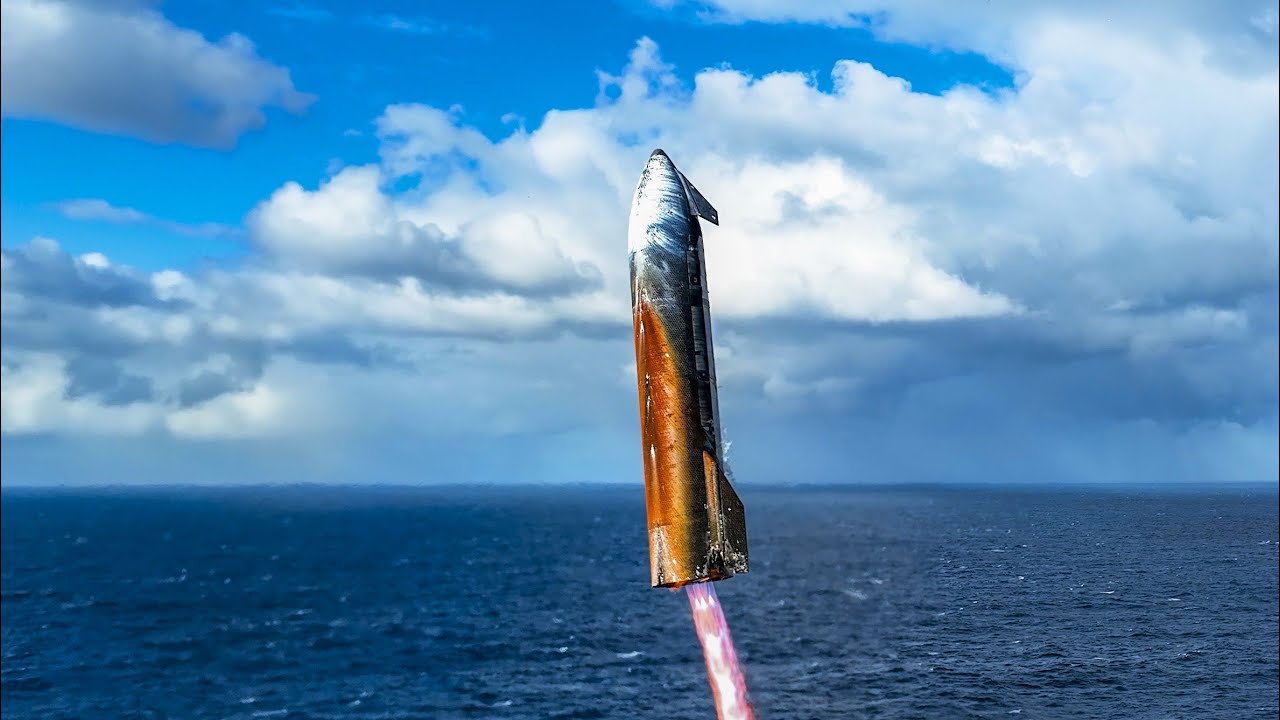
10th test flight of the two-stage Starship launch vehicle.
Launch trajectory and telemetry simulations provided by Flight Club - a rocket launch simulator and orbital trajectory visualiser for all things space!

Mission completed.
Liftoff.

Unofficial Re-stream by SPACE AFFAIRS has started
Confirmed rescheduled for NET August 26.
Scrubbed for the day due to launch site weather.
Second development version of the Starship reusable two-stage super heavy-lift launch vehicle.
See DetailsThe Super Heavy Booster 16 has made a planned splashdown near the launch site.
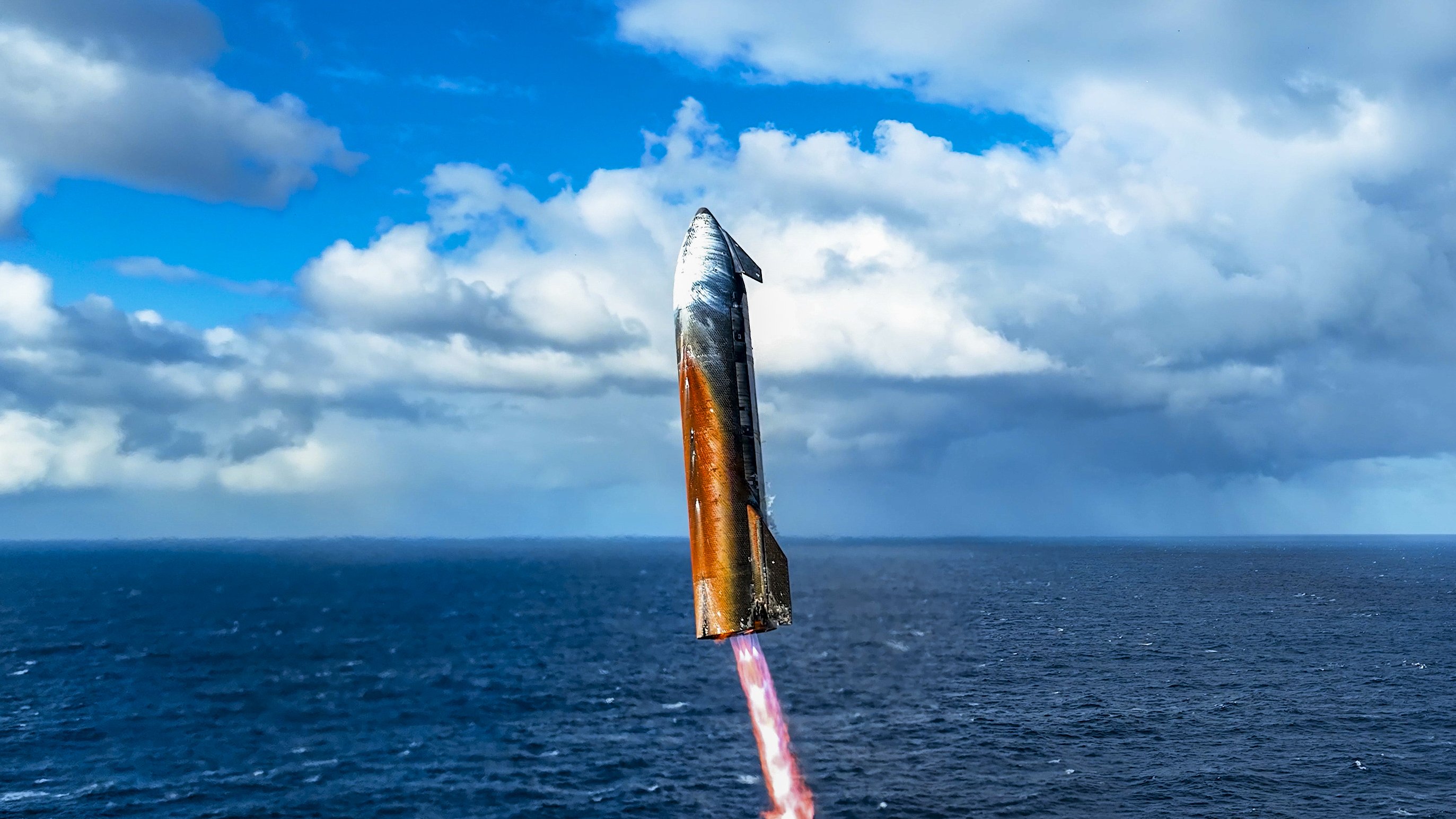
Result: Successful Ocean landing at Gulf of Mexico.Ship 37 (S37) is the 2nd stage vehicle that was used for the 10th Starship flight test. It is the 5th "Block 2" Starship spacecraft with lengthened propellant tanks and forward flaps with a new design, among other enhancements.
Starship V2 DetailsSpace Exploration Technologies Corp., known as SpaceX, is an American aerospace manufacturer and space transport services company headquartered in Hawthorne, California. It was founded in 2002 by entrepreneur Elon Musk with the goal of reducing space transportation costs and enabling the colonization of Mars. SpaceX operates from many pads, on the East Coast of the US they operate from SLC-40 at Cape Canaveral Space Force Station and historic LC-39A at Kennedy Space Center. They also operate from SLC-4E at Vandenberg Space Force Base, California, usually for polar launches. Another launch site is being developed at Boca Chica, Texas.
INFO WIKI
SpaceX’s Starship-Super Heavy launch vehicle completed its tenth flight test on Tuesday, August 26, 2025, marking this milestone with a resoundingly successful mission.

SpaceX has had a long journey through 10 flight tests of Starship. Teams have endured… The post Ten flights in, the Starship Program has had successes and failures appeared first on NASASpaceFlight.com.
"Nobody’s waving the white flag here until the last hour of the last day."
"The latest upgrades are looking good!"

Going into Flight 10, SpaceX was having a down year with the Starship program. Following… The post The Starship Program rises from the ashes of Block 2 with Ship 37 appeared first on NASASpaceFlight.com.
A batch of 27 satellites for the Starlink mega-constellation - SpaceX's project for space-based Internet communication system.
4 X-band synthetic-aperture radar Earth observation satellites for the Chinese Earth observation satellite company PIESAT.
Synthetic aperture radar satellite for Japanese Earth imaging company Synspective.
Note: Satellite serial number and Cosmos designation not confirmed. Glonass-K are the third generation of satellite design for GLONASS satellite n…
2 Earth observation radar satellites built by the Chinese satellite manufacturer SpaceTY.
USSF-259 is a classified mission for the United States Space Force. It is possibly a batch of classified LEO satellites based on SpaceX’s Starshield …
A batch of 9 Low Earth Orbit communication satellites for the Chinese state owned SatNet constellation operated by the China Satellite Network Group.…
Progress resupply mission to the International Space Station.
9 Low Earth Orbit communication satellites with Ku, Q and V band payloads for the G60 constellation operated by Shanghai Spacesail Technologies with …
10 Low Earth Orbit communication satellites with Ku, Q and V band payloads for the G60 constellation operated by Shanghai Spacesail Technologies with…



 View in Flightclub