Nuri | Flight Test
Launch Failure
Third stage failed to place the payload simulator into orbit, for unknown reason.L - -- : -- : -- : --
Launch Window
-


-
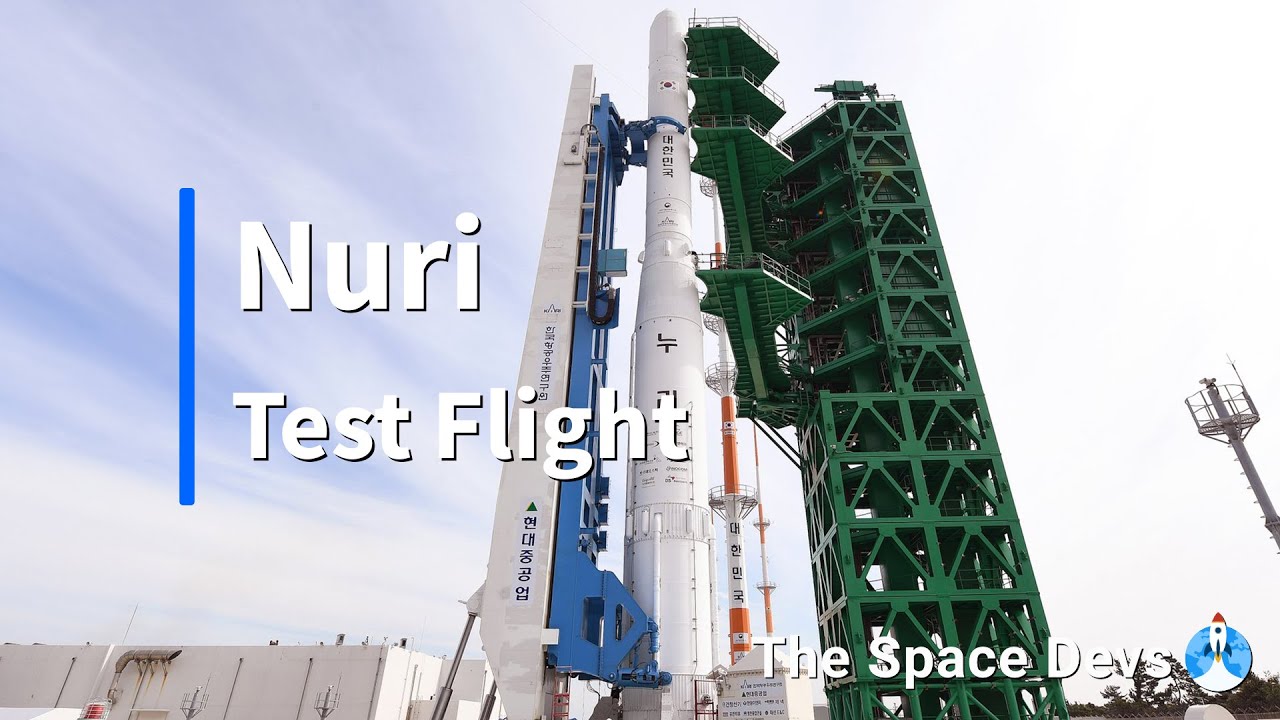
Maiden flight of the KSLV-II "Nuri" launch vehicle, carrying a dummy Payload of 1500 kg to sun-synchronous orbit.

Orbit wasn't actually achieved
The payload simulator was not placed into the correct orbit.
Liftoff

Launch time added per NOTAMs.
Added launch
Nuri, also known as KSLV-II, is South Korea's second carrier rocket and the successor to KSLV-1.
See DetailsThe Korea Aerospace Research Institute (KARI) established in 1989, is the aeronautics and space agency of Republic of Korea. Its main laboratories are located in Daejeon, in the Daedeok Science Town.
INFO WIKI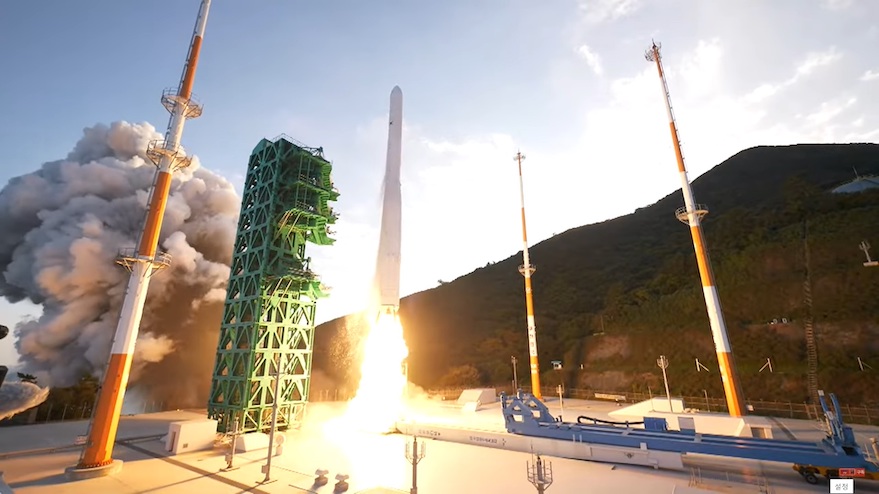
The failed October debut of South Korea’s KSLV-2 rocket is being blamed on improperly anchored helium tanks inside the three-stage rocket’s upper stage.
"We do not see any meaningful positive catalysts for the stock."
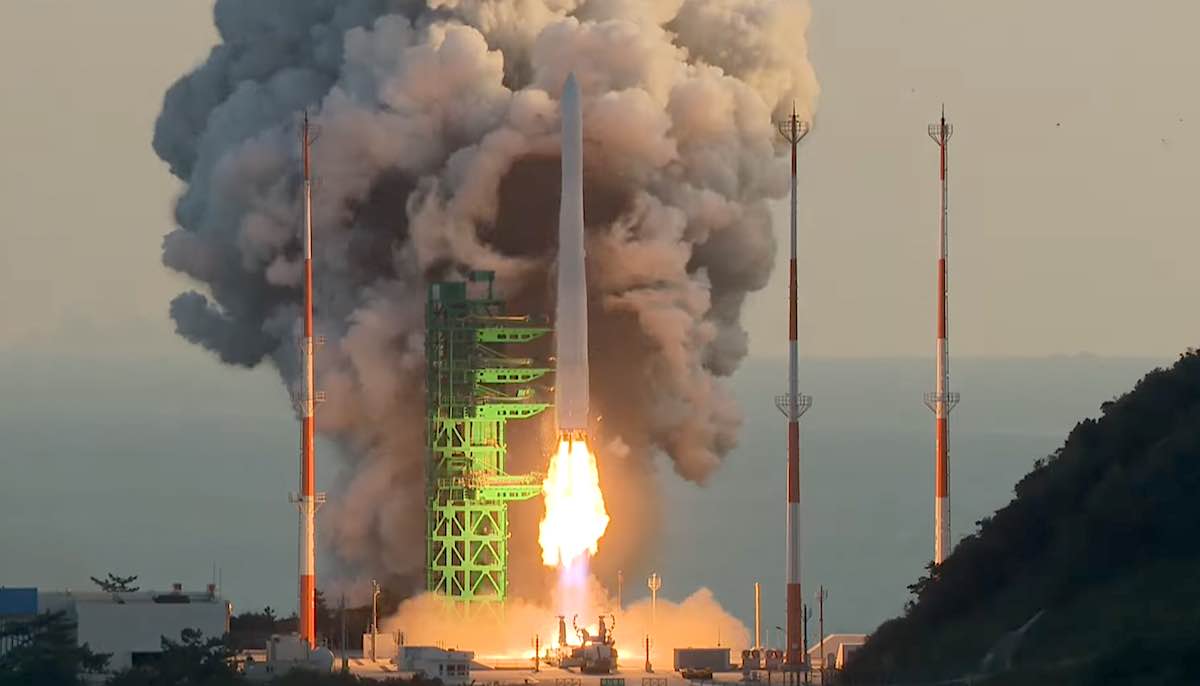
South Korea’s first domestically produced satellite launcher failed to reach orbit on its inaugural test flight Thursday. A preliminary review of data indicated the rocket’s third stage shut down early, the Korea Aerospace Research Institu…
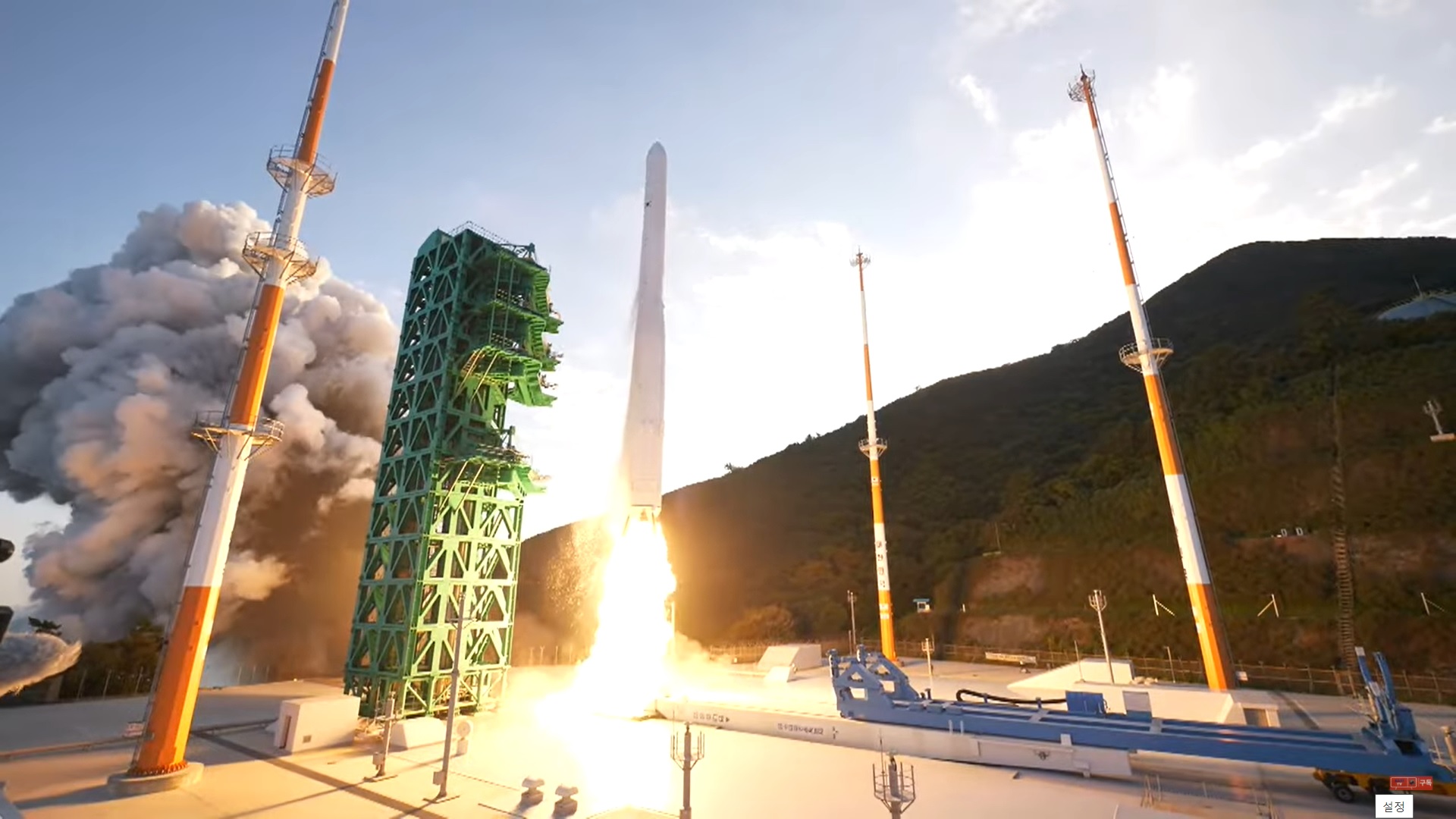
“The flight of Nuri was completed. I’m very proud of this. Regrettably, it didn’t reach the goal it aimed at,” South Korean President Moon Jae-in announced at Naro Space Center, where the three-stage KSLV-2 rocket, also known as Nuri, lif…
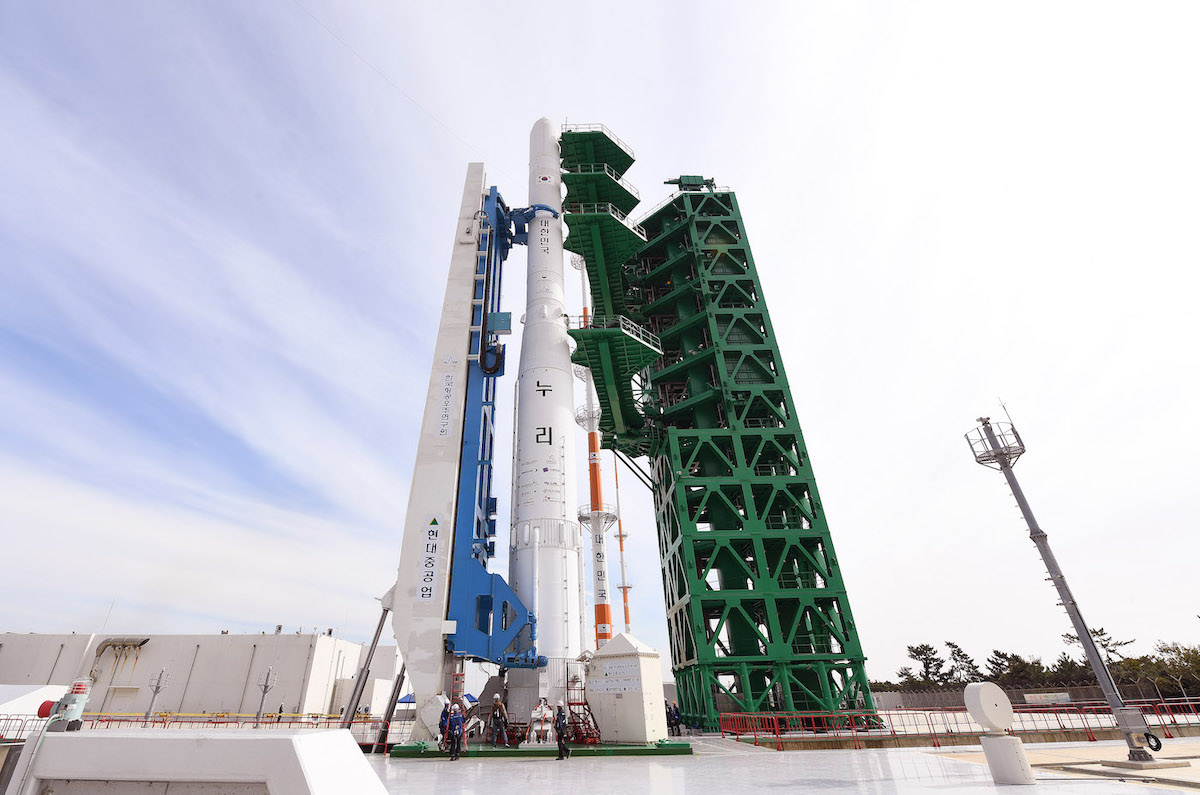
South Korea’s new three-stage, liquid-fueled Nuri launcher is scheduled to blast off Thursday on the country’s first attempt to place an object into orbit with an entirely homegrown rocket.
Share-ride of 9 commercial Earth observation and technology demonstration satellites to SSO, details TBD.
A batch of 27 satellites for the Starlink mega-constellation - SpaceX's project for space-based Internet communication system.
4 X-band synthetic-aperture radar Earth observation satellites for the Chinese Earth observation satellite company PIESAT.
Synthetic aperture radar satellite for Japanese Earth imaging company Synspective.
Note: Satellite serial number and Cosmos designation not confirmed. Glonass-K are the third generation of satellite design for GLONASS satellite n…
2 Earth observation radar satellites built by the Chinese satellite manufacturer SpaceTY.
USSF-259 is a classified mission for the United States Space Force. It is possibly a batch of classified LEO satellites based on SpaceX’s Starshield …
A batch of 9 Low Earth Orbit communication satellites for the Chinese state owned SatNet constellation operated by the China Satellite Network Group.…
Progress resupply mission to the International Space Station.
9 Low Earth Orbit communication satellites with Ku, Q and V band payloads for the G60 constellation operated by Shanghai Spacesail Technologies with …

