LVM-3 | Chandrayaan-3
Launch Successful
L - -- : -- : -- : --
Launch Window
-


-
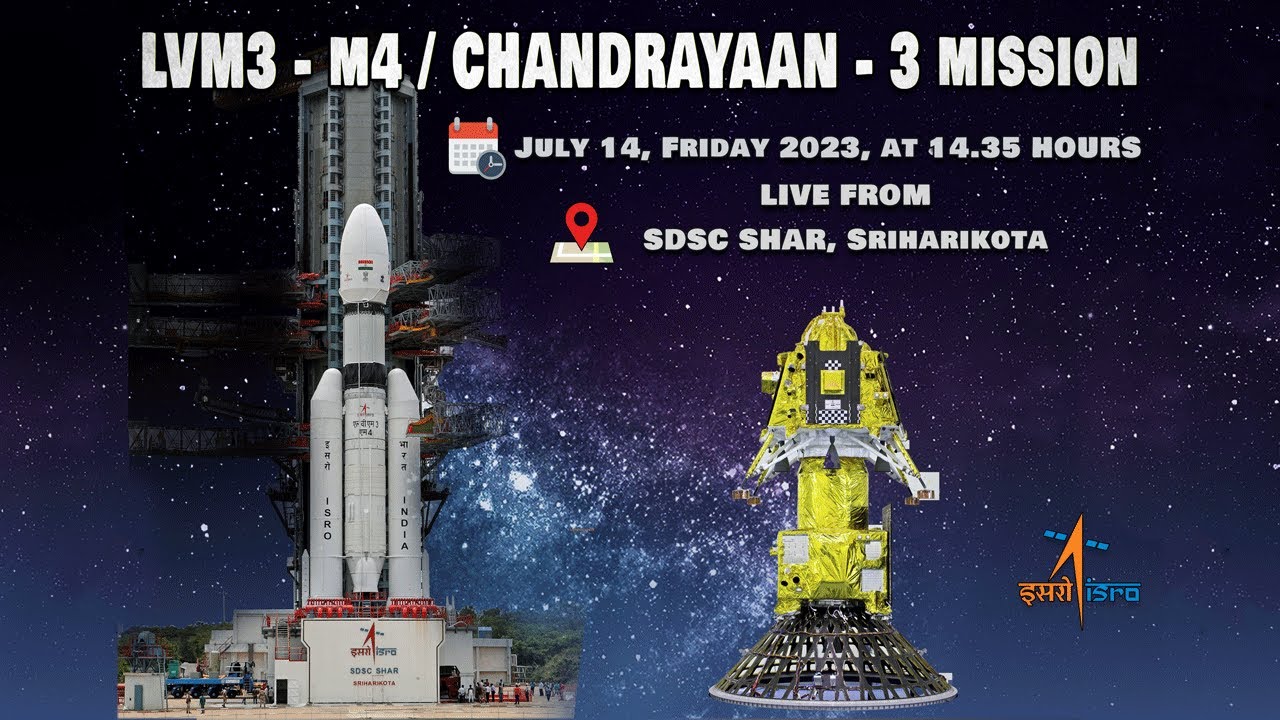

Chandrayaan-3 is a follow-on mission to Chandrayaan-2 to demonstrate end-to-end capability in safe landing and roving on the lunar surface. It consists of Lander and Rover configuration. It will be launched by LVM3 from SDSC SHAR, Sriharikota. The propulsion module will carry the lander and rover co...
Chandrayaan-3 is India's third mission to the Moon. It repeats most of the failed Chandrayaan-2 mission, with only a lander and rover. After a controlled descent, the lander will perform a soft landing on the lunar surface at a specified site and deploy the rover. The six-wheeled rover weighs around 20 kg and will operate on solar power. It will move around the landing site, performing lunar surface chemical analysis and relaying data back to Earth through the orbiter. The lander will be collecting data on Moon-quakes, thermal properties of the lunar surface, the density and variation of lunar surface plasma. Altogether, the Chandrayaan-3 mission will collect scientific information on lunar topography, mineralogy, elemental abundance, lunar exosphere and signatures of hydroxyl and water-ice.

Launch success confirmed
Liftoff

Livestream has started
Added T-0 seconds.
GO for launch.
The Launch Vehicle Mark-3 (LVM-3), previously called Geosynchronous Satellite Launch Vehicle Mark III (GSLV Mk III), is a three-stage medium-lift launch vehicle developed by the Indian Space Research Organisation (ISRO). It is designed to launch satellites into geostationary orbit, and is intended as a launch vehicle for crewed missions under the Indian Human Spaceflight Programme.
The Indian Space Research Organisation (ISRO) is the space agency of the Government of India headquartered in the city of Bangalore. Its vision is to "harness space technology for national development while pursuing space science research and planetary exploration."
INFO WIKI
Sydney, Australia (SPX) Nov 15, 2025 Chandrayaan-3 was developed to demonstrate the capability for a controlled lunar landing, enable rover mobility on the Moon, and facilitate in-situ research. The mission includes a lander module, p…

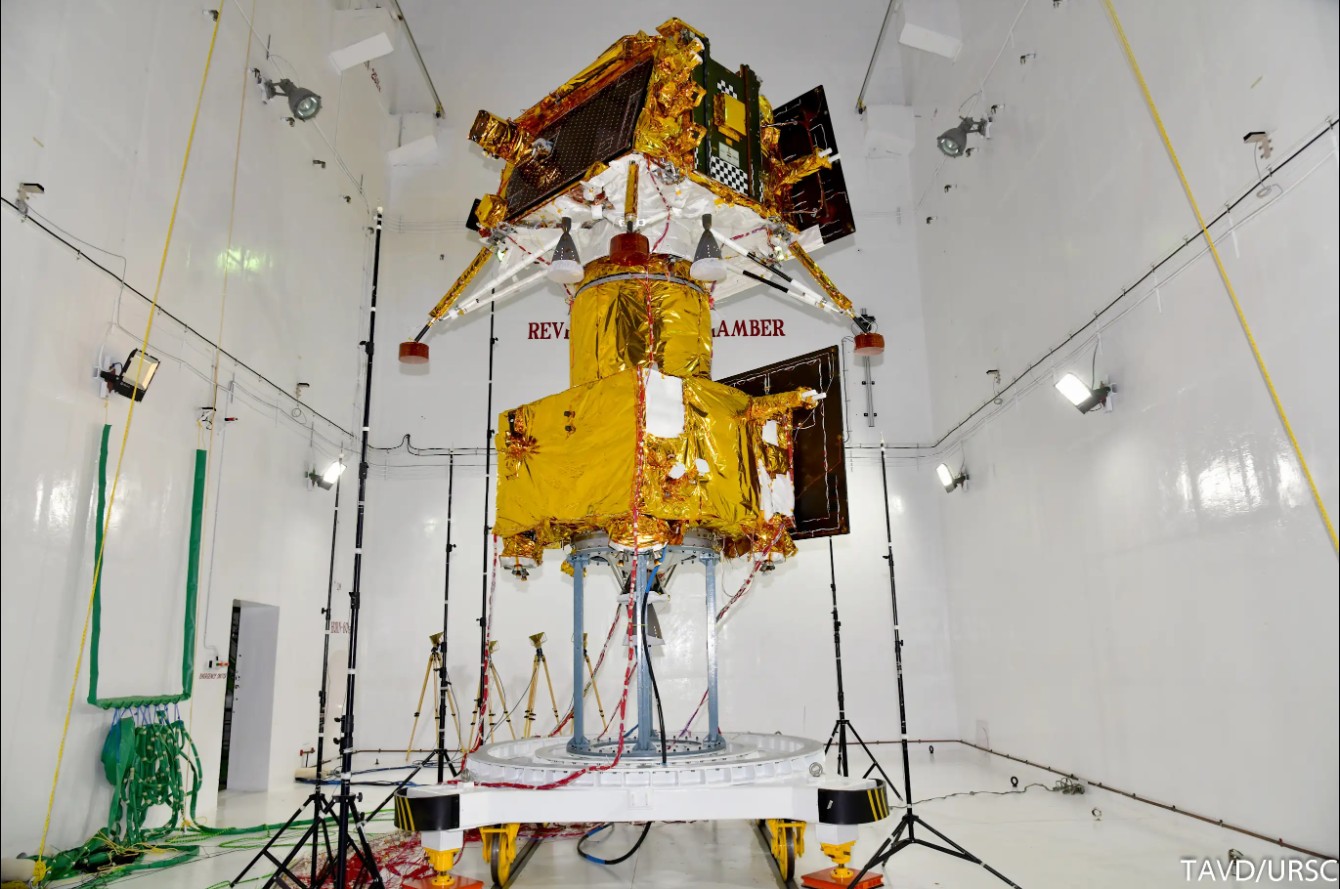
The Indian Space Research Organisation (ISRO) has made a surprise announcement, announcing they have successfully brought the Chandrayann-3 Propulsion Module back to Earth orbit.
India now credibly has the third most advanced deep-space program in the world.
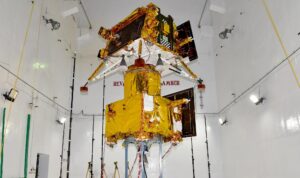
The spacecraft that transported the Chandrayaan-3 lander to the moon has returned to Earth orbit, a demonstration of technologies to support a future Indian lunar sample return mission.
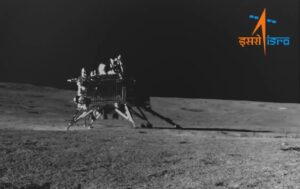
The Chandrayaan-3 mission is a perfect example of India crossing the threshold to a new era of space activity. While the August 2023 Moon landing is a shining star on India’s space lapel, Chandrayaan-3 is just one part of a larger Indian s…
4 X-band synthetic-aperture radar Earth observation satellites for the Chinese Earth observation satellite company PIESAT.
Synthetic aperture radar satellite for Japanese Earth imaging company Synspective.
Note: Satellite serial number and Cosmos designation not confirmed. Glonass-K are the third generation of satellite design for GLONASS satellite n…
2 Earth observation radar satellites built by the Chinese satellite manufacturer SpaceTY.
USSF-259 is a classified mission for the United States Space Force. It is possibly a batch of classified LEO satellites based on SpaceX’s Starshield …
A batch of 9 Low Earth Orbit communication satellites for the Chinese state owned SatNet constellation operated by the China Satellite Network Group.…
Progress resupply mission to the International Space Station.
9 Low Earth Orbit communication satellites with Ku, Q and V band payloads for the G60 constellation operated by Shanghai Spacesail Technologies with …
10 Low Earth Orbit communication satellites with Ku, Q and V band payloads for the G60 constellation operated by Shanghai Spacesail Technologies with…
Sentinel-3C is the third satellite in the Sentinel-3 constellation, which provides high-accuracy optical, radar and altimetry data for marine and lan…