Long March 4C | Gaofen 5
Launch Successful
L - -- : -- : -- : --
Launch Window
-


-
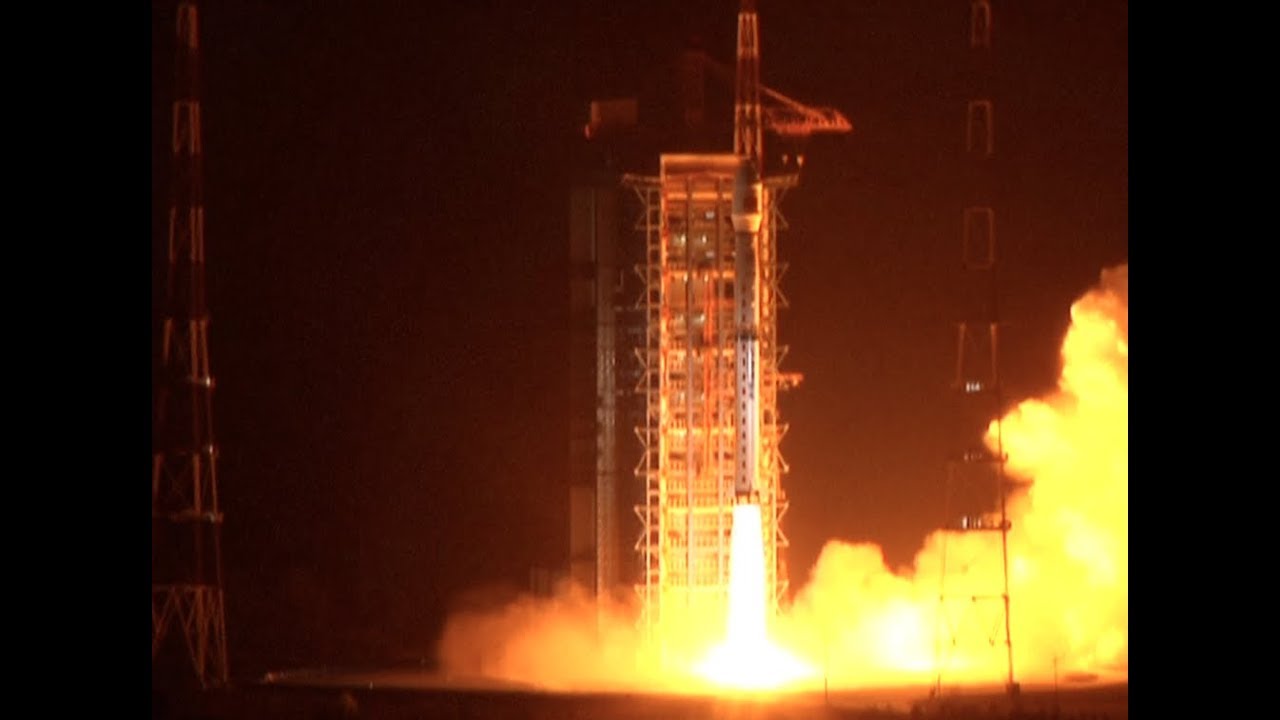
Gaofen is a series of civilian Earth observation satellites developed and launched for the China High-definition Earth Observation System (CHEOS), a state-sponsored programme aimed to develop a near-real time, all-weather, global surveillance network consisting of satellite, near-space (stratosphere) airships, and aerial observation platforms. Based on the SAST5000B bus, Gaofen 5 will carry six types of payloads, including visible and short-wave infra hyper-spectral camera, spectral imager, greenhouse gas detector, atmospheric environment infrared detector at very high spectral resolution, differential absorption spectrometer for atmospheric trace gas, and multi-angle polarization detector. The satellite has a designed life of 8 years. It is to be launched atop of a Long March 4C to a 705km Sun Syncronous Orbit (SSO).
The Long March 4C, also known as the Chang Zheng 4C, CZ-4C and LM-4C, previously designated Long March 4B-II, is a Chinese orbital carrier rocket. It is launched from the Jiuquan, Taiyuan Satellite Launch Centre and Xichangs, and consists of 3 stages. Long March 4C vehicles have been used to launch the Yaogan-1, Yaogan-3 SAR satellites and the Fengyun-3A polar orbiting meteorological satellite. On December 15, 2009 a Long March 4C was used to launch Yaogan 8.
The China Aerospace Science and Technology Corporation (CASC) is the main contractor for the Chinese space program. It is state-owned and has a number of subordinate entities which design, develop and manufacture a range of spacecraft, launch vehicles, strategic and tactical missile systems, and ground equipment. It was officially established in July 1999 as part of a Chinese government reform drive, having previously been one part of the former China Aerospace Corporation. Various incarnations of the program date back to 1956.
INFO WIKITranche 1 Transport Layer A is one of six missions by the United States Space Force Space Development Agency (SDA) for the Proliferated Warfighter Sp…
A batch of 9 Low Earth Orbit communication satellites for the Chinese state owned SatNet constellation operated by the China Satellite Network Group.…
NeonSat-2 to 6 are part of the South Korean government's Earth observation micro-satellite constellation NeonSat (New-space Earth Observation Satelli…
Classified payload for the US National Reconnaissance Office.
Dedicated rideshare flight to a sun-synchronous orbit with dozens of small microsatellites and nanosatellites for commercial and government customers.
SpaceX Crew-13 is the thirteenth crewed operational flight of a Crew Dragon spacecraft to the International Space Station as part of NASA's Commercia…
14th test flight of the two-stage Starship launch vehicle. 3rd flight of Starship V3 and the first Starship flight to deploy satellites (a group of S…
A classified mission for the United States Space Force. It is possibly a batch of classified LEO satellites based on SpaceX’s Starshield satellite bu…
Synthetic aperture radar satellite for Japanese Earth imaging company Synspective.
3 Chinese reconnaissance satellites of unknown purposes, officially reported as for "Electromagnetic environment probing".

