H-IIA 202 | QZS-1R
Launch Successful
L - -- : -- : -- : --
Launch Window
Oct. 26, 2021, 2:19 a.m. - Oct. 26, 2021, 2:34 a.m.


Oct. 26, 2021, 2:19 a.m. - Oct. 26, 2021, 2:34 a.m.

Japan’s H-IIA rocket will launch on October 26 at 02:19 UTC from LA-Y1 at the Tanegashima Space Center, carrying the QZS-1R satellite. This will be the 44th launch of the H-IIA rocket for Mitsubishi Heavy Industries and the Japan Aerospace Exploration Agency (JAXA). For the mission, the H-IIA will l...
The Quasi-Zenith Satellite System (QZSS) is a three-satellite regional time transfer system and the satellite-based augmentation system for the GPS that would be receivable within Japan. The primary purpose of QZSS is to increase the availability of GPS in Japan's numerous urban canyons, where only satellites at very high elevation can be seen. A secondary function is performance enhancement, increasing the accuracy and reliability of GPS derived navigation solutions. QZS-1R is a replacement satellite for QZS-1 which was launched in 2010.

Launch success.
One day delay due to weather.
New launch time.

Added launch
H-IIA (H2A) is an active expendable launch system operated by Mitsubishi Heavy Industries (MHI) for the Japan Aerospace Exploration Agency. The liquid-fueled H-IIA rockets have been used to launch satellites into geostationary orbit, to launch a lunar orbiting spacecraft, and to launch Akatsuki, which studied the planet Venus. Launches occur at the Tanegashima Space Center.
Mitsubishi Heavy Industries, Ltd. is a Japanese multinational engineering, electrical equipment and electronics company headquartered in Tokyo, Japan. MHI is one of the core companies of the Mitsubishi Group. MHI's products include aerospace components, air conditioners, aircraft, automotive components, forklift trucks, hydraulic equipment, machine tools, missiles, power generation equipment, printing machines, ships and space launch vehicles. Through its defense-related activities, it is the world's 23rd-largest defense contractor measured by 2011 defense revenues and the largest based in Japan.
INFO WIKI
Japan’s H-IIA rocket will launch on October 26 at 02:19 UTC from LA-Y1 at the Tanegashima Space Center, carrying the QZS-1R satellite. This will be the 44th launch of the H-IIA rocket for Mitsubishi Heavy Industries and the Japan Aerospace…

Japan is set to launch a replacement satellite Monday for a navigation spacecraft that has been in space since 2010, augmenting the U.S. military’s GPS network to provide more precise positioning and timing services over the Asia-Pacific r…
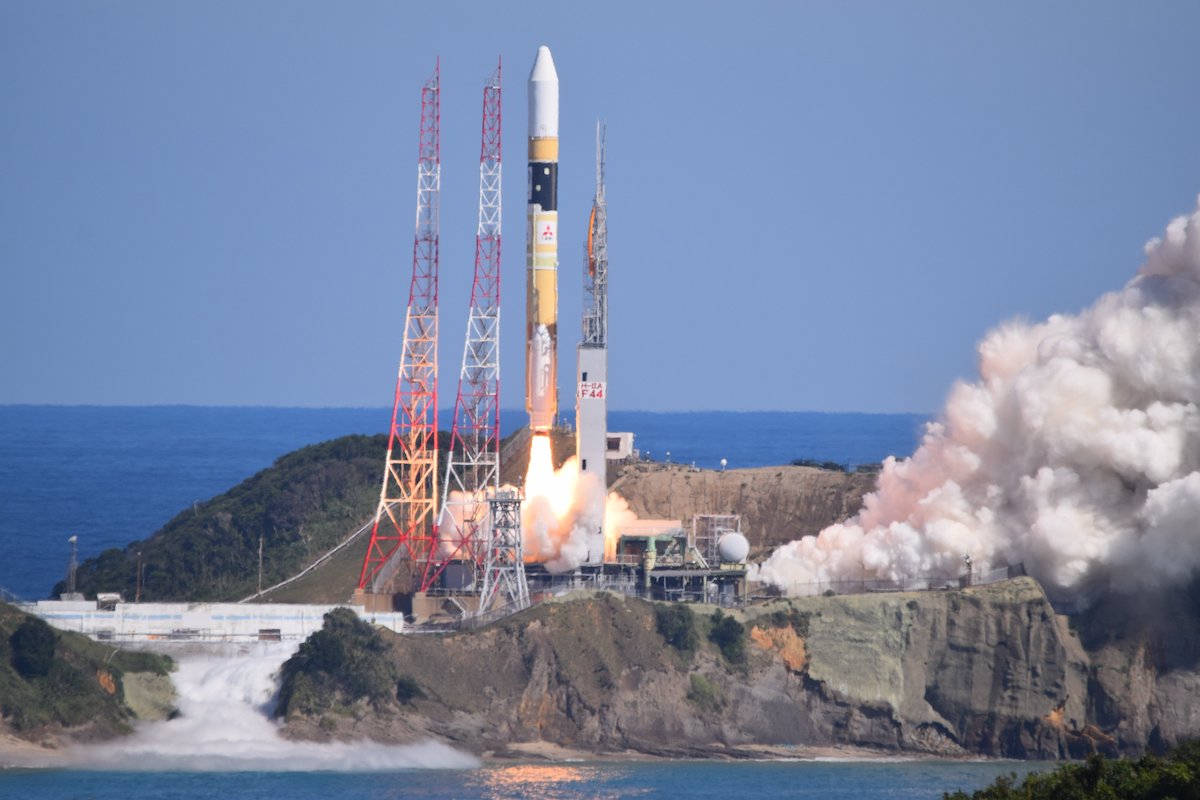
A replacement for an aging satellite in Japan’s regional navigation network successfully launched Monday from Tanegashima Space Center aboard an H-2A rocket, heading to an orbit more than 20,000 miles above Earth.
A batch of 24 satellites for the Starlink mega-constellation - SpaceX's project for space-based Internet communication system.
Classified payload for the US National Reconnaissance Office.
2 Chinese classified satellites claimed to be for communication technology test purposes. Actual mission not known.
Tianlian is a Chinese data tracking and relay communications geostationary satellite series. The TL-3 (Tian Lian 3) satellites are the 3rd generation…
A batch of 24 satellites for the Starlink mega-constellation - SpaceX's project for space-based Internet communication system.
13th test flight of the two-stage Starship launch vehicle. Second flight of Starship V3. For the first time, Starship will carry 20 V3 Starlink sa…
Share-ride of 5 commercial Earth observation and technology demonstration satellites to SSO, including SpaceTY's TY-48. Details TBD.
Tianlian is a Chinese data tracking and relay communications geostationary satellite series. The TL 2 (Tian Lian 2) satellites represent the second g…
Carried 9 satellites on a share-ride to sun-synchronous orbit. Details TBD.
The Northrop Grumman/SpaceLogistics MRV-1 is a mission extension payload including a mission robotic vehicle (MRV) and multiple mission extension pod…
