Falcon Heavy | Dragonfly
To Be Determined
L - -- : -- : -- : --


Dragonfly is NASA's 4th New Frontiers program mission that will send a robotic rotorcraft to fly within the atmosphere of Saturn's moon Titan to sample materials and determine surface composition in different geologic settings, advancing humanity's search for the building blocks of life. The craft is a large quadcopter with double rotors with mass of about 875 kg, featuring rotors of 1.35 m in diameter. It can fly through several kilometers within an hour and will perform 1 flight per Titan day (~16 Earth days). During the planned 3.3-year mission, Dragonfly is expected to cover distance up to several hundred km. Dragonfly will use a Multi-Mission Radioisotope Thermoelectric Generator (MMRTG) to power its instruments. The planned science instrument suite is: * DragonCam: Camera Suite * DrACO: Drill for Acquisition of Complex Organics * DraMS: Mass Spectrometer * DraGNS: Gamma-ray and Neutron Spectrometer * DraGMet: Geophysics and Meteorology

Added launch.
The Falcon Heavy is a variant of the Falcon 9 full thrust launch vehicle and consists of a standard Falcon 9 rocket core, with two additional boosters derived from the Falcon 9 first stage.
See DetailsSpace Exploration Technologies Corp., known as SpaceX, is an American aerospace manufacturer and space transport services company headquartered in Hawthorne, California. It was founded in 2002 by entrepreneur Elon Musk with the goal of reducing space transportation costs and enabling the colonization of Mars. SpaceX operates from many pads, on the East Coast of the US they operate from SLC-40 at Cape Canaveral Space Force Station and historic LC-39A at Kennedy Space Center. They also operate from SLC-4E at Vandenberg Space Force Base, California, usually for polar launches. Another launch site is being developed at Boca Chica, Texas.
INFO WIKI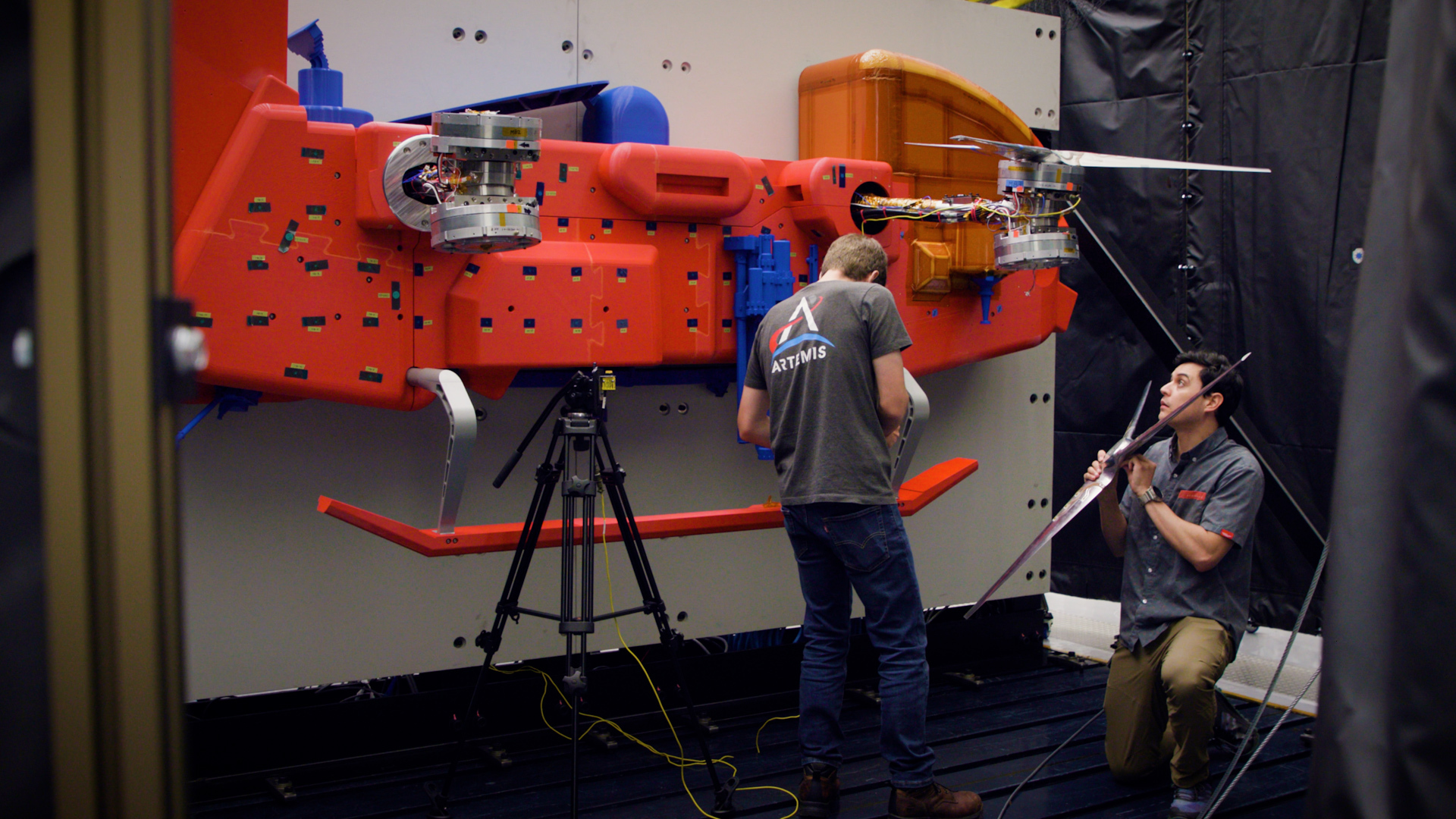
In sending a car-sized rotorcraft to explore Saturn’s moon Titan, NASA’s Dragonfly mission will undertake an unprecedented voyage of scientific discovery. And the work to ensure that this first-of-its-kind project can fulfill its ambitious…
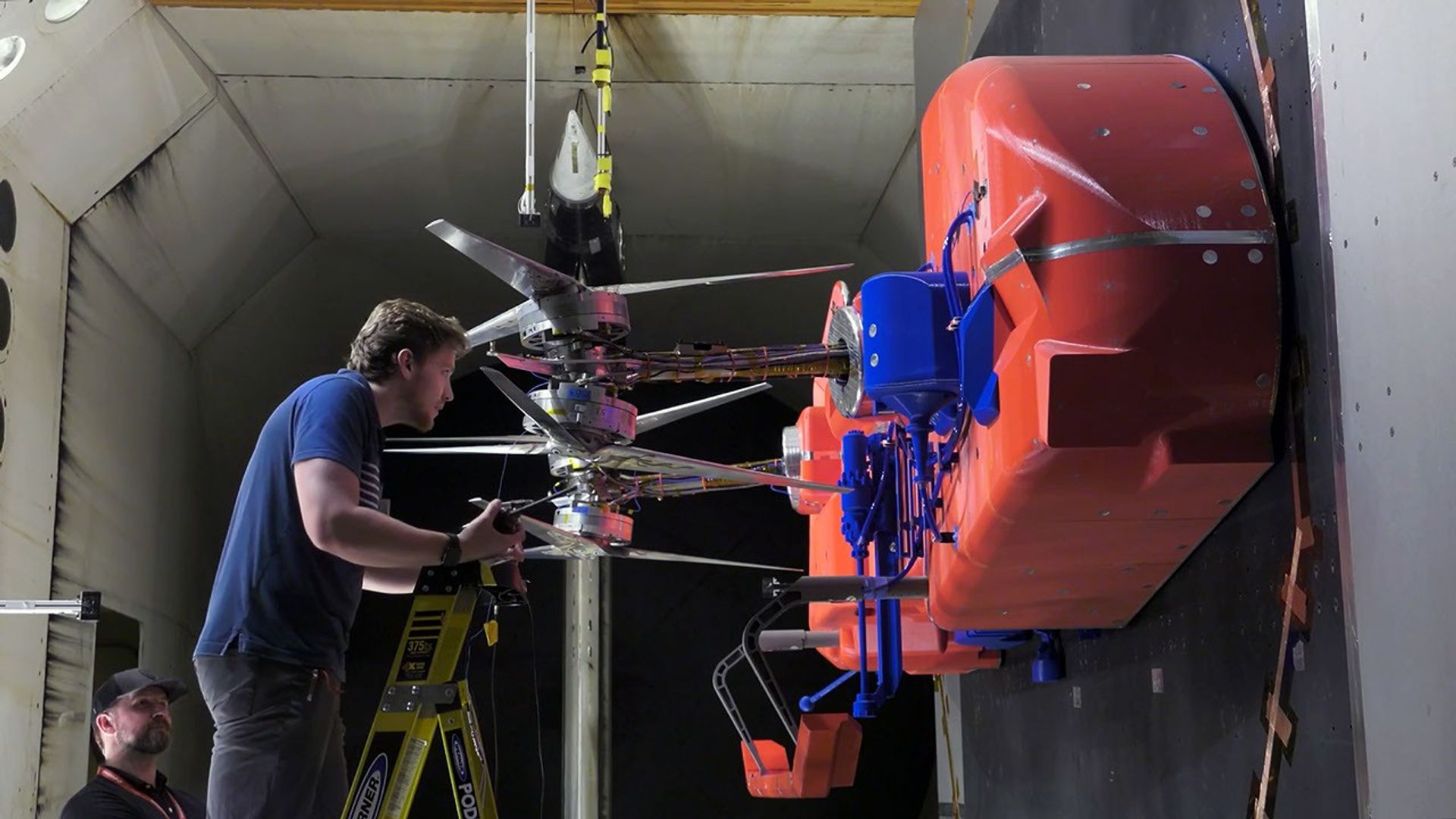
"Probably the best part of my day is watching that team hit their milestones."

In July 2028, NASA’s next New Frontiers program mission, Dragonfly, will launch to Saturn atop… The post How Dragonfly will support the search for life on an uninhabitable world appeared first on NASASpaceFlight.com.
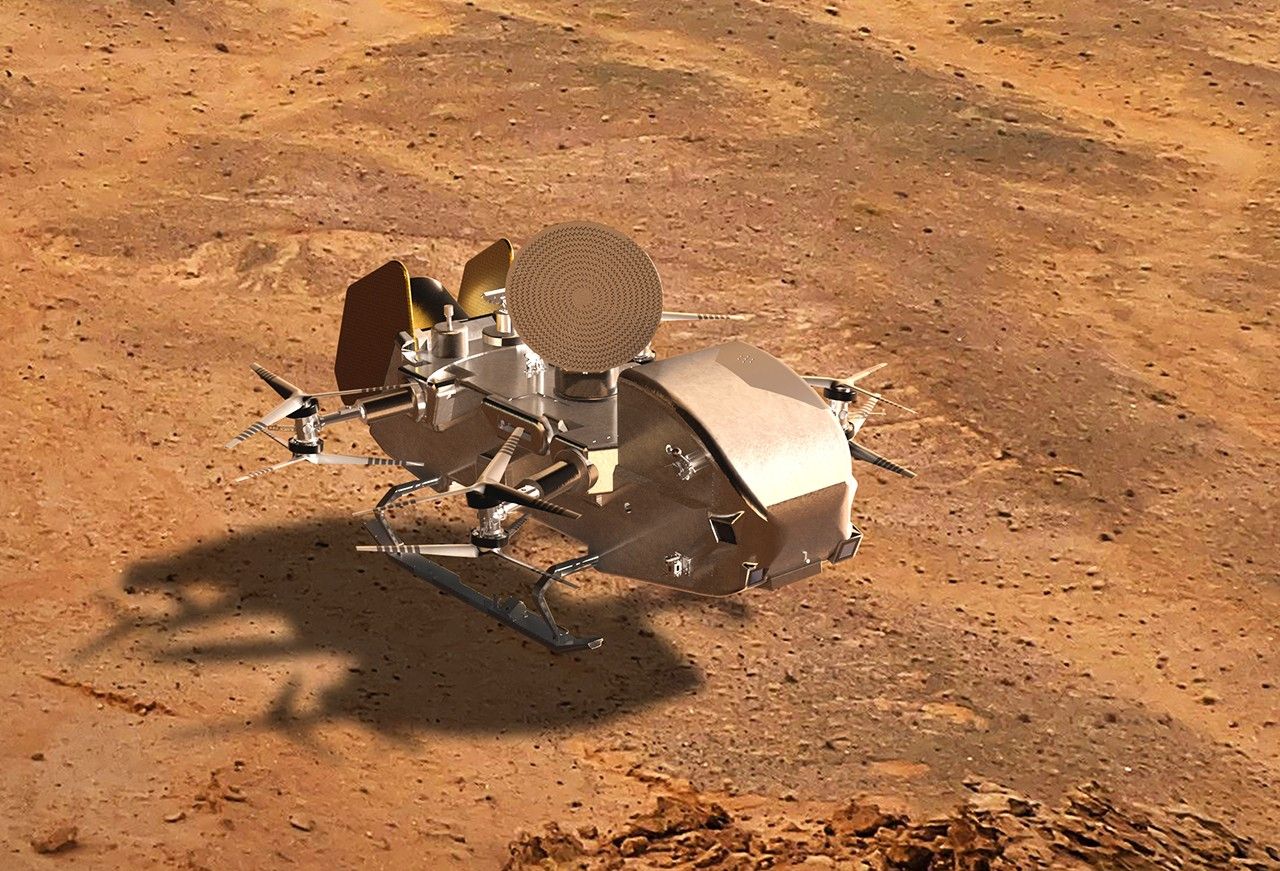
When it descends through the thick golden haze on Saturn’s moon Titan, NASA’s Dragonfly rotorcraft will find eerily familiar terrain. Dunes wrap around Titan’s equator. Clouds drift across its skies. Rain drizzles. Rivers flow, forming can…

NASA has selected SpaceX’s Falcon Heavy to launch a multibillion-dollar mission to Saturn’s moon Titan in 2028. The post NASA selects Falcon Heavy to launch Dragonfly mission appeared first on SpaceNews.
Second test flight of the Isar Spectrum launch vehicle. This launch will carry 5 cubesats and 1 non-separable experiment as part of European Space Ag…
GISAT-1A (GEO Imaging Satellite) is an Indian earth observing satellite operating from geostationary orbit to facilitate continuous observation of In…
Synthetic aperture radar satellite for Japanese Earth imaging company Synspective.
A batch of 27 satellites for the Starlink mega-constellation - SpaceX's project for space-based Internet communication system.
First test launch of Galactic Energy’s Pallas-1 rocket, with a dummy payload on board.
The Nancy Grace Roman Space Telescope is a NASA infrared space telescope with a 2.4 m (7.9 ft) wide field of view primary mirror and two scientific i…
Third of EUMETSAT's third generation of weather satellite.
A batch of 27 satellites for the Starlink mega-constellation - SpaceX's project for space-based Internet communication system.
A batch of 29 satellites for the Starlink mega-constellation - SpaceX's project for space-based Internet communication system.
Share ride of 7 satellites to sun-synchronous orbit, including the ham radio satellite BY70-4. Details TBD.