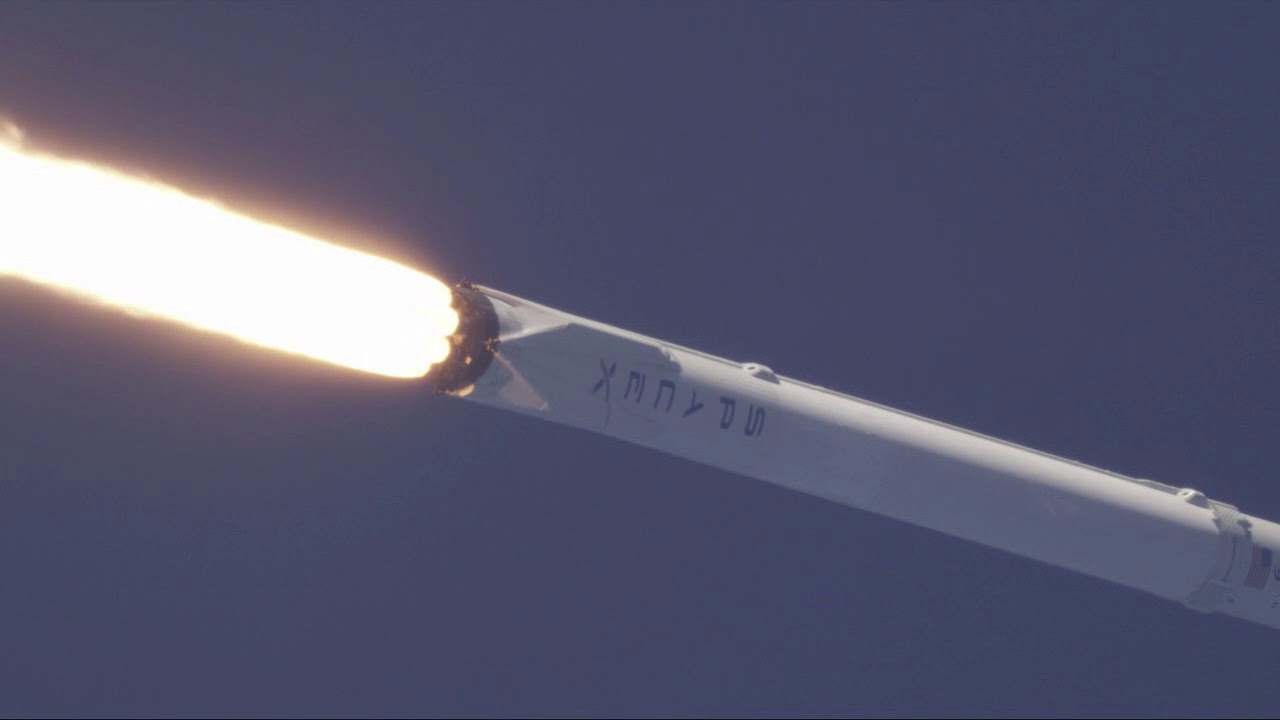
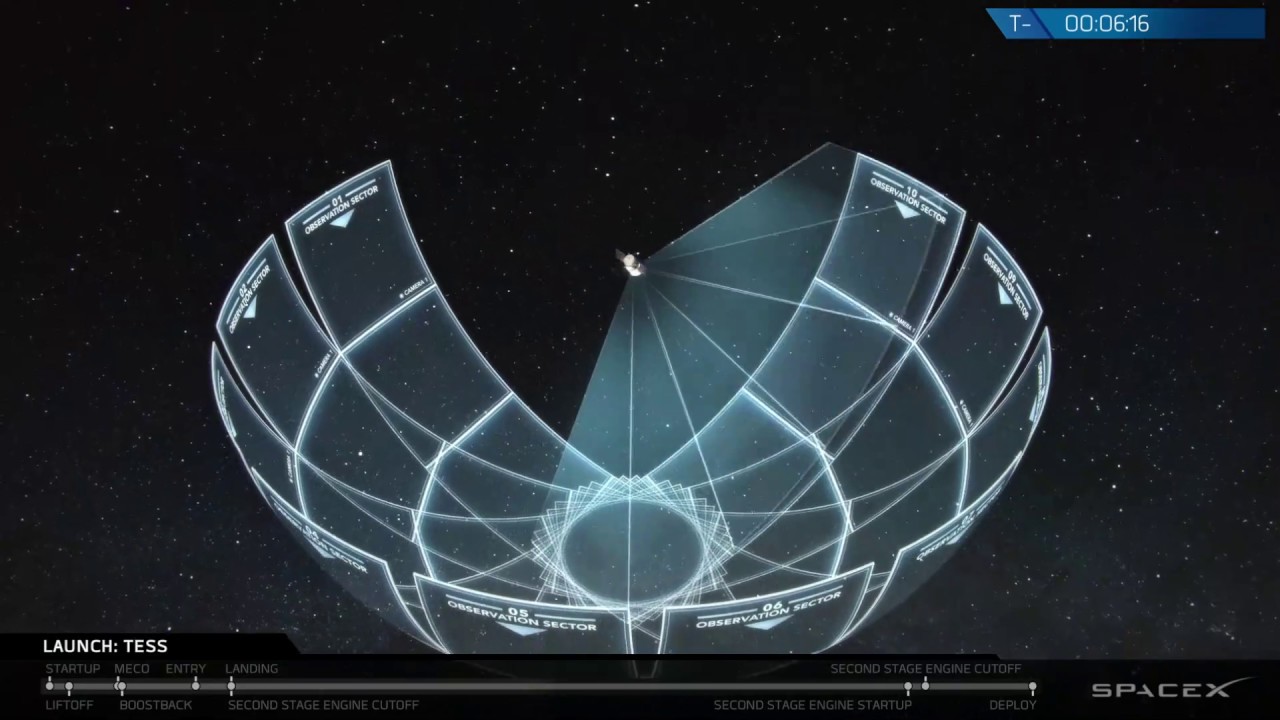
Falcon 9 Block 4 | TESS (Transiting Exoplanet Survey Satellite)
Launch Successful
L - -- : -- : -- : --
Launch Window
-


-
The Transiting Exoplanet Survey Satellite (TESS) is a NASA space telescope, designed to search for exoplanets using the transit method. TESS will identify planets ranging from Earth-sized to gas giants, orbiting a wide range of stellar types and orbital distances. The principal goal of the TESS mission is to detect small planets with bright host stars in the solar neighborhood, so that detailed characterizations of the planets and their atmospheres can be performed.
The Full Thrust variants first stage includes all systems necessary for an operational re-use of stages while the second stage is operated as an expendable rocket stage.
See DetailsThe first stage of the Falcon 9 landed on the ASDS, OCISLY, stationed of the east coast.
Result: Successful Autonomous Spaceport Drone Ship landing at Of Course I Still Love You.Space Exploration Technologies Corp., known as SpaceX, is an American aerospace manufacturer and space transport services company headquartered in Hawthorne, California. It was founded in 2002 by entrepreneur Elon Musk with the goal of reducing space transportation costs and enabling the colonization of Mars. SpaceX operates from many pads, on the East Coast of the US they operate from SLC-40 at Cape Canaveral Space Force Station and historic LC-39A at Kennedy Space Center. They also operate from SLC-4E at Vandenberg Space Force Base, California, usually for polar launches. Another launch site is being developed at Boca Chica, Texas.
INFO WIKI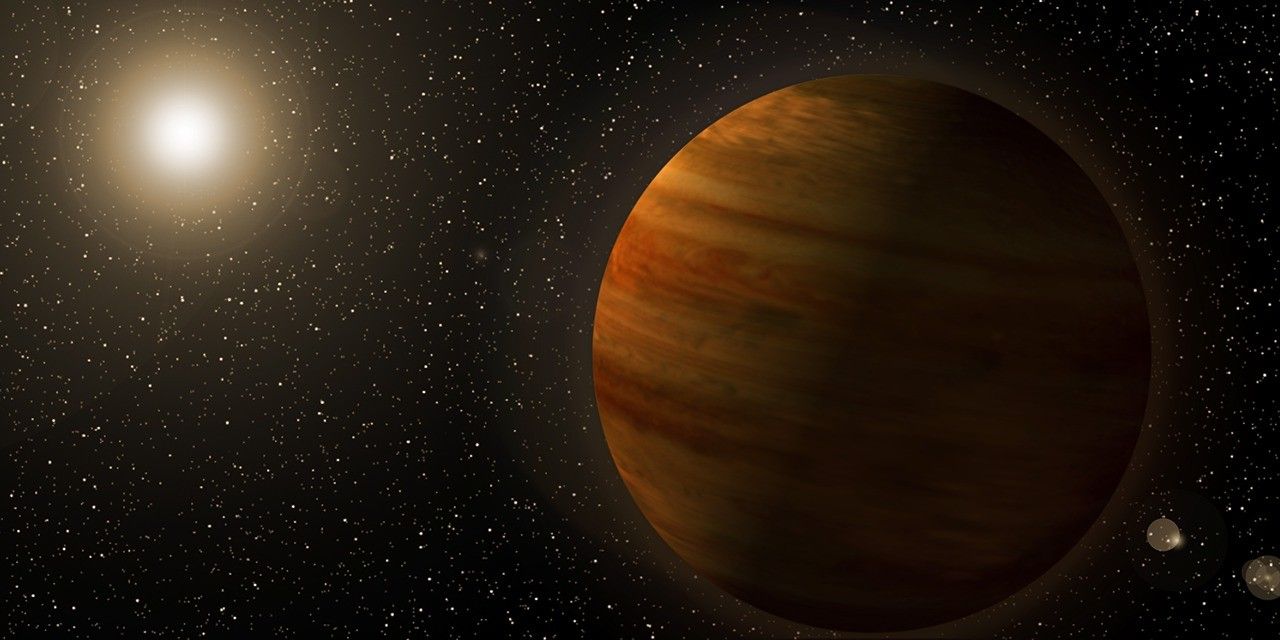
For the first time, NASA’s TESS (Transiting Exoplanet Survey Satellite) mission has identified a planet orbiting a distant star thanks to ripples in space-time. Unlike the star-hugging transiting planets TESS regularly reveals, the newfoun…
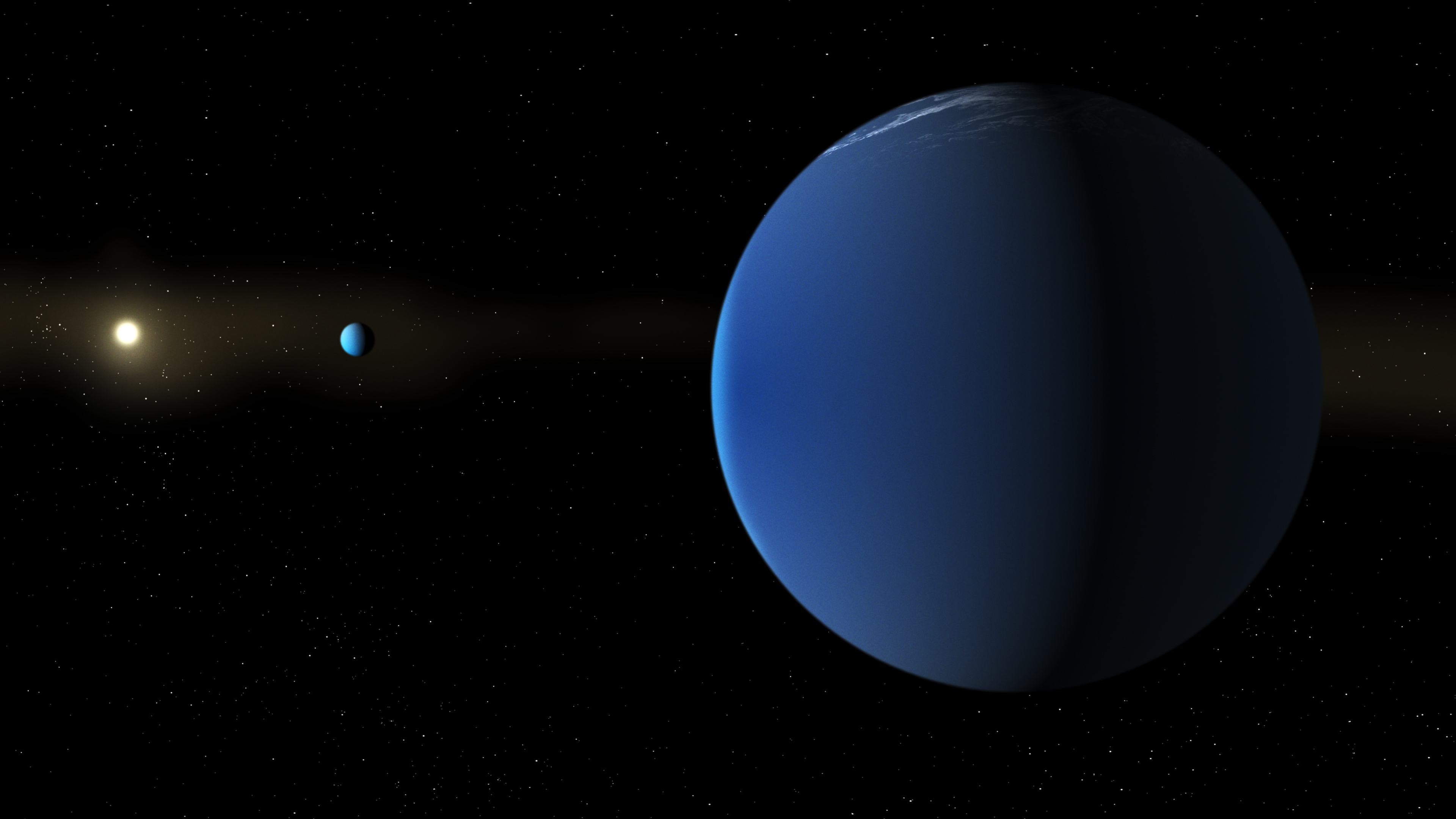
NASA has revealed two new “super-puff” planets, giant worlds so light that their density is comparable to cotton candy. Scientists calculate that these Jupiter-sized planets are the “puffiest” worlds ever found.
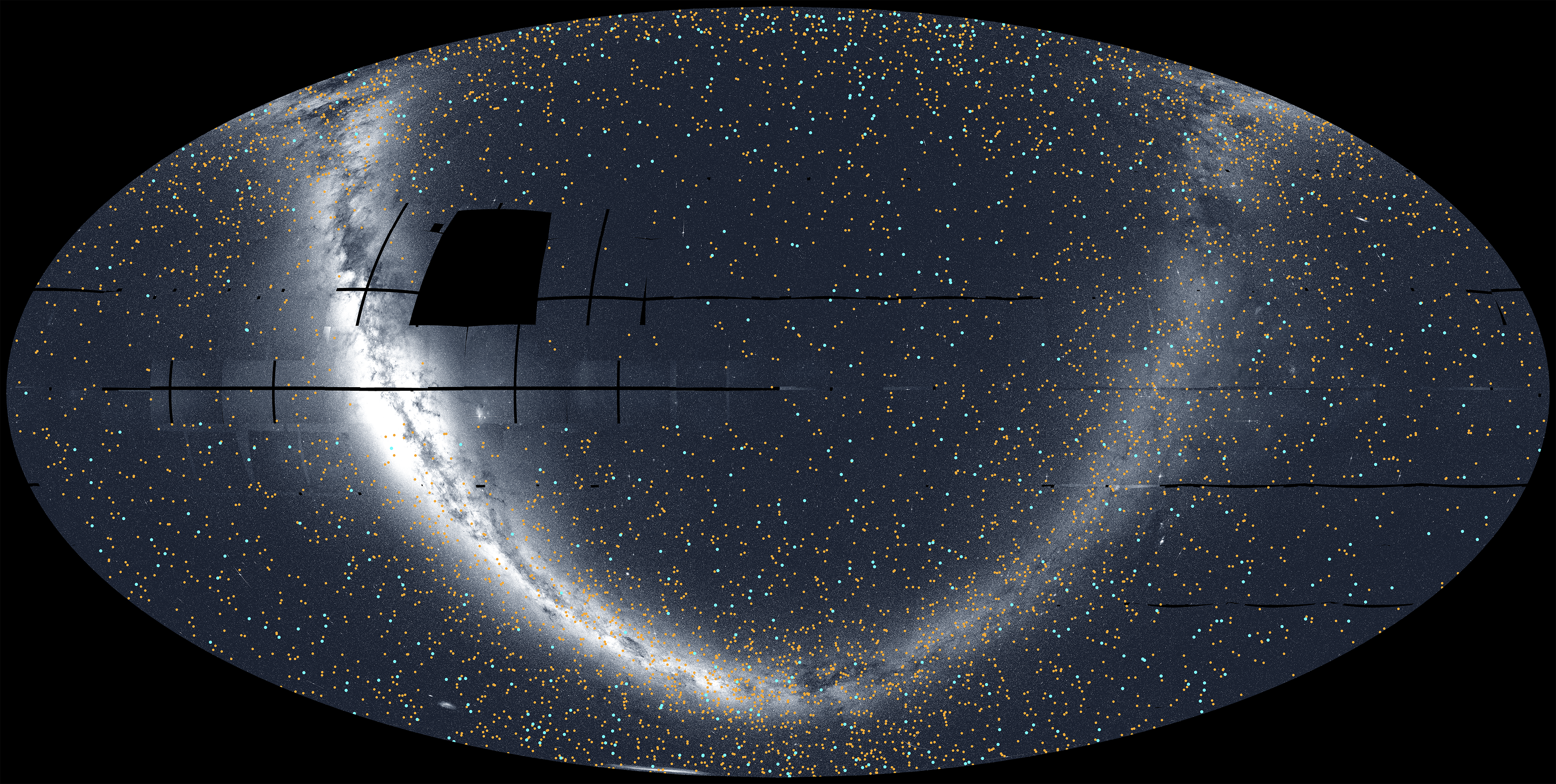
NASA’s TESS has released its most complete view of the starry sky to date
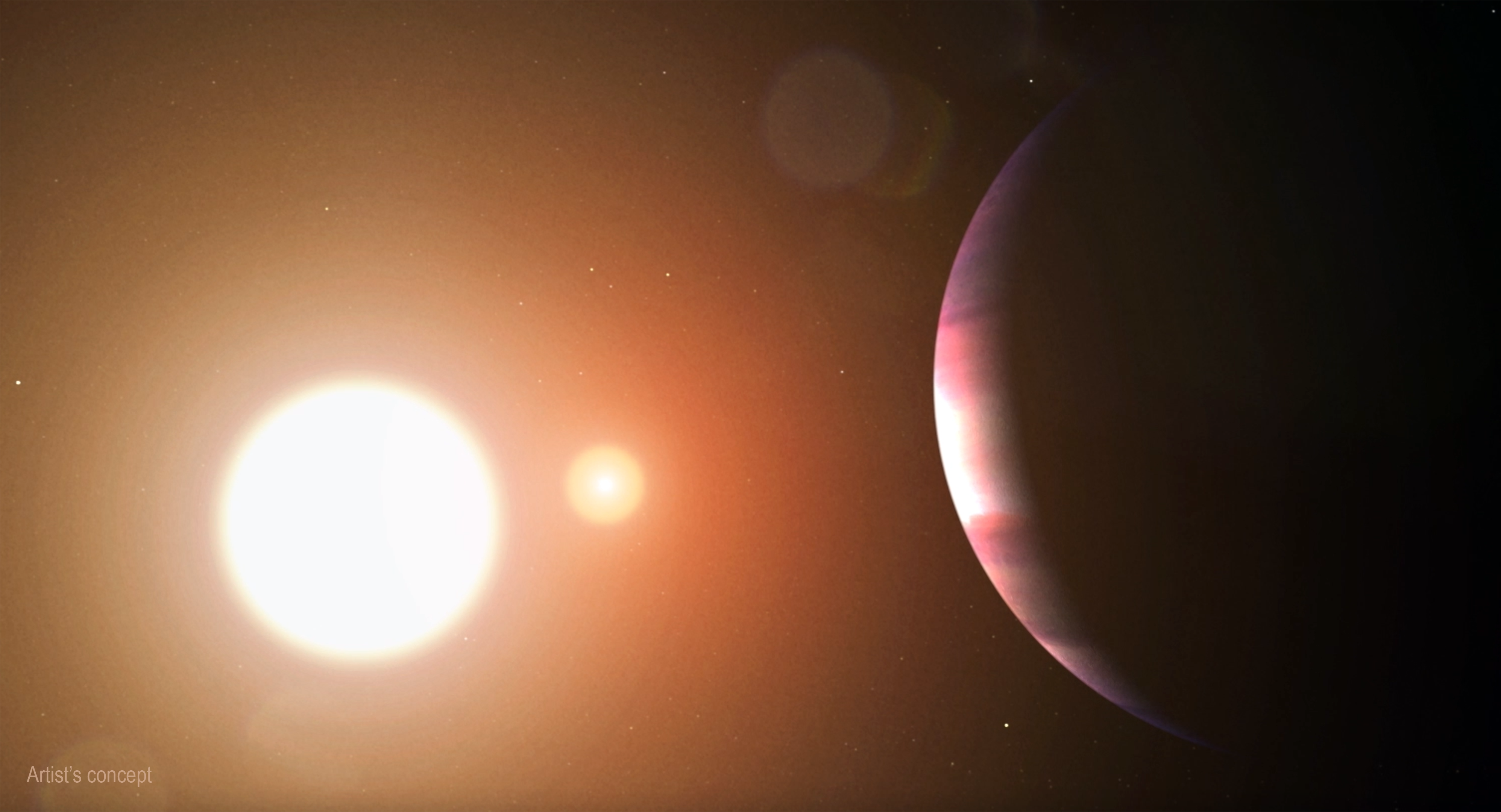
A study of NASA’s TESS (Transiting Exoplanet Survey Satellite) data on stellar pairs undergoing mutual eclipses has uncovered more than two dozen candidate exoplanets, or worlds beyond our solar system. This method allows the mission to lo…

Jan. 23, 2026 NASA’s TESS Returns to Science Observations NASA’s TESS (Transiting Exoplanet Survey Satellite) entered safe mode Jan. 15 and returned to normal science operations Jan. 18. The operations team determined the issue arose when…
A batch of 27 satellites for the Starlink mega-constellation - SpaceX's project for space-based Internet communication system.
4 X-band synthetic-aperture radar Earth observation satellites for the Chinese Earth observation satellite company PIESAT.
Synthetic aperture radar satellite for Japanese Earth imaging company Synspective.
Note: Satellite serial number and Cosmos designation not confirmed. Glonass-K are the third generation of satellite design for GLONASS satellite n…
2 Earth observation radar satellites built by the Chinese satellite manufacturer SpaceTY.
USSF-259 is a classified mission for the United States Space Force. It is possibly a batch of classified LEO satellites based on SpaceX’s Starshield …
A batch of 9 Low Earth Orbit communication satellites for the Chinese state owned SatNet constellation operated by the China Satellite Network Group.…
Progress resupply mission to the International Space Station.
9 Low Earth Orbit communication satellites with Ku, Q and V band payloads for the G60 constellation operated by Shanghai Spacesail Technologies with …
10 Low Earth Orbit communication satellites with Ku, Q and V band payloads for the G60 constellation operated by Shanghai Spacesail Technologies with…