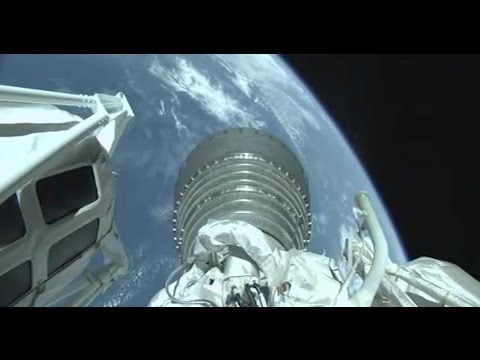
Atlas V 401 | Cygnus CRS OA-7 (S.S. John Glenn)
Launch Successful
L - -- : -- : -- : --
Launch Window
-


-
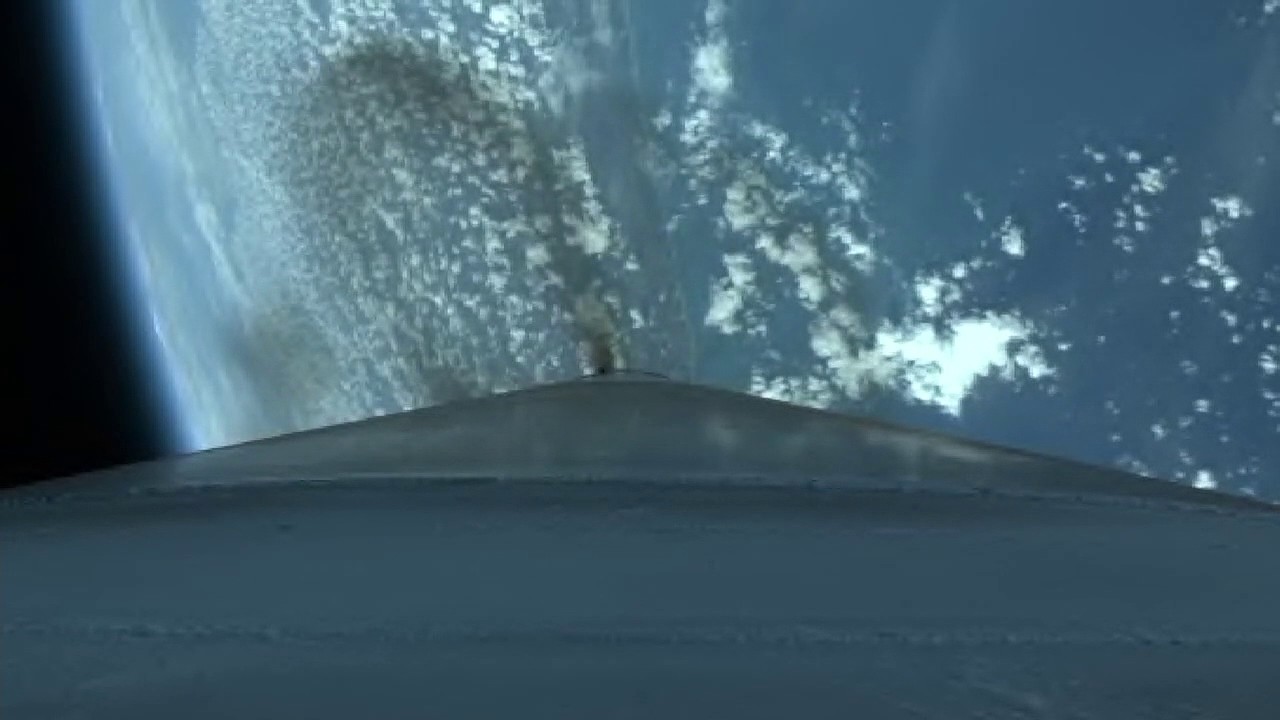
This is the eighth planned flight of the Orbital ATK's unmanned resupply spacecraft Cygnus and its seventh flight to the International Space Station under the Commercial Resupply Services contract with NASA. Orbital ATK named the vehicle after astronaut John Glenn, the first American to orbit Earth and pioneer of human spaceflight.
An Atlas V with a 4 meter diameter fairing, no boosters and a single centaur upper stage engine.
See DetailsCygnus CRS OA-7, also known as Orbital ATK CRS-7, is the eighth flight of the Orbital ATK unmanned resupply spacecraft Cygnus and its seventh flight to the International Space Station under the Commercial Resupply Services contract with NASA. Orbital and NASA jointly developed a new space transportation system to provide commercial cargo resupply services to the International Space Station (ISS). Under the Commercial Orbital Transportation Services (COTS) program, then Orbital Sciences designed and built Antares, a medium-class launch vehicle; Cygnus, an advanced maneuvering spacecraft, and a Pressurized Cargo Module which is provided by Orbital's industrial partner Thales Alenia Space. The OA-7 is named the S.S. John Glenn in honor of astronaut and senator John Glenn, the first US astronaut to orbit the Earth on Mercury 6 and the oldest to go to space on STS-95.
Cygnus Enhanced DetailsUnited Launch Alliance (ULA) is a joint venture of Lockheed Martin Space Systems and Boeing Defense, Space & Security. ULA was formed in December 2006 by combining the teams at these companies which provide spacecraft launch services to the government of the United States. ULA launches from both coasts of the US. They launch their Atlas V vehicle from LC-41 in Cape Canaveral and LC-3E at Vandeberg. Their Delta IV launches from LC-37 at Cape Canaveral and LC-6 at Vandenberg.
INFO WIKI3 Chinese reconnaissance satellites of unknown purposes, officially reported as for "Electromagnetic environment probing".
A batch of 9 Low Earth Orbit communication satellites for the Chinese state owned SatNet constellation operated by the China Satellite Network Group.…
Share-ride of 9 commercial Earth observation and technology demonstration satellites to SSO, details TBD.
A batch of 27 satellites for the Starlink mega-constellation - SpaceX's project for space-based Internet communication system.
4 X-band synthetic-aperture radar Earth observation satellites for the Chinese Earth observation satellite company PIESAT.
Synthetic aperture radar satellite for Japanese Earth imaging company Synspective.
Note: Satellite serial number and Cosmos designation not confirmed. Glonass-K are the third generation of satellite design for GLONASS satellite n…
2 Earth observation radar satellites built by the Chinese satellite manufacturer SpaceTY.
USSF-259 is a classified mission for the United States Space Force. It is possibly a batch of classified LEO satellites based on SpaceX’s Starshield …
A batch of 9 Low Earth Orbit communication satellites for the Chinese state owned SatNet constellation operated by the China Satellite Network Group.…