Press Event
SPHEREx and PUNCH Science Overview News Conference
Online Falcon 9 Block 5 | SPHEREx & PUNCH
SPHEREx and PUNCH Science Overview News Conference
- Shawn Domagal-Goldman, acting director, Astrophysics Division, NASA Headquarters
- Joe Westlake, director, Heliophysics Division, NASA Headquarters
- Nicholeen Viall, PUNCH Mission Scientist, NASA’s Goddard Space Flight Center
- Rachel Akeson, SPHEREx science data center lead, Caltech/IPAC
- Phil Korngut, SPHEREx instrument scientist, Caltech
Updates

LL2 • Feb. 25, 2025, 7 p.m.
Official Webcast by NASA has started

hitura-nobad • Feb. 18, 2025, 8 p.m.
Added Event
Related Information
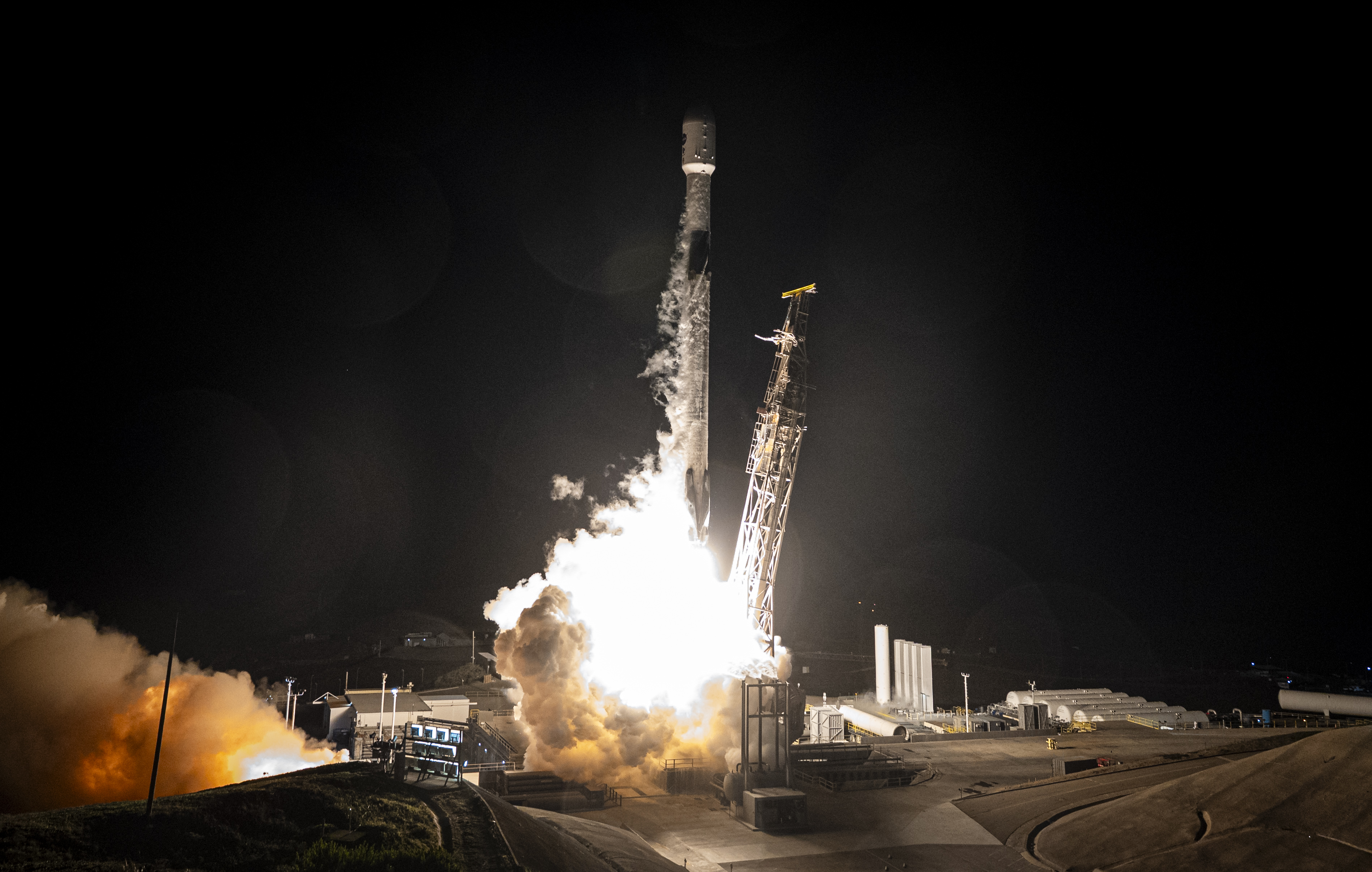
Falcon 9 Block 5 | SPHEREx & PUNCH
SpaceX | United States of AmericaVandenberg SFB, CA, USA
March 12, 2025, 3:10 a.m.
Status: Launch Successful
Mission:
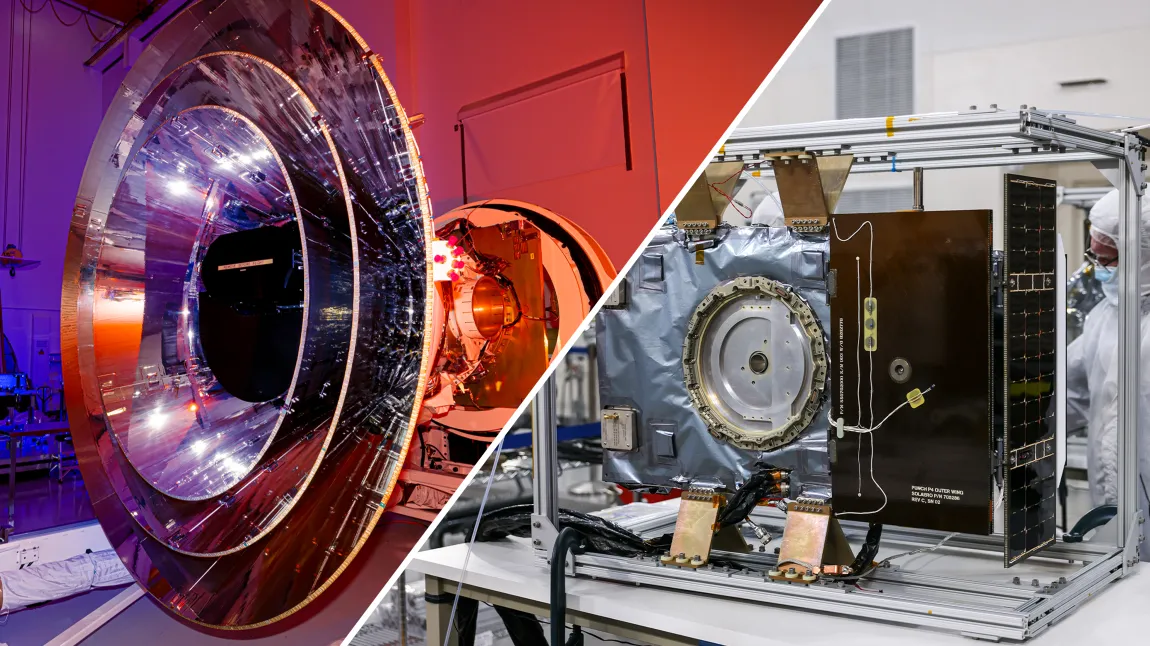
SPHEREx is a planned two-year astrophysics mission to survey the sky in the near-infrared light, which, though not visible to the human eye, serves as a powerful tool for answering cosmic questions involving the birth of the universe, and the subsequent development of galaxies. It also will search for water and organic molecules – essentials for life as we know it – in regions where stars are born from gas and dust, known as stellar nurseries, as well as disks around stars where new planets could be forming. Astronomers will use the mission to gather data on more than 300 million galaxies, as well as more than 100 million stars in our own Milky Way galaxy. NASA’s Polarimeter to Unify the Corona and Heliosphere (PUNCH) mission will share a ride to space with SPHEREx. It consists of four suitcase-sized satellites, which will focus on the Sun’s outer atmosphere (the corona) and how it generates the solar wind. The spacecraft also will track coronal mass ejections – large eruptions of solar material that can drive large space weather events near Earth – to better understand their evolution and develop new techniques for predicting such eruptions.
Sun-Synchronous Orbit B1088 - Flight Proven ( ) Landing Zone 4Falcon 9
Starlink Group 17-51
Space Launch Complex 4E - Vandenberg SFB, CA, USAA batch of 24 satellites for the Starlink mega-constellation - SpaceX's project for space-based Internet communication system.
Starship
Flight 13
Orbital Launch Pad 2 - SpaceX Starbase, TX, USA13th test flight of the two-stage Starship launch vehicle. Second flight of Starship V3. For the first time, Starship will carry 20 V3 Starlink sa…
Kinetica 1
5 satellites
Launch Area 130 - Jiuquan Satellite Launch Center, People's Republic of ChinaShare-ride of 5 commercial Earth observation and technology demonstration satellites to SSO, including SpaceTY's TY-48. Details TBD.
Long March 3B/E
Tianlian 2-06
Launch Complex 2 (LC-2) - Xichang Satellite Launch Center, People's Republic of ChinaTianlian is a Chinese data tracking and relay communications geostationary satellite series. The TL 2 (Tian Lian 2) satellites represent the second g…
Gravity-1
9 satellites
Yellow Sea (launch location 5) - Haiyang Oriental SpaceportCarried 9 satellites on a share-ride to sun-synchronous orbit. Details TBD.
Falcon 9
MRV-1
Space Launch Complex 40 - Cape Canaveral SFS, FL, USAThe Northrop Grumman/SpaceLogistics MRV-1 is a mission extension payload including a mission robotic vehicle (MRV) and multiple mission extension pod…
Falcon 9
Starlink Group 17-39
Space Launch Complex 4E - Vandenberg SFB, CA, USAA batch of 24 satellites for the Starlink mega-constellation - SpaceX's project for space-based Internet communication system.
Soyuz 2.1b
16 x Rassvet-3
43/4 (43R) - Plesetsk Cosmodrome, Russian FederationNote: Payload identities uncertain. Batch of 16 Rassvet-3 Low Earth Orbit communication satellites for the Russian Byuro-1440 (Bureau 1440) conste…
Vikram-I
Demo Flight
Satish Dhawan Space Centre First Launch Pad - Satish Dhawan Space Centre, IndiaFirst launch of Skyroot Aerospace's Vikram-I launch vehicle. This first launch will carry 4 payloads: - Grahaa Space's SOLARAS S3 satellite - C…
Falcon 9
SDA Tranche 1 Transport Layer E
Space Launch Complex 4E - Vandenberg SFB, CA, USATranche 1 Transport Layer E is one of six missions by the United States Space Force Space Development Agency (SDA) for the Proliferated Warfighter Sp…

