Press Event
NASA TRACERS Media Teleconference
Online Falcon 9 Block 5 | TRACERS
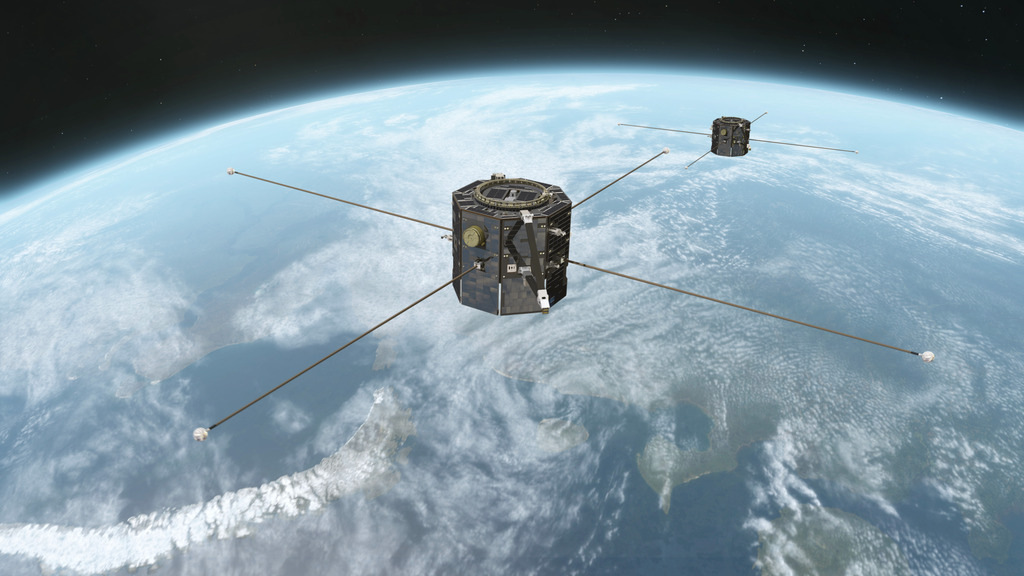
NASA will hold a media teleconference to share information about the agency’s upcoming Tandem Reconnection and Cusp Electrodynamics Reconnaissance Satellites, or TRACERS, mission.
The TRACERS mission is a pair of twin satellites that will study how Earth’s magnetic shield — the magnetosphere — protects our planet from the supersonic stream of material from the Sun called solar wind. As they fly pole to pole in a Sun-synchronous orbit, the two TRACERS spacecraft will measure how magnetic explosions send these solar wind particles zooming down into Earth’s atmosphere — and how these explosions shape the space weather that impacts our satellites, technology, and astronauts.
Also launching on this flight will be three additional NASA-funded payloads. The Athena EPIC (Economical Payload Integration Cost) SmallSat, led by NASA’s Langley Research Center in Hampton, Virginia, is designed to demonstrate an innovative, configurable way to put remote-sensing instruments into orbit faster and more affordably. The Polylingual Experimental Terminal technology demonstration, managed by the agency’s SCaN (Space Communications and Navigation) program, will showcase new technology that empowers missions to roam between communications networks in space, like cell phones roam between providers on Earth. Finally, the Relativistic Electron Atmospheric Loss (REAL) CubeSat, led by Dartmouth College in Hanover, New Hampshire, will use space as a laboratory to understand how high-energy particles within the bands of radiation that surround Earth are naturally scattered into the atmosphere, aiding the development of methods for removing these damaging particles to better protect satellites and the critical ground systems they support.
Updates

LL2 • July 17, 2025, 2:50 p.m.
Official Webcast by NASA Video has started

Nosu • July 15, 2025, 6:51 a.m.
Adding event
Related Information
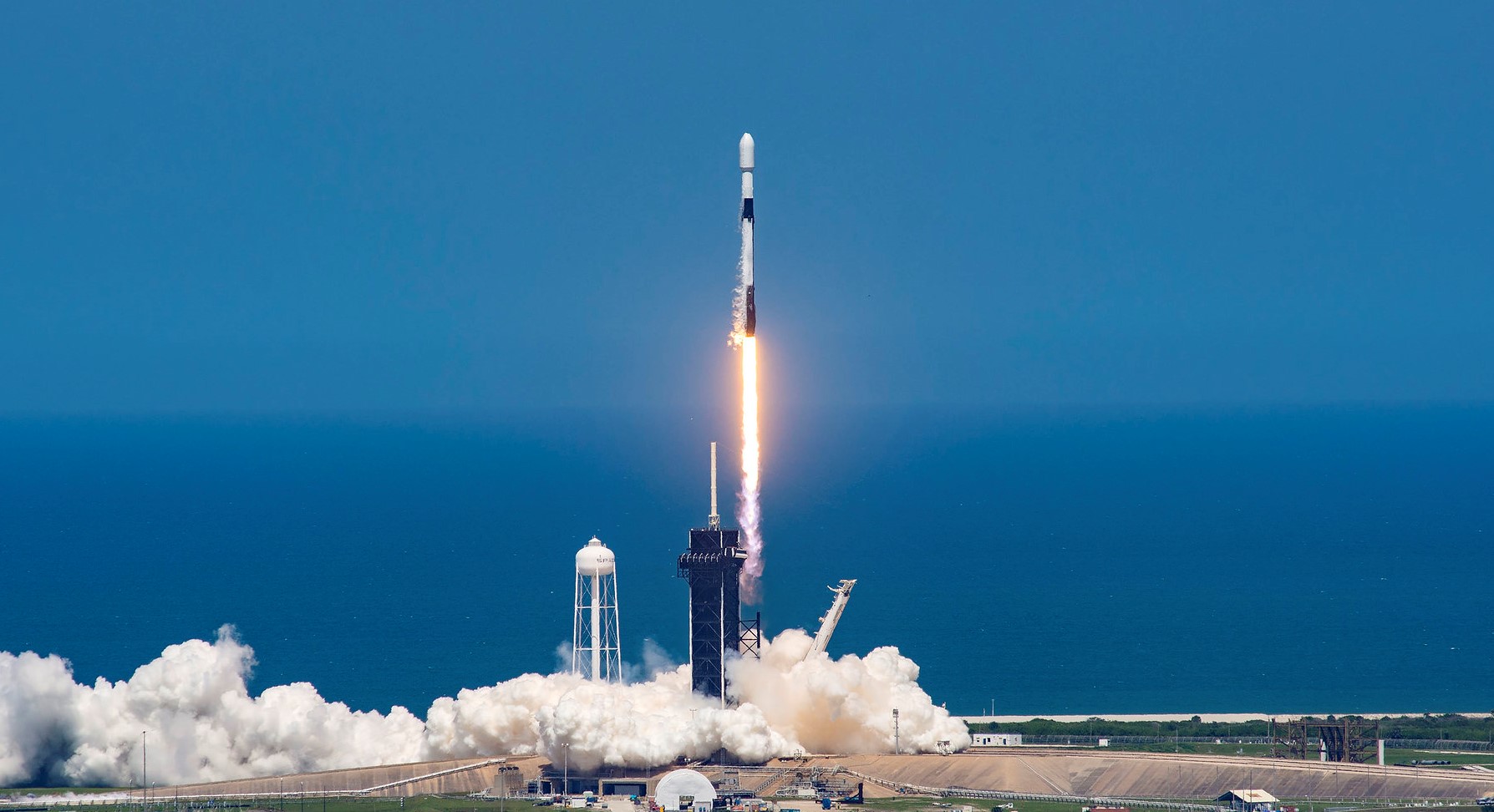
Falcon 9 Block 5 | TRACERS
SpaceX | United States of AmericaVandenberg SFB, CA, USA
Status: Launch Successful
Mission:
NASA's Tandem Reconnection and Cusp Electrodynamics Reconnaissance Satellites (TRACERS) mission, consisting of two identical satellites that will orbit Earth in tandem (one following the other), will help understand magnetic re-connection and its effects in Earth’s atmosphere. Magnetic re-connection occurs when activity from the Sun interacts with Earth’s magnetic field. By understanding this process, scientists will be able to better understand and prepare for impacts of solar activity on Earth. Hitchhiking small satellites: * Athena EPIC (Economical Payload Integration Cost) * Polylingual Experimental Terminal (PExT) * Relativistic Electron Atmospheric Loss (REAL)
Sun-Synchronous Orbit B1081 - Flight Proven ( ) Landing Zone 4Falcon 9
Starlink Group 15-16
Space Launch Complex 4E - Vandenberg SFB, CA, USAA batch of 27 satellites for the Starlink mega-constellation - SpaceX's project for space-based Internet communication system.
Long March 8A
SatNet LEO Group 28
Commercial LC-1 - Wenchang Space Launch Site, People's Republic of ChinaA batch of 9 Low Earth Orbit communication satellites for the Chinese state owned SatNet constellation operated by the China Satellite Network Group.…
Falcon 9
Starlink Group 15-15
Space Launch Complex 4E - Vandenberg SFB, CA, USAA batch of 27 satellites for the Starlink mega-constellation - SpaceX's project for space-based Internet communication system.
Long March 4B
Yaogan 53-07 to 09/56-19 to 21
Launch Area 94 (SLS-2 / 603) - Jiuquan Satellite Launch Center, People's Republic of China6 Chinese military “remote sensing” satellite of unknown purposes.
Long March 6A
Yaogan 50-03
Launch Complex 9A - Taiyuan Satellite Launch Center, People's Republic of ChinaThe Yaogan 50-03 is a Chinese military “remote sensing” satellite of unknown purposes.
Electron
We're Not Hawking Around (3x HawkEye 360)
Rocket Lab Launch Complex 1A - Rocket Lab Launch Complex 1, Mahia Peninsula, New ZealandHawkEye 360 is a a space-based civil global intelligence satellite network using radio frequency (RF) technology to help monitor transportation acros…
Ceres-1S
Xiguang-4 01
Rizhao offshore launch location - Haiyang Oriental Spaceport0.5 meter resolution Earth observation satellite for the city of Guangzhou government and Guangzhou University with multi-spectral imaging capability…
Falcon 9
Bandwagon 5 (Dedicated Mid-Inclination Rideshare)
Space Launch Complex 40 - Cape Canaveral SFS, FL, USADedicated rideshare flight to a mid-inclination orbit with dozens of small microsatellites and nanosatellites for commercial and government customers…
H3-24
Martian Moons eXploration (MMX)
Yoshinobu Launch Complex LP-2 - Tanegashima Space Center, JapanMMX is a Japanese scientific mission to land on Phobos, one of the two moons of Mars, to collect samples before bringing them back to Earth. The m…
Falcon 9
USSF-481
Space Launch Complex 4E - Vandenberg SFB, CA, USAA classified mission for the United States Space Force. It is possibly a batch of classified LEO satellites based on SpaceX’s Starshield satellite bu…