Press Event
NASA Katalyst Swift Reboost Preview Teleconference
Online Pegasus XL | Swift Boost Mission
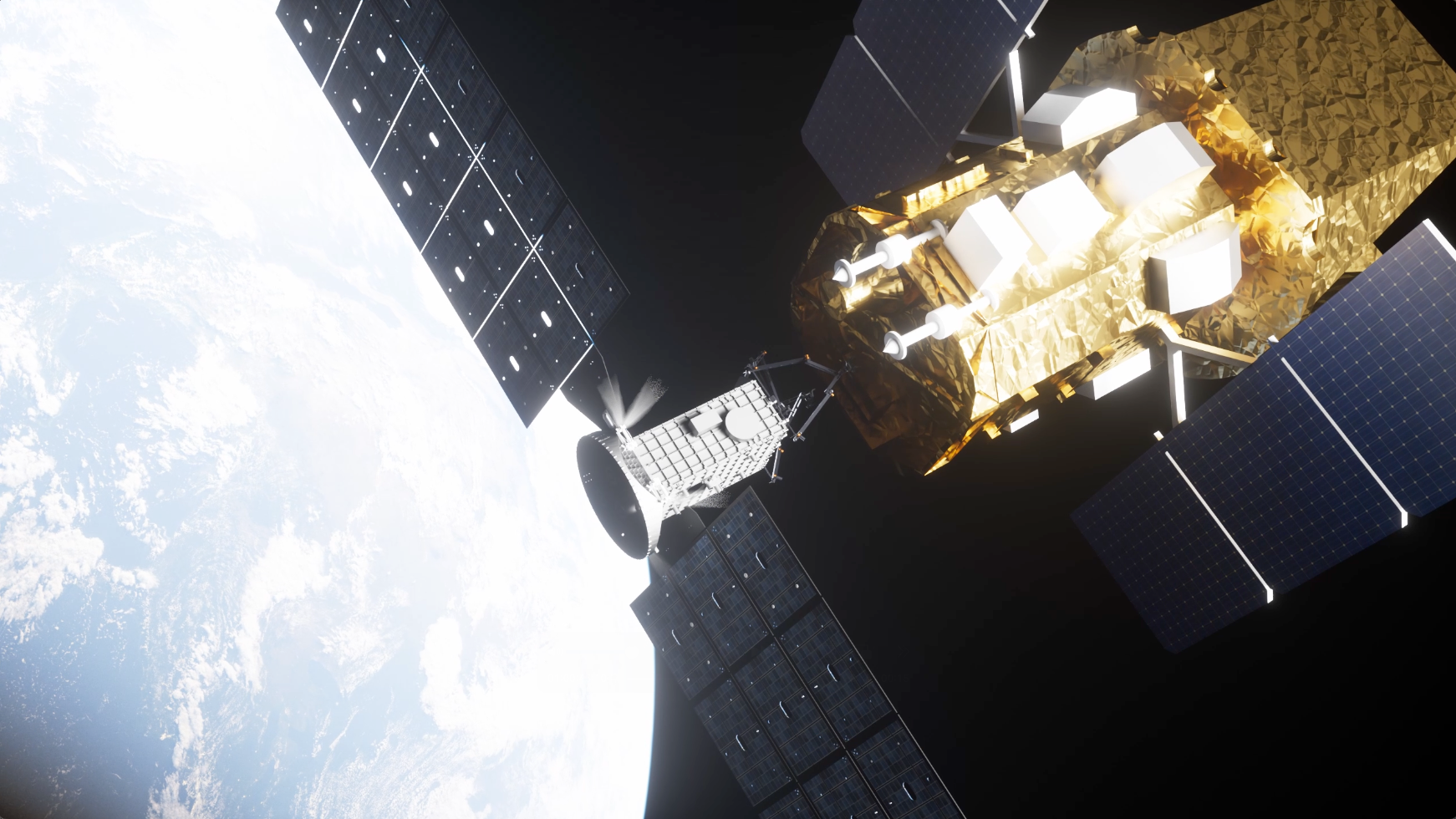
NASA will host an audio-only media teleconference to preview the Katalyst Space mission to boost the orbit of NASA’s Neil Gehrels Swift Observatory.
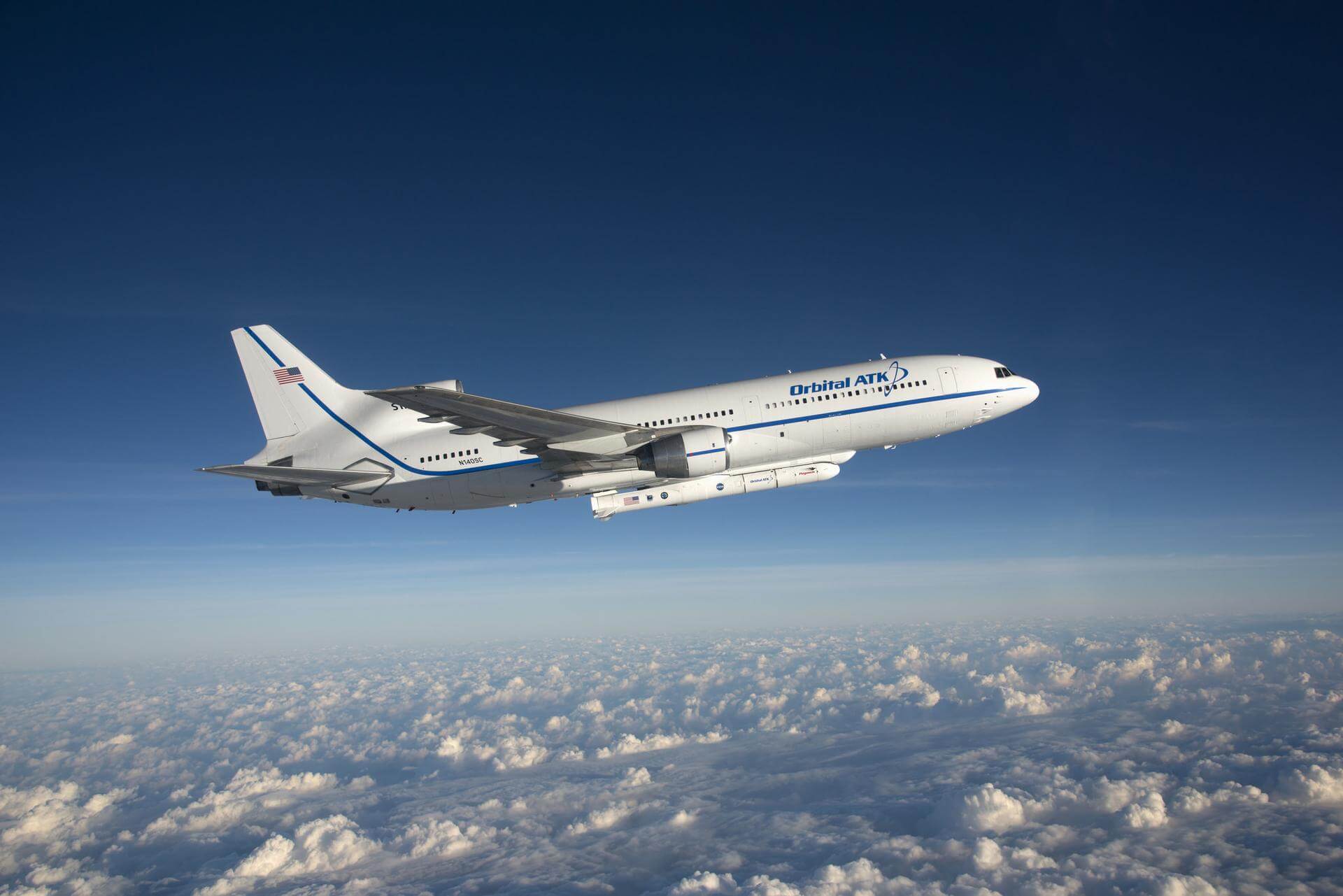
Katalyst’s robotic servicing spacecraft, called LINK, will attempt to rendezvous with Swift and raise its altitude, extending its science mission lifespan and advancing a key capability for the future of space exploration. The LINK spacecraft will launch on Northrop Grumman’s Pegasus XL rocket later this month from Kwajalein Atoll in the Marshall Islands.
Participants in the media teleconference include:
- Shawn Domagal-Goldman, division director, Astrophysics, NASA Headquarters in Washington
- Brad Cenko, principal investigator, Swift, NASA’s Goddard Space Flight Center in Greenbelt, Maryland
- Kieran Wilson, principal investigator, LINK, Katalyst Space
- Robert Lamontagne, vice president, strategic partnerships, Katalyst Space
- Wes Collier, vice president, launch systems, Northrop Grumman
The Swift mission, which launched in 2004, leads NASA’s fleet of telescopes in studying changes in the high-energy universe, like gamma-ray bursts, which are the most powerful explosions in the cosmos. When a rapid, sudden event takes place in the sky, Swift serves as a “dispatcher,” providing critical information that allows other “first responder” missions to follow up to learn more about how the universe works.
After 21 years, Swift’s low Earth orbit has begun to rapidly decay because of increased solar activity. Rather than allowing the observatory to re-enter Earth’s atmosphere, as many missions do at the end of their lifetimes, NASA is using this opportunity to advance U.S. spacecraft servicing technology. In September 2025, NASA awarded a contract to Katalyst to mount a robotic servicing mission for Swift in less than a year. The mission will use LINK to rendezvous with Swift and boost it to a higher altitude, demonstrating a key capability for the future of space exploration.
Updates

Nosu • June 12, 2026, 7:50 a.m.
Adding event
Related Information
Pegasus XL | Swift Boost Mission
Orbital Sciences Corporation | United States of AmericaAir launch to orbit
TBD June, 2026
Status: To Be Determined
Mission:
Contracted by NASA under the Small Business Innovation Research Phase 3 contract, Katalyst Space Technologies' LINK servicing spacecraft will rendezvous and attach to NASA’s Neil Gehrels Swift Observatory to re-boost its orbit. This aims to demonstrate a key capability for the future of space exploration and extending the Swift mission’s science lifetime in gamma ray astronomy.
Low Earth OrbitFalcon 9
Starlink Group 10-54
Space Launch Complex 40 - Cape Canaveral SFS, FL, USAA batch of 29 satellites for the Starlink mega-constellation - SpaceX's project for space-based Internet communication system.
H3-30
H3-30 Test Flight
Yoshinobu Launch Complex LP-2 - Tanegashima Space Center, JapanTest flight of the H3-30 variant of the H3 launch vehicle with 3 LE-9 engines in the first stage and no SRBs. The flight will carry a dummy main payl…
Falcon 9
Starlink Group 17-44
Space Launch Complex 4E - Vandenberg SFB, CA, USAA batch of 24 satellites for the Starlink mega-constellation - SpaceX's project for space-based Internet communication system.
Electron
Curveball
Rocket Lab Launch Complex 2 (Launch Area 0 C) - Wallops Flight Facility, Virginia, USASub-orbital launch under Rocket Lab’s Hypersonic Accelerator Suborbital Test Electron (HASTE) program, details TBD.
Long March 5
TJSW-25
101 - Wenchang Space Launch Site, People's Republic of ChinaChinese classified satellite claimed to be for communication technology test purposes. Actual mission not known.
Zhuque-2E Block 2
2 x SatNet DTC test satellites
Launch Area 96A - Jiuquan Satellite Launch Center, People's Republic of ChinaA pair of demonstration satellites for Direct-To-Cell (DTC) communications from Low Earth Orbit for SpaceSail and China Mobile: * SpaceSail DTC 01…
Falcon 9
Starlink Group 10-35
Space Launch Complex 40 - Cape Canaveral SFS, FL, USAA batch of 29 satellites for the Starlink mega-constellation - SpaceX's project for space-based Internet communication system.
Falcon 9
Starlink Group 17-43
Space Launch Complex 4E - Vandenberg SFB, CA, USAA batch of 21 satellites for the Starlink mega-constellation - SpaceX's project for space-based Internet communication system. 2 US military Stars…
Long March 8
SpaceSail Polar Group #12
Commercial LC-1 - Wenchang Space Launch Site, People's Republic of China18 Low Earth Orbit communication satellites with Ku, Q and V band payloads for the G60 constellation operated by Shanghai Spacesail Technologies with…
Long March 6A
SpaceSail Polar Group #11
Launch Complex 9A - Taiyuan Satellite Launch Center, People's Republic of China18 Low Earth Orbit communication satellites with Ku, Q and V band payloads for the G60 constellation operated by Shanghai Spacesail Technologies with…

