Press Event
NASA IMAP Media Teleconference
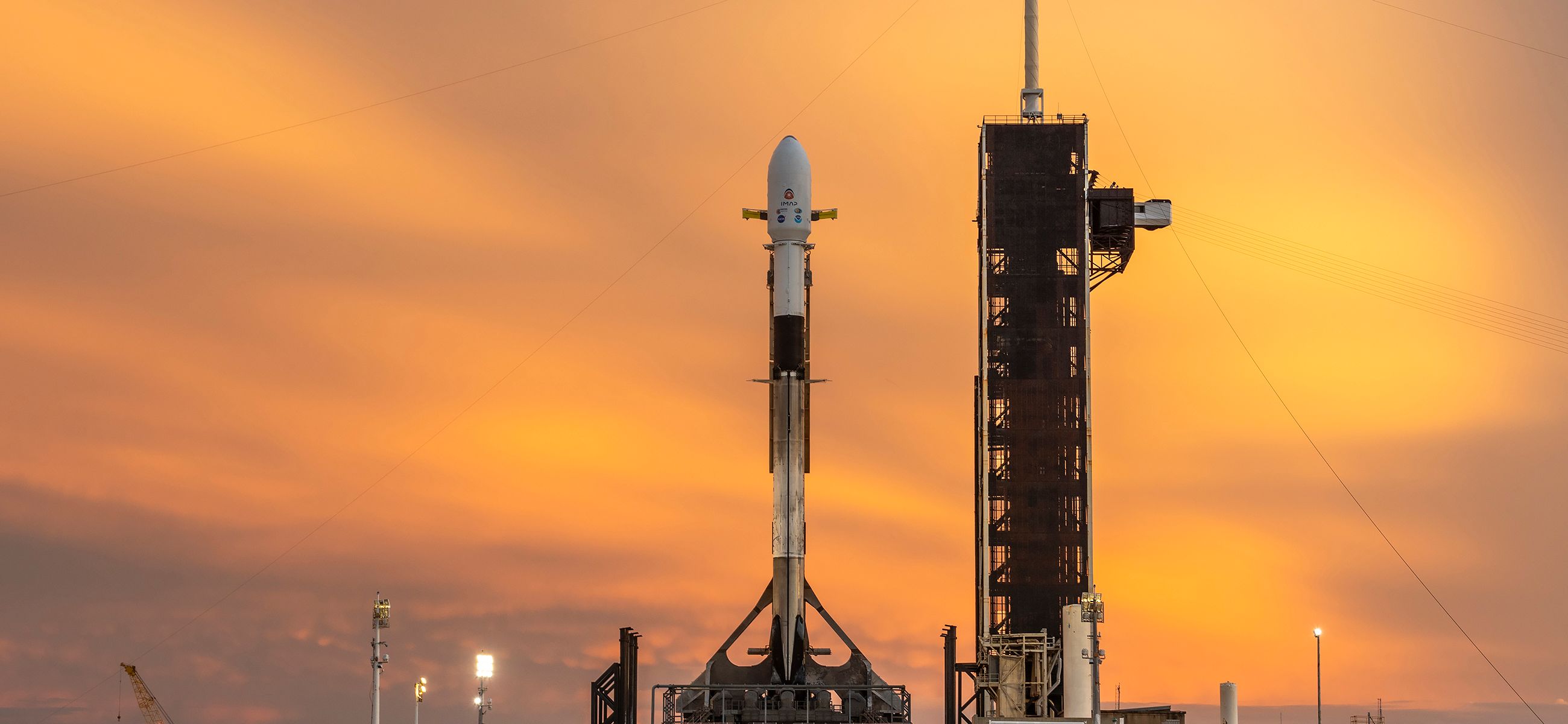
Online Falcon 9 Block 5 | IMAP & others
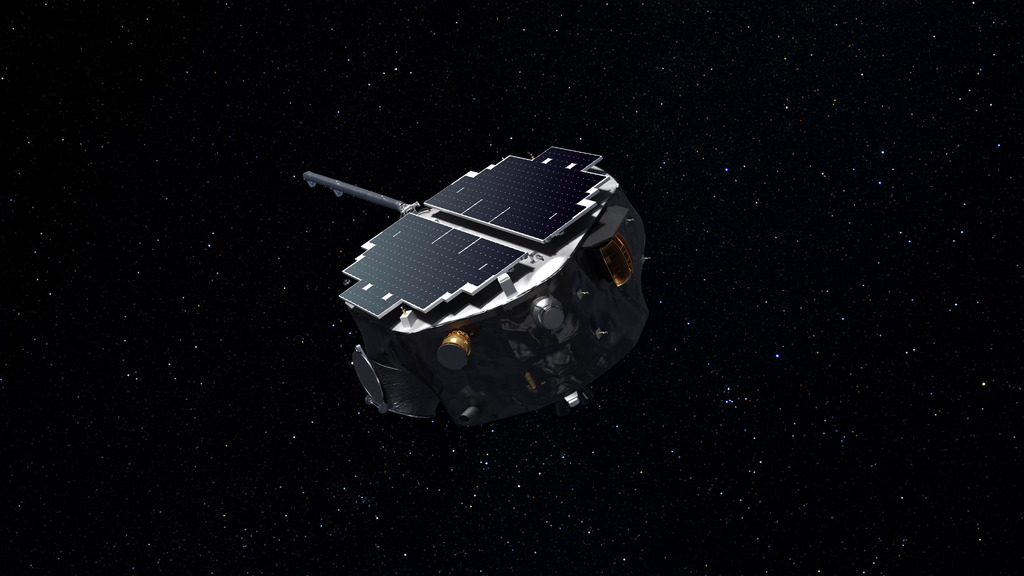
NASA will hold a media teleconference to discuss the agency’s upcoming Sun and space weather missions, IMAP (Interstellar Mapping and Acceleration Probe) and Carruthers Geocorona Observatory.
The IMAP mission will map the boundaries of our heliosphere, the vast bubble created by the Sun’s wind that encapsulates our entire solar system. As a modern-day celestial cartographer, IMAP will explore how the heliosphere interacts with interstellar space, as well as chart the range of particles that fill the space between the planets. The IMAP mission also will support near real-time observations of the solar wind and energetic particles. These energetic particles can produce hazardous space weather that can impact spacecraft and other NASA hardware as the agency explores deeper into space, including at the Moon under the Artemis campaign.
NASA’s Carruthers Geocorona Observatory will image the ultraviolet glow of Earth’s exosphere, the outermost region of our planet’s atmosphere. This data will help scientists understand how space weather from the Sun shapes the exosphere and ultimately impacts our planet. The first observation of this glow – called the geocorona – was captured during Apollo 16, when a telescope designed and built by George Carruthers was deployed on the Moon.
Participants include:
- Nicky Fox, associate administrator, Science Mission Directorate, NASA Headquarters in Washington
- Teresa Nieves-Chinchilla, director, Moon to Mars Space Weather Analysis Office, NASA’s Goddard Space Flight Center in Greenbelt, Maryland
- David J. McComas, IMAP principal investigator, Princeton University
- Lara Waldrop, Carruthers Geocorona Observatory principal investigator, University of Illinois Urbana-Champaign
Updates

LL2 • Sept. 4, 2025, 3:57 p.m.
Official Webcast by NASA Video has started

Nosu • Aug. 29, 2025, 7:15 a.m.
Adding event
Related Information
Falcon 9 Block 5 | IMAP & others
SpaceX | United States of AmericaKennedy Space Center, FL, USA
Status: Launch Successful
Mission:
IMAP (Interstellar Mapping and Acceleration Probe) is a NASA mission to study interactions between solar wind and the local interstellar medium. Carrying a suite of 10 scientific instruments, IMAP is able to investigate how particles are accelerated, determine their composition, as well as help to advance space weather forecasting models. The IMAP launch also includes the space weather satellite SWFO-L1 (Space Weather Follow-On - L1) for NOAA and the GLIDE (Global Lyman-alpha Imagers of the Dynamic Exosphere/Carruthers Geocorona Observatory) mission to study far ultraviolet emission in the Earth's exosphere.
Heliocentric L1 B1096 - Flight Proven ( ) Just Read the InstructionsFalcon 9
Starlink Group 10-49
Space Launch Complex 40 - Cape Canaveral SFS, FL, USAA batch of 29 satellites for the Starlink mega-constellation - SpaceX's project for space-based Internet communication system.
Long March 6C
7 satellites
Launch Complex 9A - Taiyuan Satellite Launch Center, People's Republic of ChinaShare ride of 7 satellites to sun-synchronous orbit, including the ham radio satellite BY70-4. Details TBD.
Soyuz 2.1b/Fregat
Glonass-K1 No. 19
43/3 (43L) - Plesetsk Cosmodrome, Russian FederationNote: Payload identity not confirmed. Glonass-K are the third generation of satellite design for GLONASS satellite navigation system. GLONASS is a…
Falcon 9
Starlink Group 15-20
Space Launch Complex 4E - Vandenberg SFB, CA, USAA batch of 27 satellites for the Starlink mega-constellation - SpaceX's project for space-based Internet communication system.
Falcon 9
Starlink Group 10-39
Space Launch Complex 40 - Cape Canaveral SFS, FL, USAA batch of 29 satellites for the Starlink mega-constellation - SpaceX's project for space-based Internet communication system.
Electron
The Lightning God Defends (iQPS Launch 8)
Rocket Lab Launch Complex 1B - Rocket Lab Launch Complex 1, Mahia Peninsula, New ZealandSynthetic aperture radar Earth observation satellite for Japanese Earth imaging company iQPS.
Falcon 9
Starlink Group 17-50
Space Launch Complex 4E - Vandenberg SFB, CA, USAA batch of 24 satellites for the Starlink mega-constellation - SpaceX's project for space-based Internet communication system.
Zhuque-3
Honghu-03
Launch Area 96B - Jiuquan Satellite Launch Center, People's Republic of ChinaNote: Second test launch of LandSpace’s ZQ-3 rocket and first ever successful orbital launch vehicle booster recovery by a Chinese private launch ser…
Long March 2C
Satellite for Earth Observation (SEO)
Launch Complex 9 - Taiyuan Satellite Launch Center, People's Republic of ChinaSatellite for Earth Observation (SEO) is an Earth observation satellite project of the United Arab Emirates (UAE) by the National Space Science and T…
Long March 12
SatNet LEO Group 24
Commercial LC-2 - Wenchang Space Launch Site, People's Republic of ChinaA batch of 9 Low Earth Orbit communication satellites for the Chinese state owned SatNet constellation operated by the China Satellite Network Group.…

