Press Event
NASA DART Pre-Impact Press Briefing
Falcon 9 Block 5 | Double Asteroid Redirection Test (DART)
NASA will hold a press briefing ahead of the DART mission impact.
Related Information
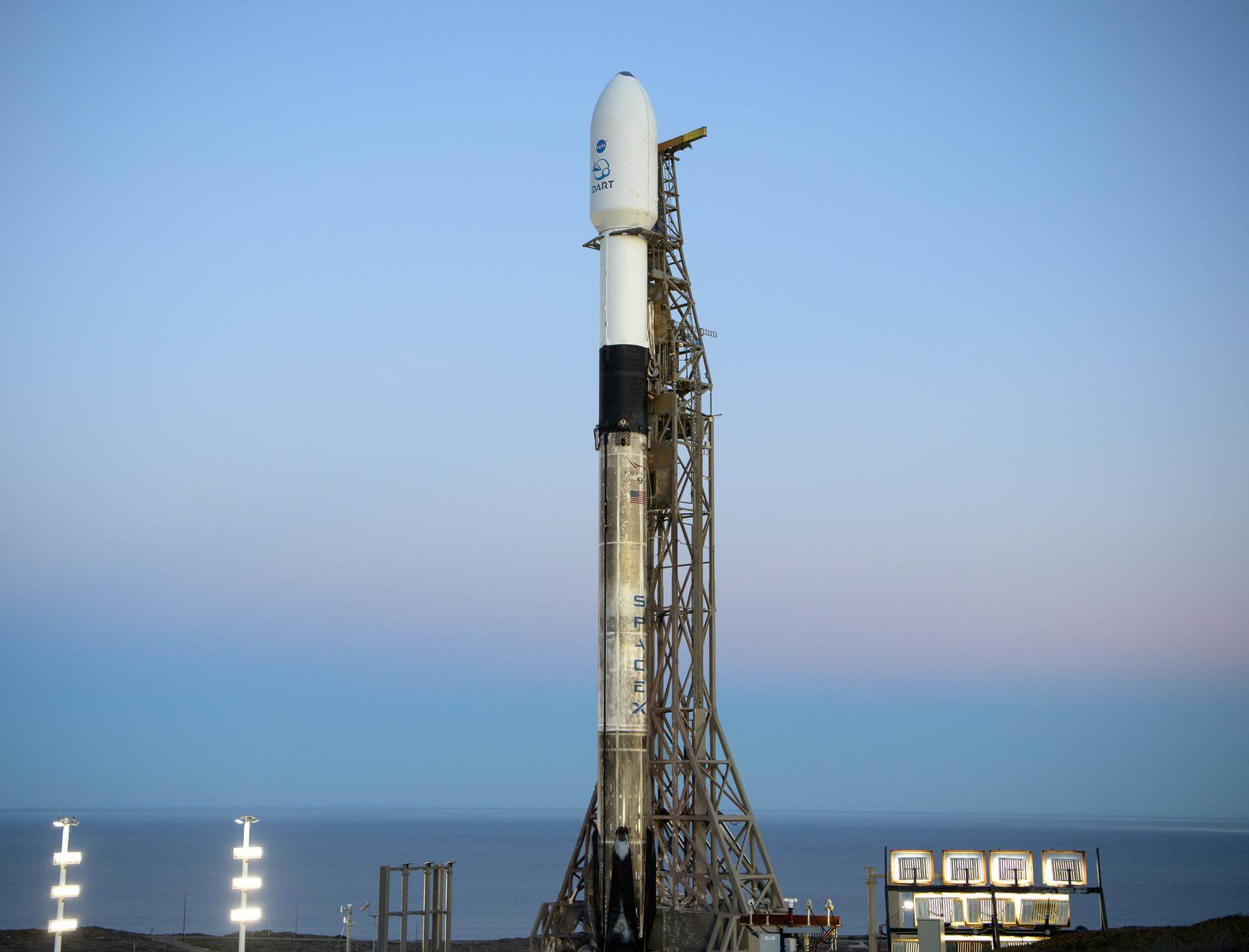
Falcon 9 Block 5 | Double Asteroid Redirection Test (DART)
SpaceX | United States of AmericaVandenberg SFB, CA, USA
Status: Launch Successful
Mission:
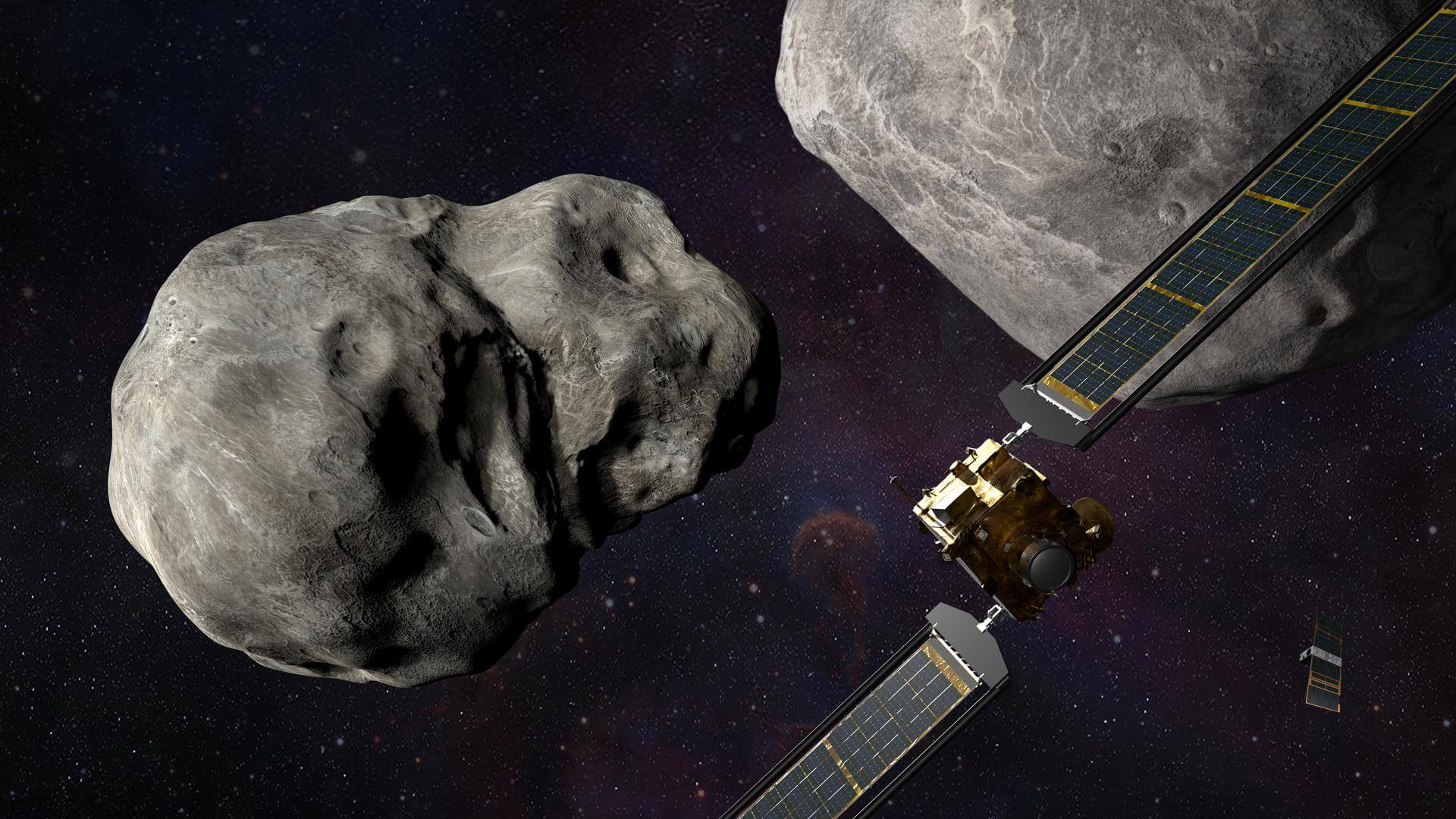
Double Asteroid Redirection Test (DART) mission is the first-ever mission to demonstrate the capability to deflect an asteroid by colliding a spacecraft with it at high speed, a technique known as a kinetic impactor. DART is a planetary defense-driven test of one of the technologies for preventing the Earth impact of a hazardous asteroid: the kinetic impactor. DART's primary objective is to demonstrate a kinetic impact on a small asteroid. The binary near-Earth asteroid (65803) Didymos is the target for DART. While Didymos' primary body is approximately 800 meters across, its secondary body has a 150-meter size, which is more typical of the size of asteroids that could pose a more common hazard to Earth. The DART spacecraft will achieve the kinetic impact by deliberately crashing itself into the moonlet at a speed of approximately 6 km/s, with the aid of an onboard camera and sophisticated autonomous navigation software. The collision will change the speed of the moonlet in its orbit around the main body by a fraction of one percent, enough to be measured using telescopes on Earth.
Heliocentric N/A B1063 - Flight Proven ( ) Of Course I Still Love YouLong March 8A
SatNet LEO Group 28
Commercial LC-1 - Wenchang Space Launch Site, People's Republic of ChinaA batch of 9 Low Earth Orbit communication satellites for the Chinese state owned SatNet constellation operated by the China Satellite Network Group.…
Falcon 9
Starlink Group 15-15
Space Launch Complex 4E - Vandenberg SFB, CA, USAA batch of 27 satellites for the Starlink mega-constellation - SpaceX's project for space-based Internet communication system.
Long March 4B
Yaogan 53-07 to 09/56-19 to 21
Launch Area 94 (SLS-2 / 603) - Jiuquan Satellite Launch Center, People's Republic of China6 Chinese military “remote sensing” satellite of unknown purposes.
Long March 6A
Yaogan 50-03
Launch Complex 9A - Taiyuan Satellite Launch Center, People's Republic of ChinaThe Yaogan 50-03 is a Chinese military “remote sensing” satellite of unknown purposes.
Electron
We're Not Hawking Around (3x HawkEye 360)
Rocket Lab Launch Complex 1A - Rocket Lab Launch Complex 1, Mahia Peninsula, New ZealandHawkEye 360 is a a space-based civil global intelligence satellite network using radio frequency (RF) technology to help monitor transportation acros…
Ceres-1S
Xiguang-4 01
Rizhao offshore launch location - Haiyang Oriental Spaceport0.5 meter resolution Earth observation satellite for the city of Guangzhou government and Guangzhou University with multi-spectral imaging capability…
Falcon 9
Bandwagon 5 (Dedicated Mid-Inclination Rideshare)
Space Launch Complex 40 - Cape Canaveral SFS, FL, USADedicated rideshare flight to a mid-inclination orbit with dozens of small microsatellites and nanosatellites for commercial and government customers…
H3-24
Martian Moons eXploration (MMX)
Yoshinobu Launch Complex LP-2 - Tanegashima Space Center, JapanMMX is a Japanese scientific mission to land on Phobos, one of the two moons of Mars, to collect samples before bringing them back to Earth. The m…
Falcon 9
USSF-481
Space Launch Complex 4E - Vandenberg SFB, CA, USAA classified mission for the United States Space Force. It is possibly a batch of classified LEO satellites based on SpaceX’s Starshield satellite bu…
Zhuque-2E Block 2
10 satellites
Launch Area 96A - Jiuquan Satellite Launch Center, People's Republic of ChinaRide-share of 10 satellites to sun-synchronous orbit, including: * Guangchuan-03 & 04 (LT-03/04) from LandSpace's subsidiary LandTower for testing…