Yury Onufriyenko
Russian - (RFSA)
Retired
Date of Birth: Feb. 6, 1961
Age: 65
Col. Yuri Ivanovich Onufriyenko (Russian: Юрий Иванович Онуфриенко, Ukrainian: Юрій Іванович Онуфрієнко) (born 6 February 1961) is a retired Russian cosmonaut. He is a veteran of two extended spaceflights, aboard the space station Mir in 1996 and aboard the International Space Station in 2001-2002.
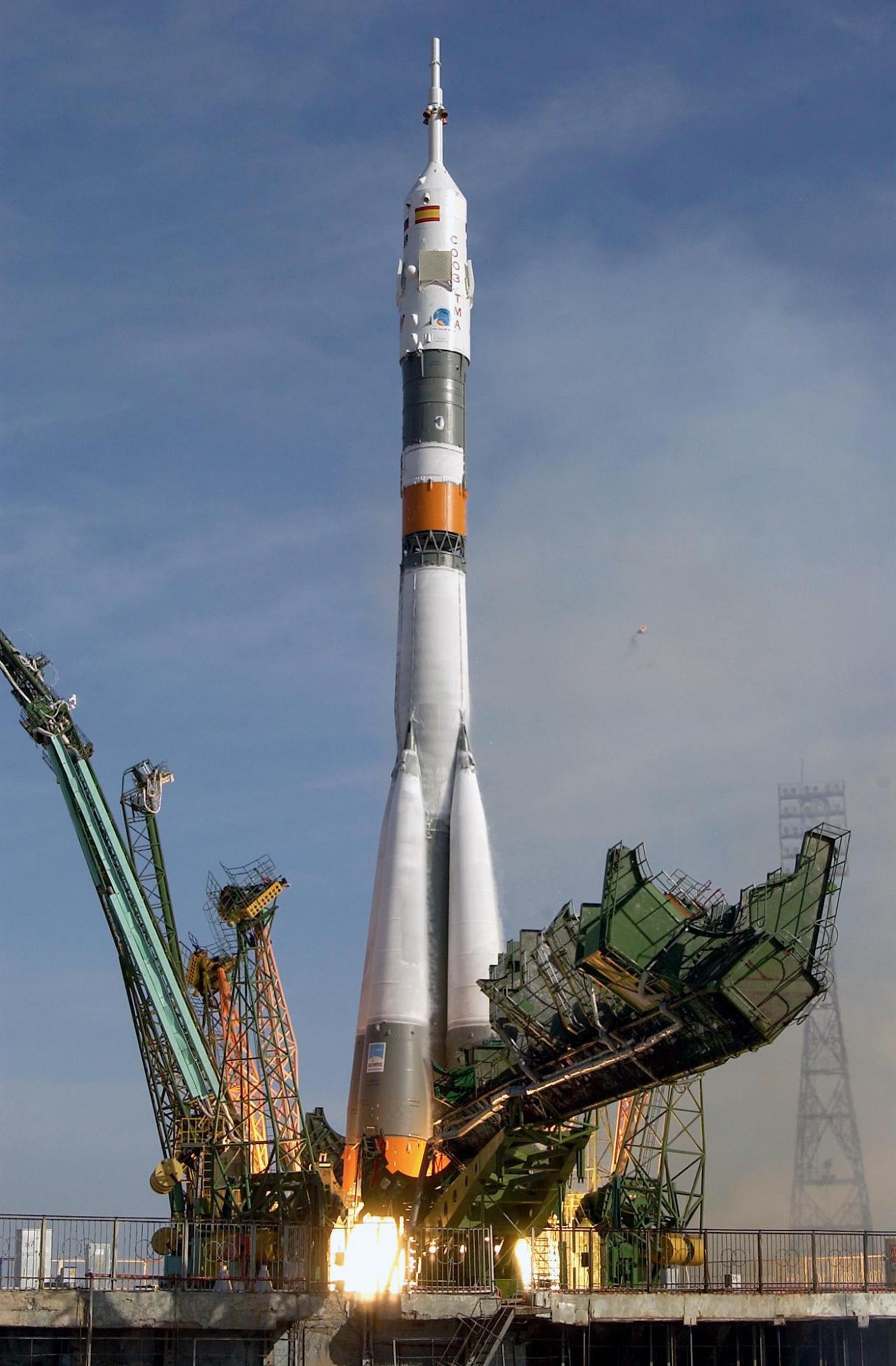
Soyuz-U | Soyuz TM-23
Russian Federal Space Agency (ROSCOSMOS) | RussiaBaikonur Cosmodrome, Republic of Kazakhstan
Status: Success
Mission:
Soyuz TM-23 was the 25th mission and the 21st long-duration expedition to Mir space station. It was also a part of the US/Russian Shuttle-Mir Program. The mission began on February 21, 1996, 12:34:05 UTC, launching Commander Yuri Onufrienko and Flight Engineer Yury Usachov into orbit. They docked with Mir two days later. During their stay there, cosmonauts performed several EVAs and various scientific experiments. Station crew was visited by several Progress resupply spacecrafts, STS-76, and welcomed aboard Soyuz TM-24 with the next expedition crew. The mission concluded with a safe landing back on Earth on September 2, 1996, 07:41:40 UTC.
Low Earth Orbit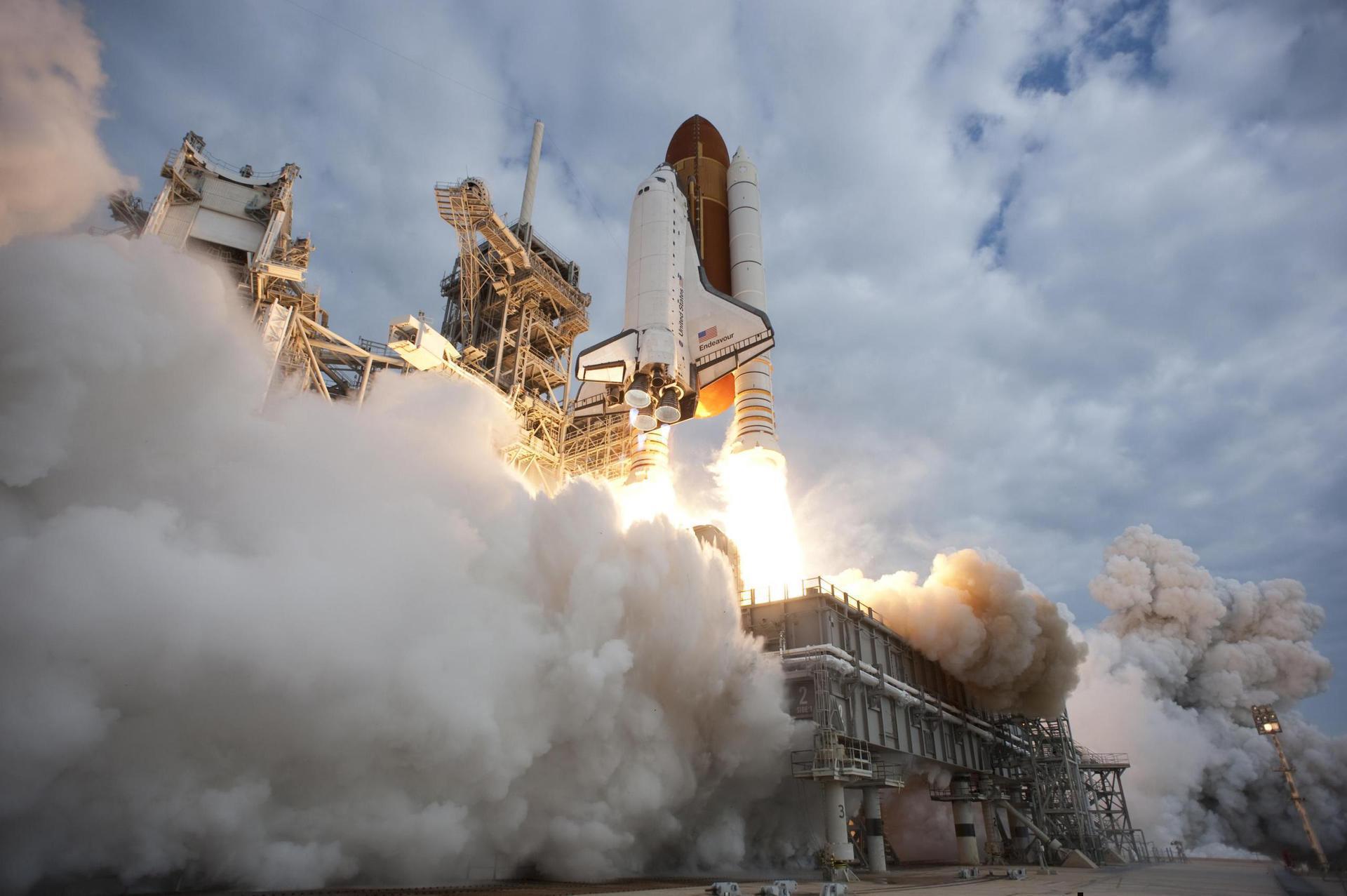
Space Shuttle Endeavour / OV-105 | STS-108
National Aeronautics and Space Administration | United States of AmericaKennedy Space Center, FL, USA
Status: Success
Mission:
STS-108 was a Space Shuttle mission to the International Space Station (ISS) flown by Space Shuttle Endeavour. Its primary objective was to deliver supplies to and help maintain the ISS. It was the 12th shuttle flight to visit the International Space Station and the first since the installation of the Russian airlock called Pirs on the station. Endeavour delivered the Expedition 4 crew to the orbital outpost. The Expedition 3 crew returned to Earth on Endeavour.
Low Earth OrbitSpace Shuttle Endeavour / OV-105 | STS-111
National Aeronautics and Space Administration | United States of AmericaKennedy Space Center, FL, USA
Status: Success
Mission:
STS-111 was a space shuttle mission to the International Space Station (ISS) flown by Space Shuttle Endeavour. STS-111 resupplied the station and replaced the Expedition 4 crew with the Expedition 5 crew. It was launched on 5 June 2002, from Kennedy Space Center, Florida.
Low Earth OrbitThe Roscosmos State Corporation for Space Activities, commonly known as Roscosmos, is the governmental body responsible for the space science program of the Russian Federation and general aerospace research. Soyuz has many launch locations the Russian sites are Baikonur, Plesetsk and Vostochny however Ariane also purchases the vehicle and launches it from French Guiana.
Electron
The Mountain God Rises (iQPS Launch 10)
Rocket Lab Launch Complex 1A - Rocket Lab Launch Complex 1, Mahia Peninsula, New ZealandSynthetic aperture radar Earth observation satellite for Japanese Earth imaging company iQPS.
Soyuz 2.1b/Fregat-M
MKA Kinosputnik, KOEN and others
Cosmodrome Site 1S - Vostochny Cosmodrome, Siberia, Russian FederationShare-ride of multiple satellites, including dual-use optical Earth observation satellites and drone-guiding satellites: * MKA Kinosputnik * KOEN…
Starship
Starlink Group 31-2 (Starship Flight 15)
Orbital Launch Pad 2 - SpaceX Starbase, TX, USA15th test flight of the two-stage Starship launch vehicle and 4th flight of Starship V3. Second Starship flight to deploy satellites (a group of Star…
Falcon 9
USSF-627
Space Launch Complex 4E - Vandenberg SFB, CA, USAA classified mission for the United States Space Force. It is possibly a batch of classified LEO satellites based on SpaceX’s Starshield satellite bu…
Long March 2D
CAS Pathfinder-1
Launch Area 94 (SLS-2 / 603) - Jiuquan Satellite Launch Center, People's Republic of ChinaThe Chinese Academy of Science (CAS)' Pathfinder-1 satellites is built for in-orbit validation of critical technologies for the upcoming main mission…