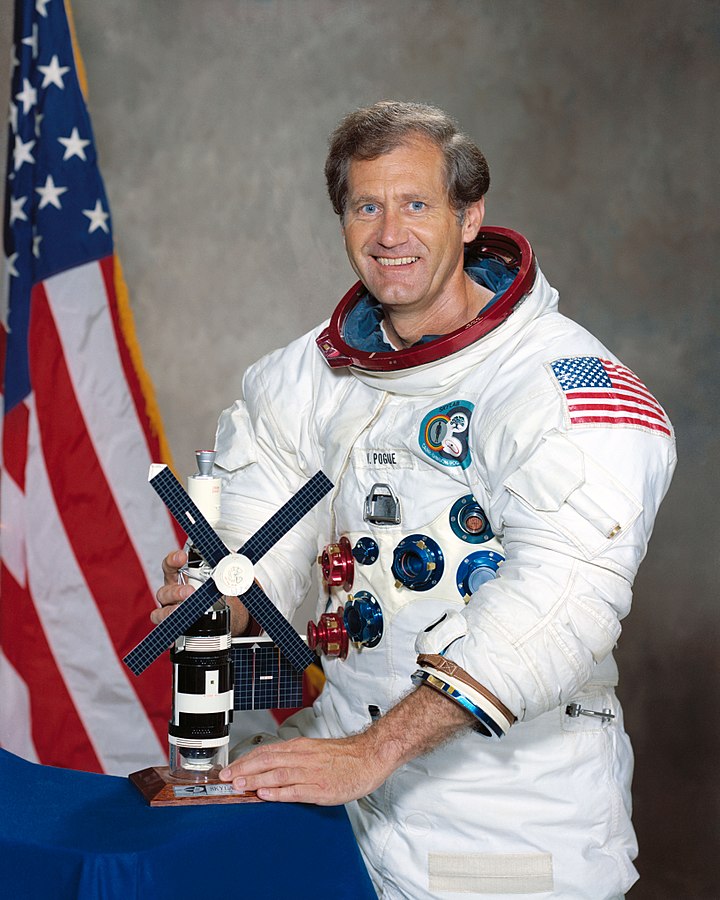
William R. Pogue
American - (NASA)
Deceased
Date of Birth: Jan. 23, 1930
Date of Death: March 3, 2014
William Reid Pogue was an American astronaut, U.S. Air Force fighter pilot, and test pilot who was also an accomplished teacher, public speaker and author. Born and educated in Oklahoma, Pogue graduated from college and enlisted in the United States Air Force, in which he served for 24 years. He flew combat during the Korean War, and with the elite USAF Thunderbirds. He served as a flight instructor and mathematics professor, and was a versatile test pilot, including two years in an exchange with the RAF (UK). Colonel Pogue was an Air Force instructor when accepted into NASA in 1966. His astronaut career included one orbital mission, as pilot of the last crew of Skylab. The crew set a duration record (84 days) that was unbroken in NASA for over 20 years, and in orbit they conducted dozens of research experiments. The mission was also noted for a dispute with ground control over schedule management that news media named “The Skylab Mutiny”. Pogue retired from both the USAF and NASA a few months after he returned from Skylab. Over the next 30 plus years he taught, lectured, consulted, and wrote about aviation and aeronatics, in the US and abroad. He died in 2014, age 84, survived by three children, four stepsons, and his third wife.
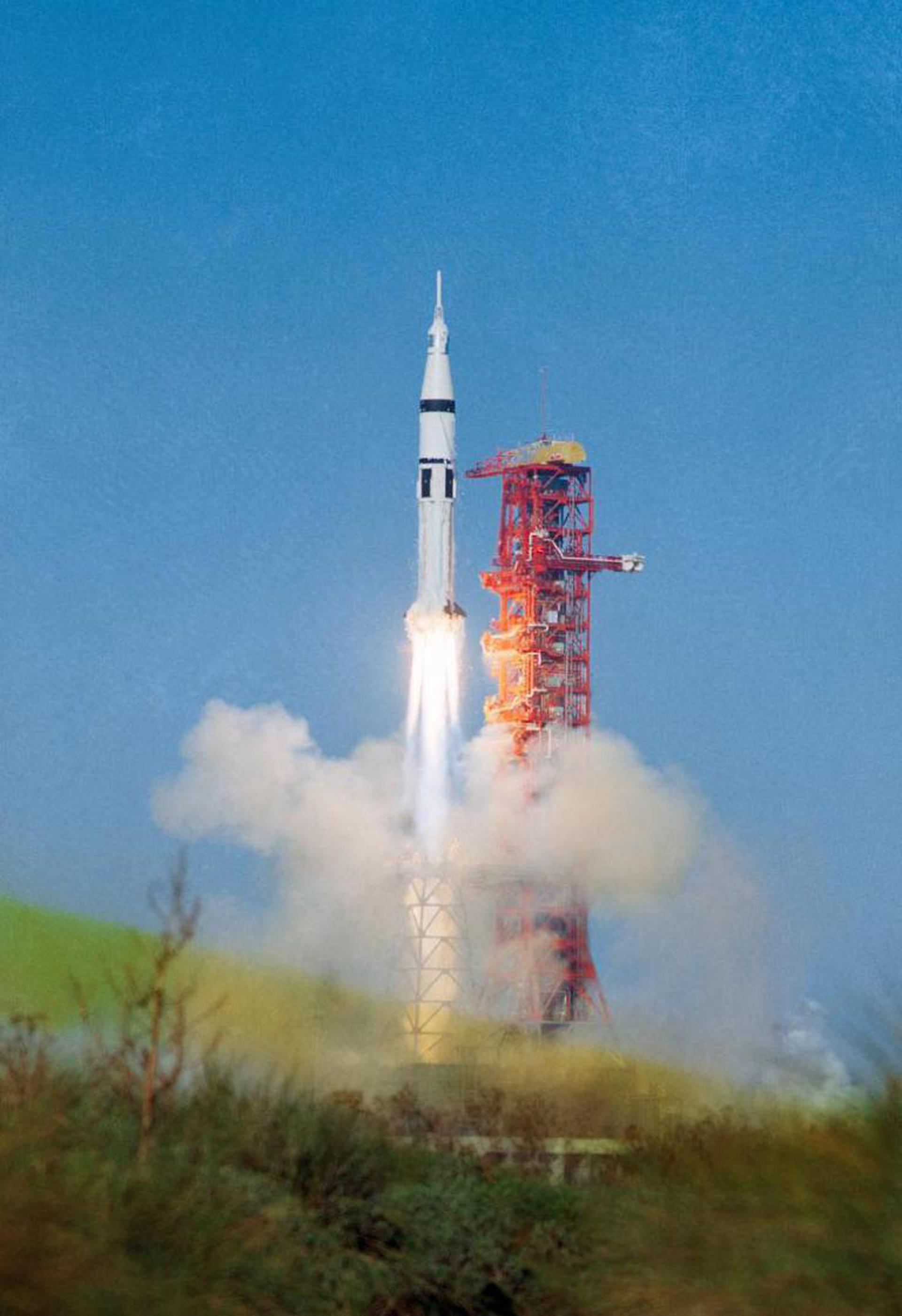
Saturn IB | Skylab 4
National Aeronautics and Space Administration | United States of AmericaKennedy Space Center, FL, USA
Status: Success
Mission:
Skylab 4 (also known as SL-4 or SLM-3) was the third and the last crewed mission to the first US orbital space station Skylab. The mission began on November 16, 1973, 14:01:23 UTC with the launch of a three-person crew. Crew members were the Commander Gerald P. Carr, Science Pilot Edward G. Gibson and William R. Pogue. During their 83-day stay on the station, crew performed Earth and solar observations. The mission ended successfully with the splashdown in the Pacific Ocean on February 8, 1974, 15:16:53 UTC.
Low Earth OrbitThe National Aeronautics and Space Administration is an independent agency of the executive branch of the United States federal government responsible for the civilian space program, as well as aeronautics and aerospace research. NASA have many launch facilities but most are inactive. The most commonly used pad will be LC-39B at Kennedy Space Center in Florida.
Kinetica 1
9 satellites
Launch Area 130 - Jiuquan Satellite Launch Center, People's Republic of ChinaShare-ride of 9 commercial Earth observation and technology demonstration satellites to SSO, details TBD.
Falcon 9
Starlink Group 15-27
Space Launch Complex 4E - Vandenberg SFB, CA, USAA batch of 27 satellites for the Starlink mega-constellation - SpaceX's project for space-based Internet communication system.
Long March 2D
PIESAT-2 13-16
Launch Complex 9 - Taiyuan Satellite Launch Center, People's Republic of China4 X-band synthetic-aperture radar Earth observation satellites for the Chinese Earth observation satellite company PIESAT.
Electron
Owl By The Dozen (StriX Launch 12)
Rocket Lab Launch Complex 1B - Rocket Lab Launch Complex 1, Mahia Peninsula, New ZealandSynthetic aperture radar satellite for Japanese Earth imaging company Synspective.
Soyuz 2.1b/Fregat-M
Glonass-K1 No. 20 (?)
43/3 (43L) - Plesetsk Cosmodrome, Russian FederationNote: Satellite serial number and Cosmos designation not confirmed. Glonass-K are the third generation of satellite design for GLONASS satellite n…

