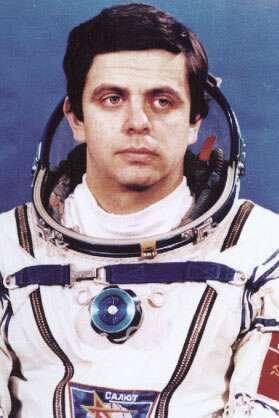
Vladimir Solovyov
Russian - (RFSA)
Retired
Date of Birth: Nov. 11, 1946
Age: 79
Vladimir Alekseyevich Solovyov (Russian: Влади́мир Алексе́евич Соловьёв; born 11 November 1946) is a former Soviet cosmonaut. He was selected as a cosmonaut on 1 December 1978 and flew as Flight Engineer on Soyuz T-10 and Soyuz T-15, spending a total of 361 days, 22 hours, 49 minutes in space. His first flight, Soyuz T-10, took off on 8 February 1984, to join Salyut 7. The crew spent ten months (nearly 237 days) performing numerous medical and space manufacturing experiments. They came down aboard Soyuz T-11 on 2 October 1984. Solovyov's second flight was aboard Soyuz T-15, taking off on 13 March 1986 and coming back aboard the same craft on 16 July 1986, 125 days later. During the T-15 mission, the crew transferred equipment from Salyut-7 to the new Mir space station; they were the last aboard the former and the first aboard the latter.
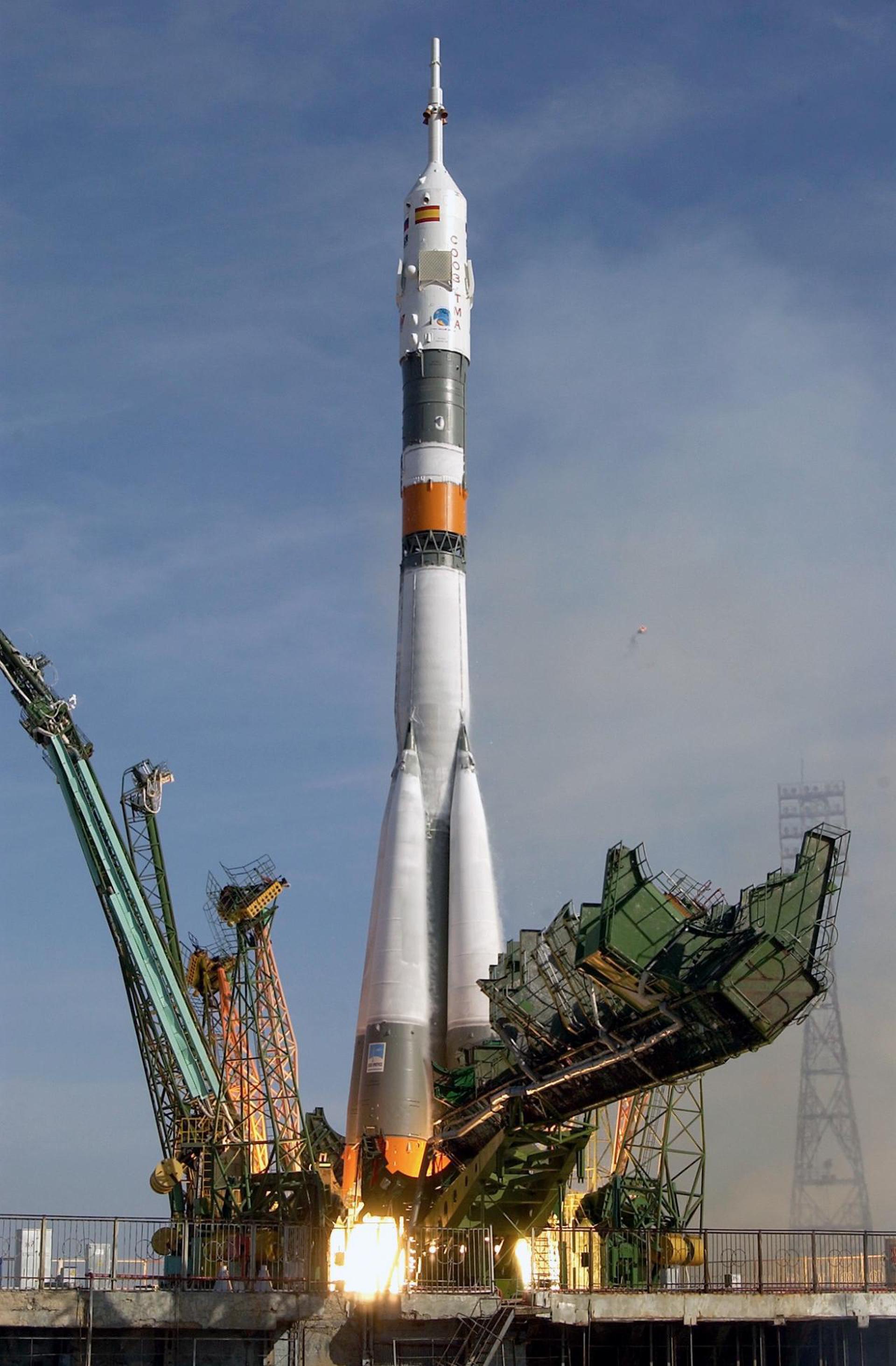
Soyuz-U | Soyuz T-10
Russian Federal Space Agency (ROSCOSMOS) | RussiaBaikonur Cosmodrome, Republic of Kazakhstan
Status: Success
Mission:
Soyuz T-10 was the third long-duration expedition to the Salyut 7 space station. The mission began on 8 February 1984, 12:07:26 UTC, launching Commander Leonid Kizim, Flight Engineer Vladimir Solovyov and Research Cosmonaut Oleg Atkov into orbit. They docked with the station the next day. During their 237-day stay on the station, crew performed various scientific and medical experiments, performed six EVAs for station maintenance, and were visited by Soyuz T-11 and Soyuz T-12 missions. Soyuz T-10, per usual, swapped vehicles with the Soyuz T-11 crew, which allowed for a longer stay on the station. The mission concluded with a safe landing back on Earth on October 2, 1984, 10:57:00 UTC.
Low Earth OrbitSoyuz-U | Soyuz T-11
Russian Federal Space Agency (ROSCOSMOS) | RussiaBaikonur Cosmodrome, Republic of Kazakhstan
Status: Success
Mission:
Soyuz T-11 was the sixth mission to visit the Salyut 7 space station and the first to visit the long-duration Soyuz T-10 resident crew of the station. The mission began on April 3, 1984, 13:08:00 UTC, launching Commander Yury Malyshev, Flight Engineer Gennady Strekalov and Research Cosmonaut Rakesh Sharma, the first Indian cosmonaut, into orbit. They docked with the station the next day. During their 7-day stay on the station, crew performed various scientific experiments. Soyuz T-11, per usual, swapped their vehicles with the resident Soyuz T-10 crew, which allowed for a longer stay on the station. The crew returned in Soyuz T-11 spacecraft, landing safely back on Earth on October 2, 1984, 10:57:00 UTC.
Low Earth Orbit
Soyuz-U2 | Soyuz T-15
Soviet Space Program | RussiaBaikonur Cosmodrome, Republic of Kazakhstan
Status: Success
Mission:
Soyuz T-15 was the last mission to visit the Salyut 7 space station and the first to visit the Mir space station. The mission began on March 13, 1986, 12:33:09 UTC, launching Commander Leonid Kizim and Flight Engineer Volodimir Solovyov into orbit. They docked with Mir two days later. During their stay there, crew tested station's systems and were visited by two Progress cargo spacecrafts. On May 5, 1986, 12:12:09 UTC crew undocked from Mir and docked with Salyut the next day. There they collected experiments results, instruments and performed two EVAs. On June 25 crew undocked from Salyut 7 and returned to Mir the next day. The mission concluded with a safe landing back on Earth on July 16, 1986, 12:34:05 UTC.
Low Earth OrbitThe Roscosmos State Corporation for Space Activities, commonly known as Roscosmos, is the governmental body responsible for the space science program of the Russian Federation and general aerospace research. Soyuz has many launch locations the Russian sites are Baikonur, Plesetsk and Vostochny however Ariane also purchases the vehicle and launches it from French Guiana.
Long March 2D
PIESAT-2 13-16
Launch Complex 9 - Taiyuan Satellite Launch Center, People's Republic of China4 X-band synthetic-aperture radar Earth observation satellites for the Chinese Earth observation satellite company PIESAT.
Electron
Owl By The Dozen (StriX Launch 12)
Rocket Lab Launch Complex 1B - Rocket Lab Launch Complex 1, Mahia Peninsula, New ZealandSynthetic aperture radar satellite for Japanese Earth imaging company Synspective.
Soyuz 2.1b/Fregat-M
Glonass-K1 No. 20 (?)
43/3 (43L) - Plesetsk Cosmodrome, Russian FederationNote: Satellite serial number and Cosmos designation not confirmed. Glonass-K are the third generation of satellite design for GLONASS satellite n…
Kuaizhou 11
SpaceTY-51 & 52
Launch Area 95A - Jiuquan Satellite Launch Center, People's Republic of China2 Earth observation radar satellites built by the Chinese satellite manufacturer SpaceTY.
Falcon 9
USSF-259
Space Launch Complex 4E - Vandenberg SFB, CA, USAUSSF-259 is a classified mission for the United States Space Force. It is possibly a batch of classified LEO satellites based on SpaceX’s Starshield …

