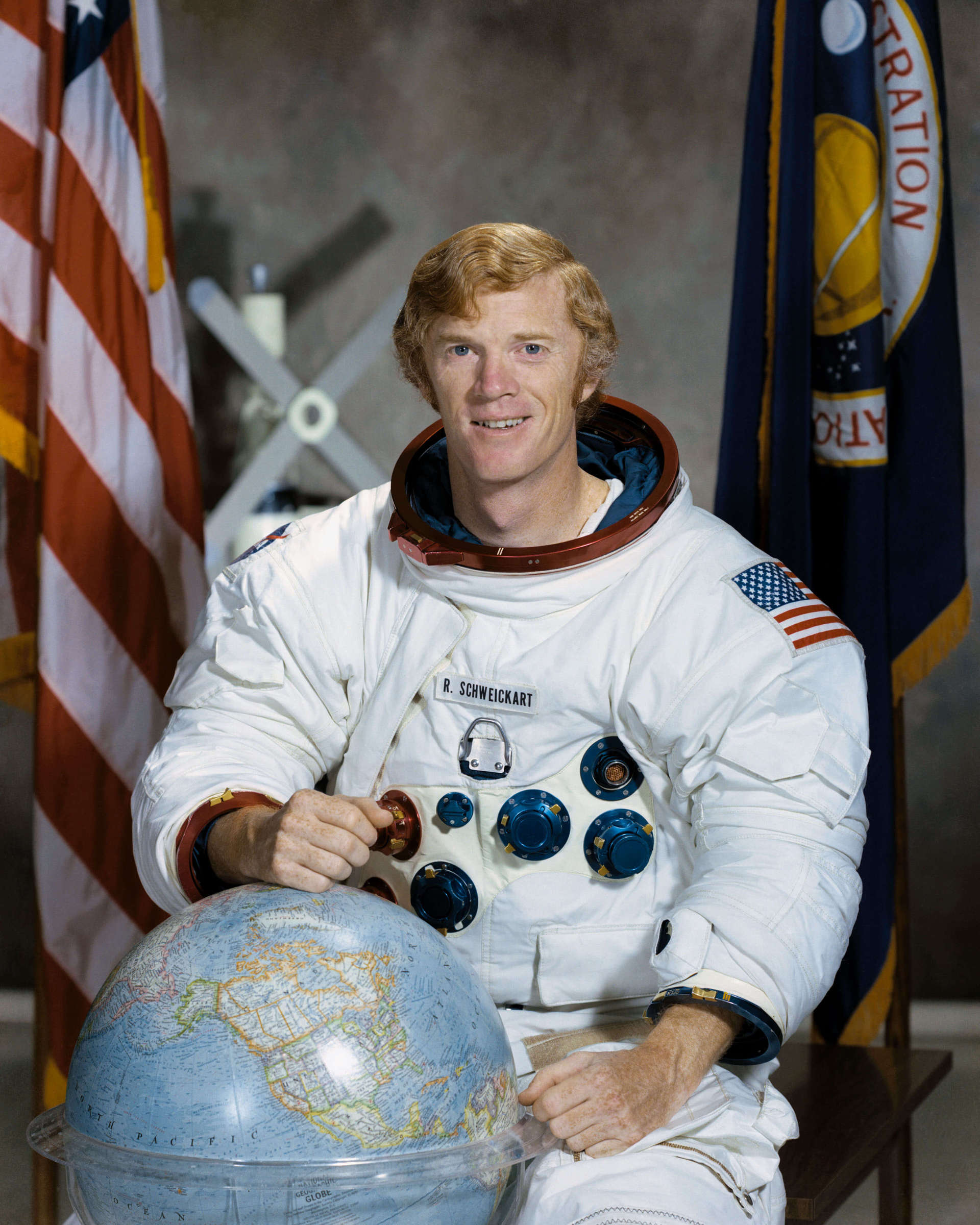
Rusty Schweickart
American - (NASA)
Retired
Date of Birth: Oct. 25, 1935
Age: 90
Russell Louis "Rusty" Schweickart is an American aeronautical engineer, and a former NASA astronaut, research scientist, U.S. Air Force fighter pilot, as well as a former business executive and government executive. Selected in 1963 for NASA's third astronaut group, he is best known as the Lunar Module Pilot on the 1969 Apollo 9 mission, the first manned flight test of the Lunar Module, on which he performed the first in-space test of the Portable Life Support System used by the Apollo astronauts who walked on the Moon. As backup Commander of the first manned Skylab mission in 1973, he was responsible for developing the hardware and procedures used by the first crew to perform critical in-flight repairs of the Skylab station. After Skylab, he served for a time as Director of User Affairs in NASA's Office of Applications. Schweickart left NASA in 1977 to serve for two years as California Governor Jerry Brown's assistant for science and technology, then was appointed by Brown to California's Energy Commission for five and a half years, serving as chairman for three. In 1984–85 he co-founded the Association of Space Explorers and later in 2002 co-founded the B612 Foundation, a non-profit organization dedicated to defending Earth from asteroid impacts, along with fellow former astronaut Ed Lu and two planetary scientists. He served for a period as its chair before becoming its chair emeritus.
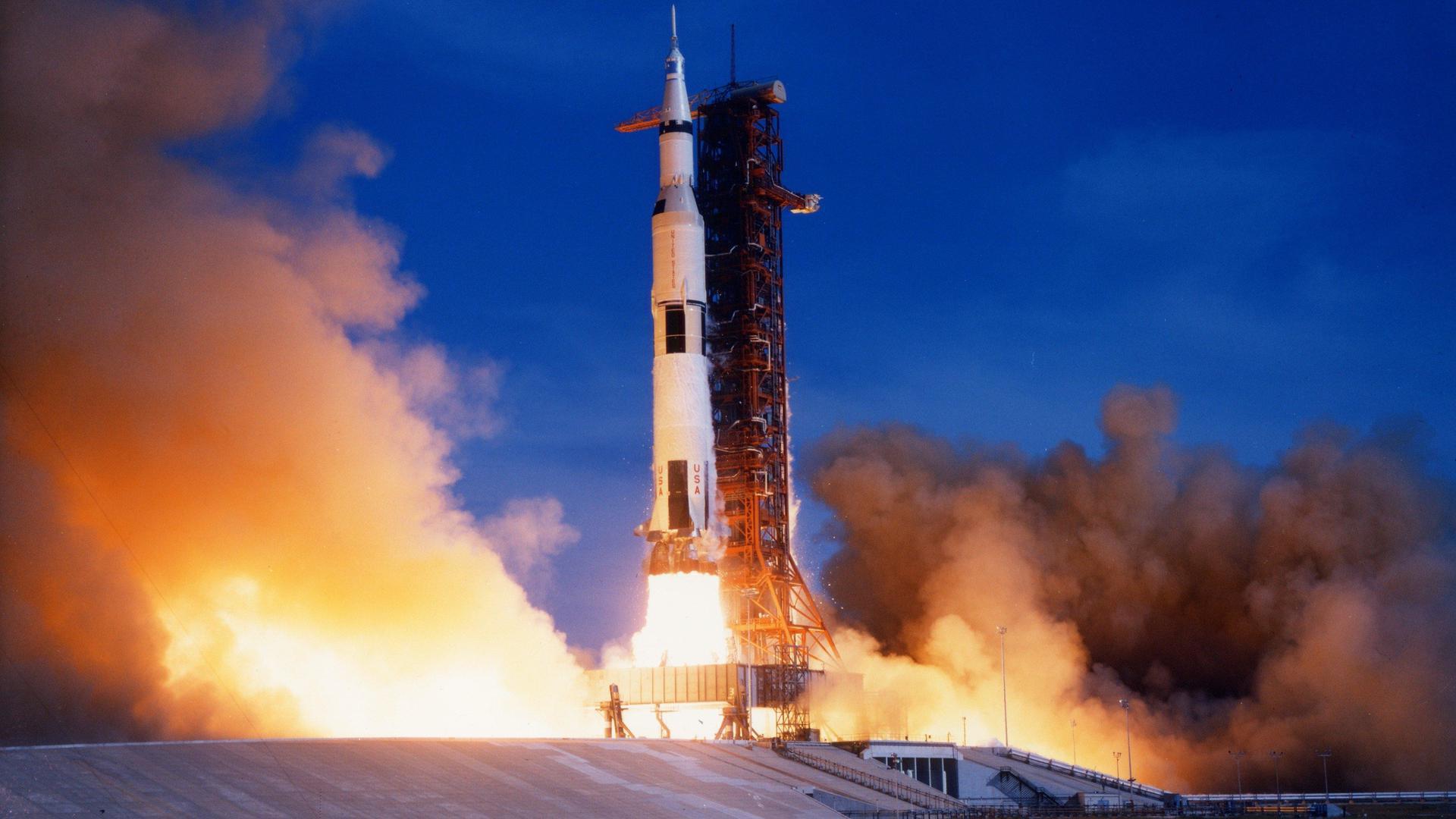
Saturn V | Apollo 9
National Aeronautics and Space Administration | United States of AmericaKennedy Space Center, FL, USA
The National Aeronautics and Space Administration is an independent agency of the executive branch of the United States federal government responsible for the civilian space program, as well as aeronautics and aerospace research. NASA have many launch facilities but most are inactive. The most commonly used pad will be LC-39B at Kennedy Space Center in Florida.
Long March 2D
PIESAT-2 13-16
Launch Complex 9 - Taiyuan Satellite Launch Center, People's Republic of China4 X-band synthetic-aperture radar Earth observation satellites for the Chinese Earth observation satellite company PIESAT.
Electron
Owl By The Dozen (StriX Launch 12)
Rocket Lab Launch Complex 1B - Rocket Lab Launch Complex 1, Mahia Peninsula, New ZealandSynthetic aperture radar satellite for Japanese Earth imaging company Synspective.
Soyuz 2.1b/Fregat-M
Glonass-K1 No. 20 (?)
43/3 (43L) - Plesetsk Cosmodrome, Russian FederationNote: Satellite serial number and Cosmos designation not confirmed. Glonass-K are the third generation of satellite design for GLONASS satellite n…
Kuaizhou 11
SpaceTY-51 & 52
Launch Area 95A - Jiuquan Satellite Launch Center, People's Republic of China2 Earth observation radar satellites built by the Chinese satellite manufacturer SpaceTY.
Falcon 9
USSF-259
Space Launch Complex 4E - Vandenberg SFB, CA, USAUSSF-259 is a classified mission for the United States Space Force. It is possibly a batch of classified LEO satellites based on SpaceX’s Starshield …

